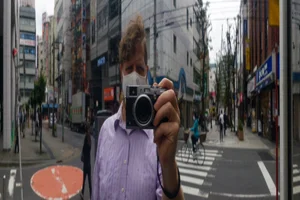
Exploring Shinagawa Station with a Vintage 135mm Lens
Shinagawa Station: A Masterclass in Light and Compression
Street Photography with the Nikkor 135mm f/3.5 Q
Shinagawa Station is more than just a transit point; it is a rhythmic engine on Tokyo’s southeast side. Connecting the Shinkansen, multiple JR lines, and the Keikyu railway, it facilitates the movement of nearly a million souls daily. For a street photographer, this isn’t just traffic—it’s a living gallery.
The rush hour at Shinagawa offers a visceral documentary experience. However, the true magic happens around 10:00 AM. As the frantic surge of salarymen subsides, the station is reclaimed by travellers and locals. The brutalist architecture of the station creates deep, dramatic pools of light—a harsh, high-contrast playground where concrete meets the oddly lush vegetation of the urban fringes.
Looking toward the Konan Exit, the new glass-and-steel office towers offer a sharp juxtaposition: the "old world" of heavy infrastructure brushing up against a new world order of transparency and reflection.
The Gear: Capturing Nostalgia with the Nikkor 135mm f/3.5 Q
While many photographers reach for a wide-angle lens in Tokyo, I find the Nikkor 135mm f/3.5 Q to be the perfect companion for Shinagawa. Nothing captures nostalgia quite like this "brass and glass" relic.
Why Vintage Glass Matters
Today’s lenses are technically perfect, razor-sharp instruments. Using them can feel like driving a Ferrari in rush hour traffic: beautiful and impressive, but perhaps too clinical for creative endeavours. They lack the "grit" that a site like Tokyo Forgeries celebrates.
The Nikkor 135-Q has a charisma that modern coatings and mathematical corrections have scrubbed away. The images come off the sensor warm, requiring little more than minor white-balance tweaks.
Telephoto Compression in a Crowded City
Using a 135mm lens for Tokyo street photography offers a unique advantage:
Safety & Distance: It allows for candid street portraits when you can’t (or shouldn’t) stand in the middle of a busy thoroughfare.
Subject Isolation: The "buttery-smooth" roll-off from the sharp focal point into the out-of-focus areas creates a dreamlike isolation.
Compression: It draws those towering Shinagawa skyscrapers right onto your subjects' shoulders, emphasizing the city's scale.
There is a character to this lens that is hard to quantify. It doesn’t just record a scene; it imparts a feeling. In the chaos of Shinagawa, it finds the quiet subject waiting, watching the day float by like a cloud.
Quick Tips for Shooting at Shinagawa Station
The Best Light: Aim for the "Golden Hour" or 10:00 AM for the best shadows in the main concourse.
The "Skyway": The pedestrian walkways leading to the office towers are perfect for using a telephoto lens to compress the crowds below.
Manual Focus: If you're using the Nikkor 135mm Q on a mirrorless body, use focus peaking to nail the eyes of commuters in motion.
What is your favourite "flawed" lens to use in the hyper-modern streets of Tokyo?
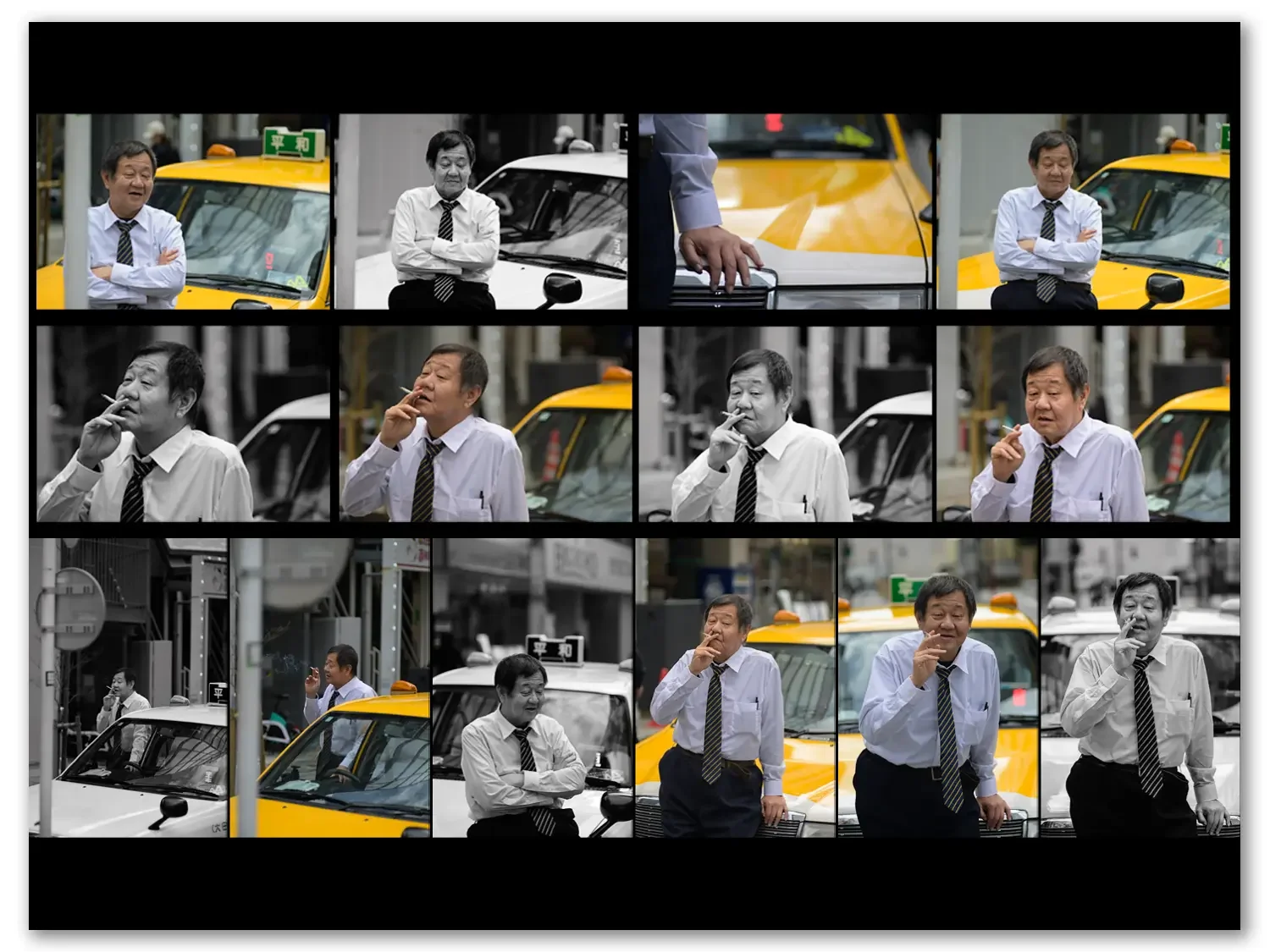
Taxi driver street portraits in Shinagawa
Read more on the Nikkor 135mm Q f3.5: Vintage Lens, Ueno Market, and Asakusa.
"The streets never look the same way twice. I’m curious—how does this side of Tokyo hit you? Drop a comment below.
I live on flat whites and shutter clicks. If you’ve found value in these shots, toss a coffee my way to keep the sensor humming.
For those who want to skip the tourist traps and shoot the real Tokyo, my calendar is open for workshops. Explore the tours here or email me at jeff@tokyoforgeries.com.
See you in the shadows."