Vintage 200 mm F4 Lens Asakusa?
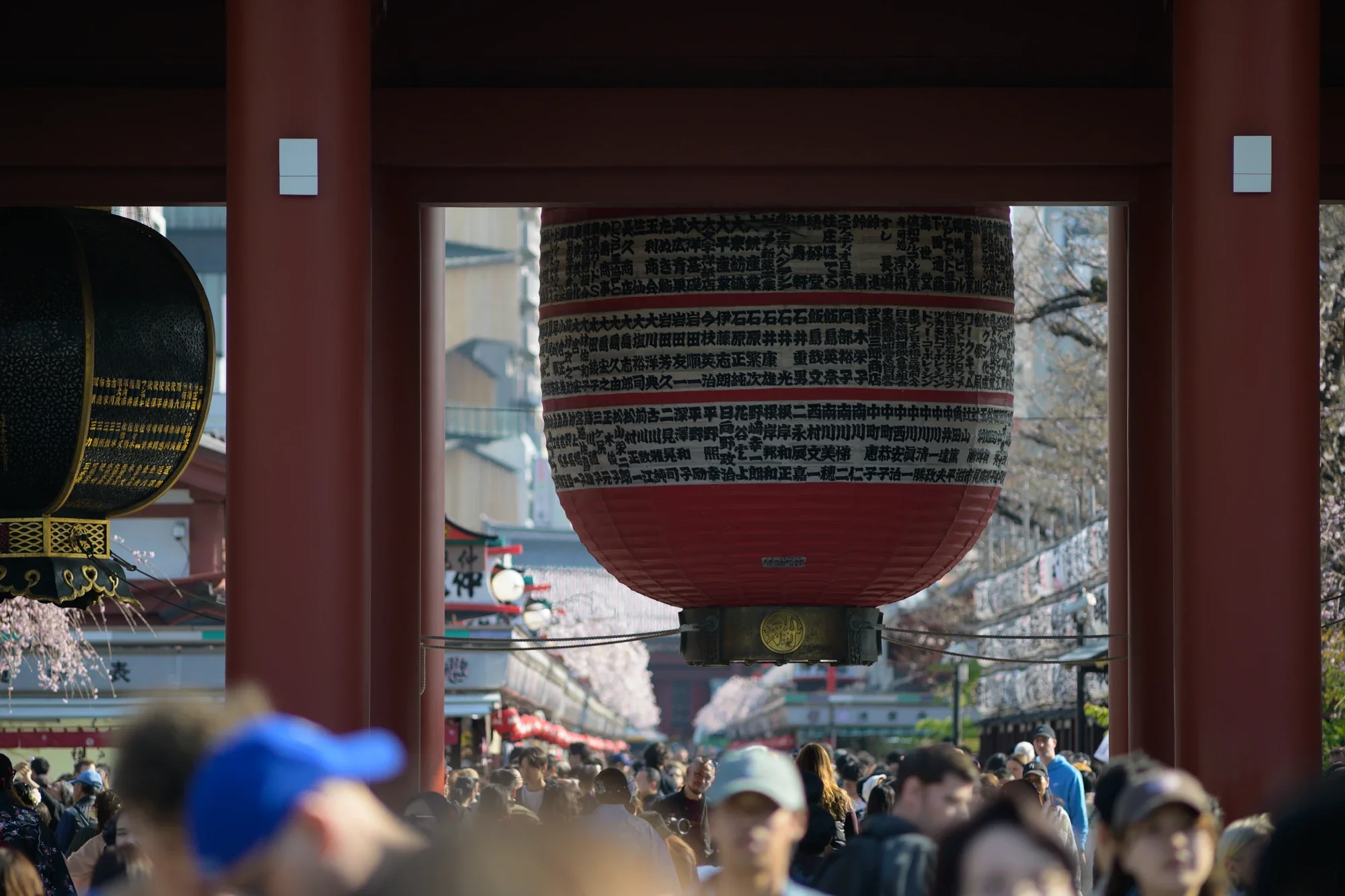
Large Paper Lanterns of Senso-Ji Temple with a vintage 200mm F4 Lens
Why 200mm is the Secret Weapon for Asakusa Street Photography
If any location in Tokyo screams for lens compression, it's Senso-ji in Asakusa. The long avenues and throngs of people provide ideal conditions for using longer focal lengths in street photography. I am not speaking of a 70-200 f2.8 or even a larger 200mm f2 lens, but rather a smaller, lighter, and discreet vintage 200mm f4 Nikkor.
The make of the lens is not of consequence. The size of it is. The slower f4 aperture allows for a smaller front element, lighter weight and smaller footprint. My version takes 52mm filters and is no bigger than most standard prime lenses for a mirrorless camera system. The size and weight feel just right on the Nikon camera body, and the smooth manual focus throw brings me right into the scene. This lens actually fits in the palm of my hand.
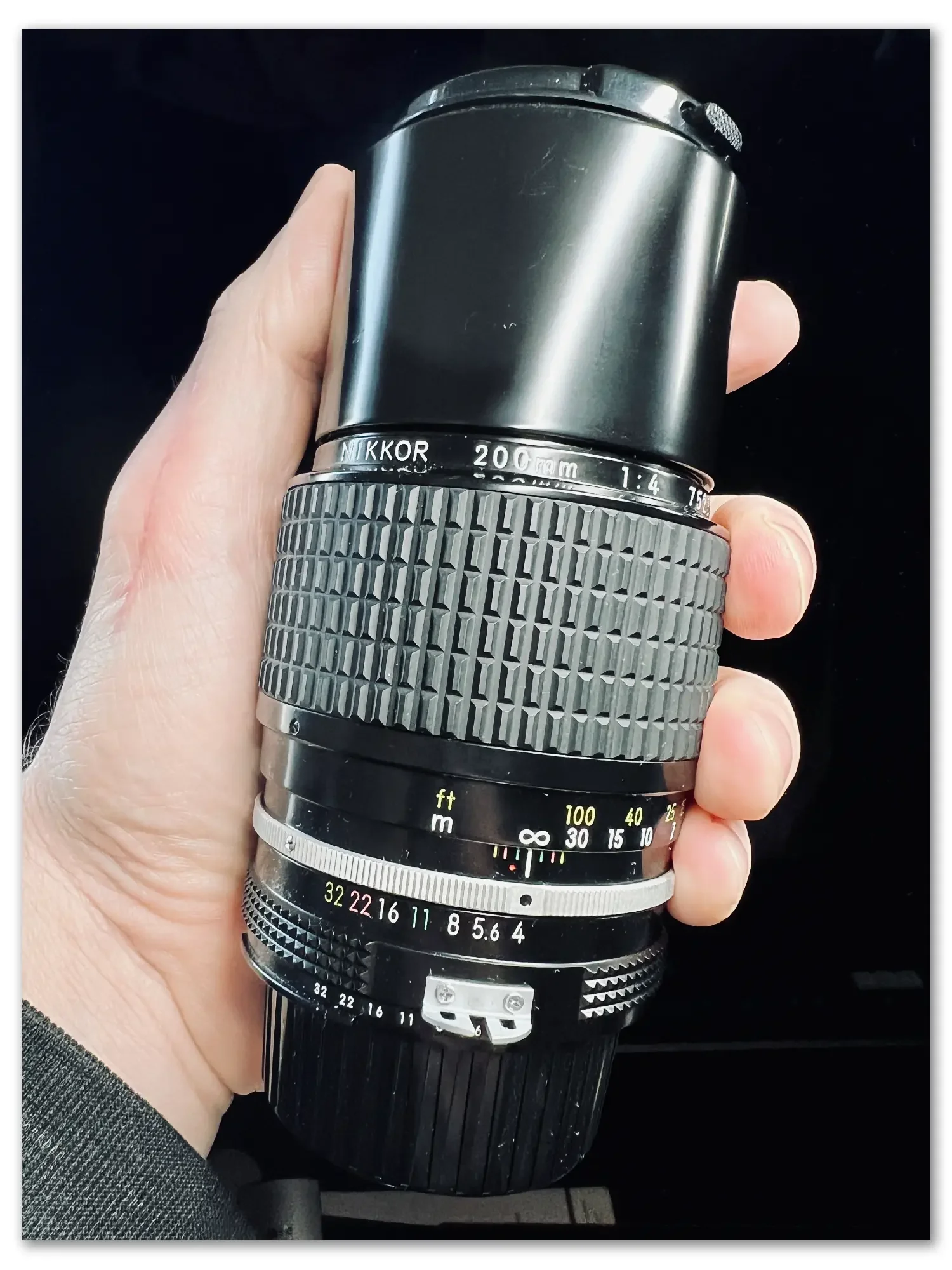
Vintage Nikkor 200mm F4 lens
The Rendering of the Nikkor 200mm f/4: Character Over Perfection
Most of Tokyo is defined by vertical lines; the city rises and falls, creating long, straight lines in many places. Senso-ji is special in that the surrounding area opens up, and the buildings close to the temple are limited in height. Adding a considerable number of visitors during peak hours to this equation creates ideal conditions for shots like the one below.
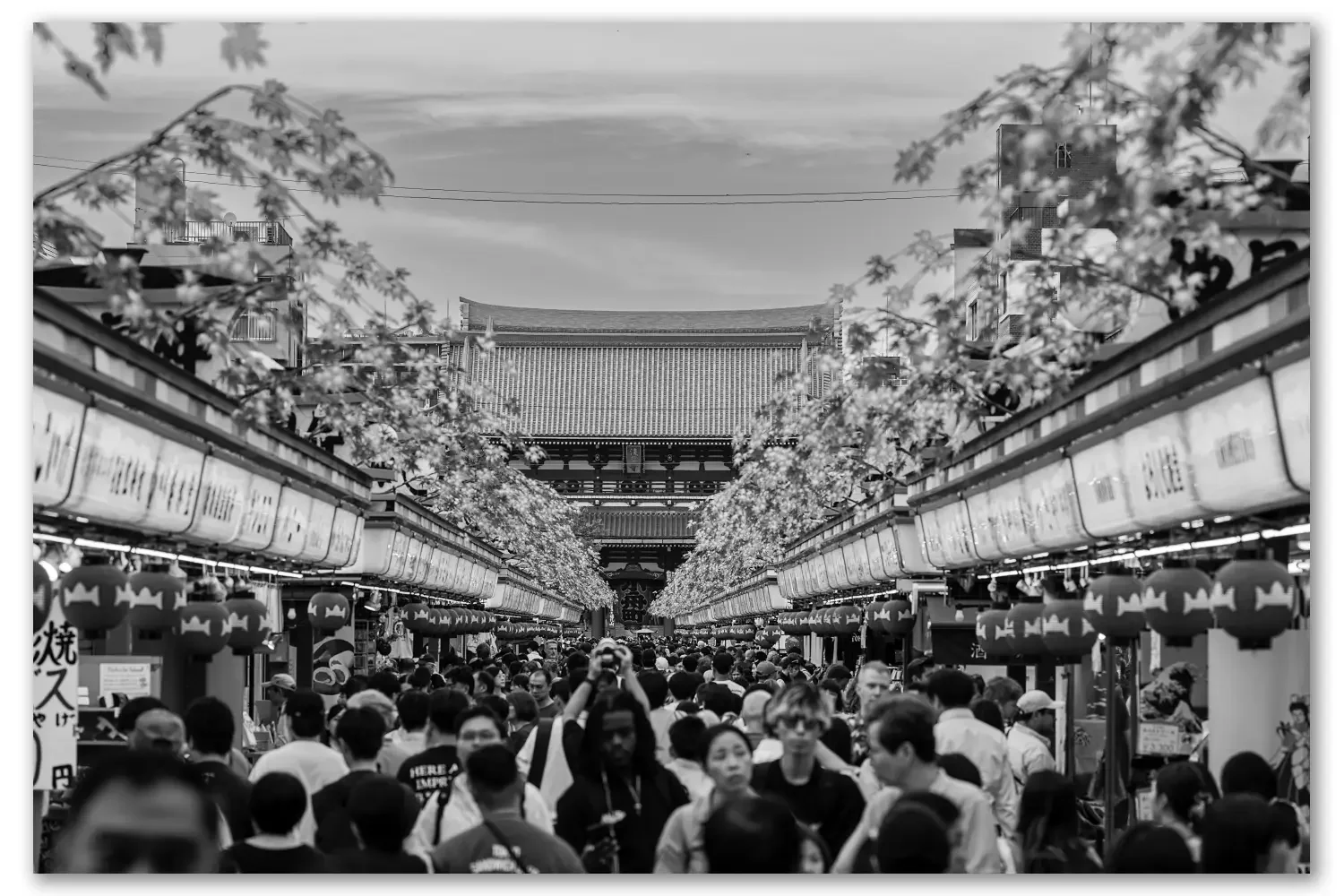
200mm F4 vintage lens rendering of Senso-Ji and its main shopping avenue
The compression brings the temple and gate forward in the frame. Giving it the appropriate amount of visual and emotional weight this temple deserves. The 200 mm focal length achieves this without taking away from the size and energy of the large crowd. The image is balanced between the destination and the path that leads there.
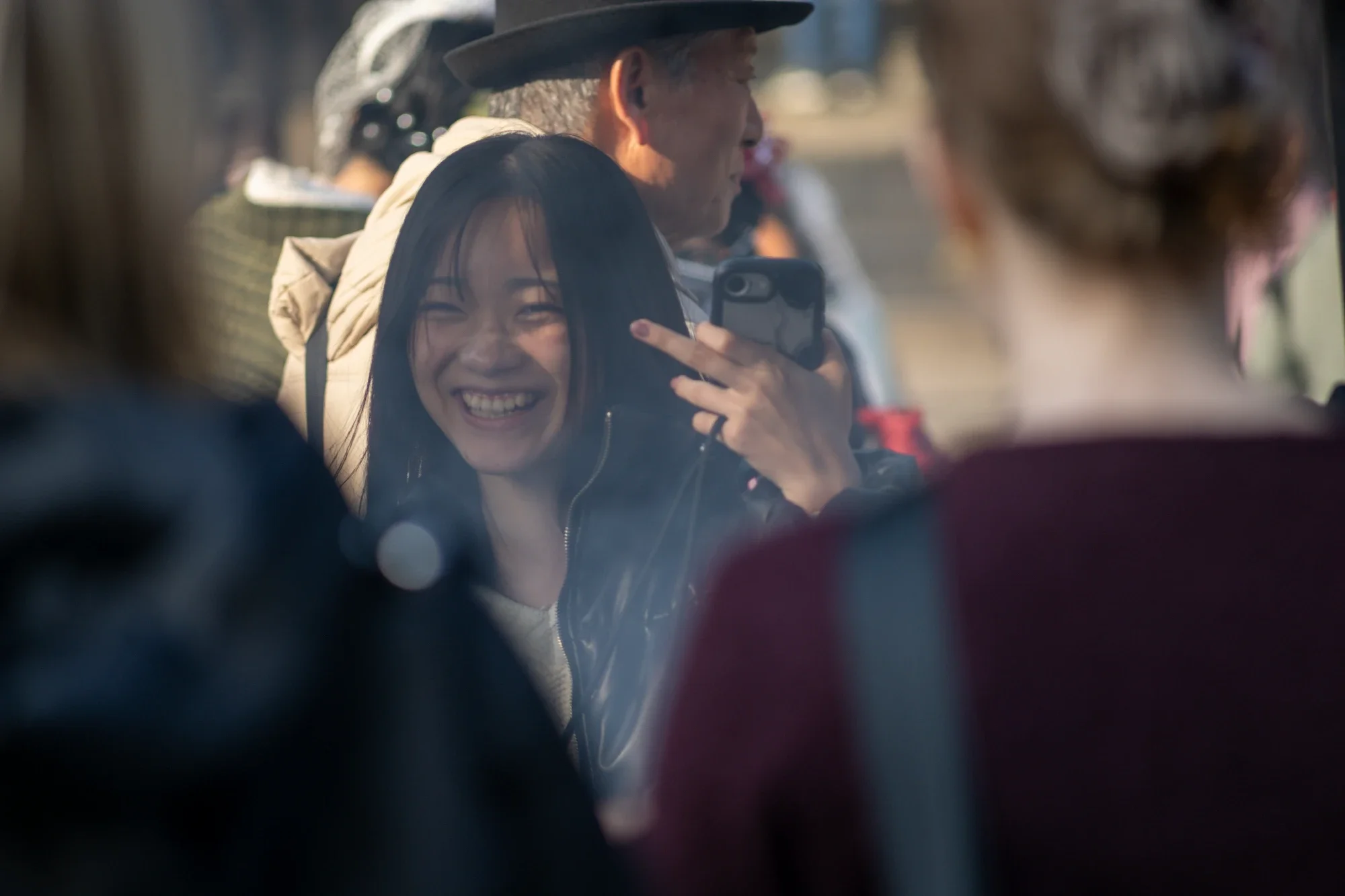
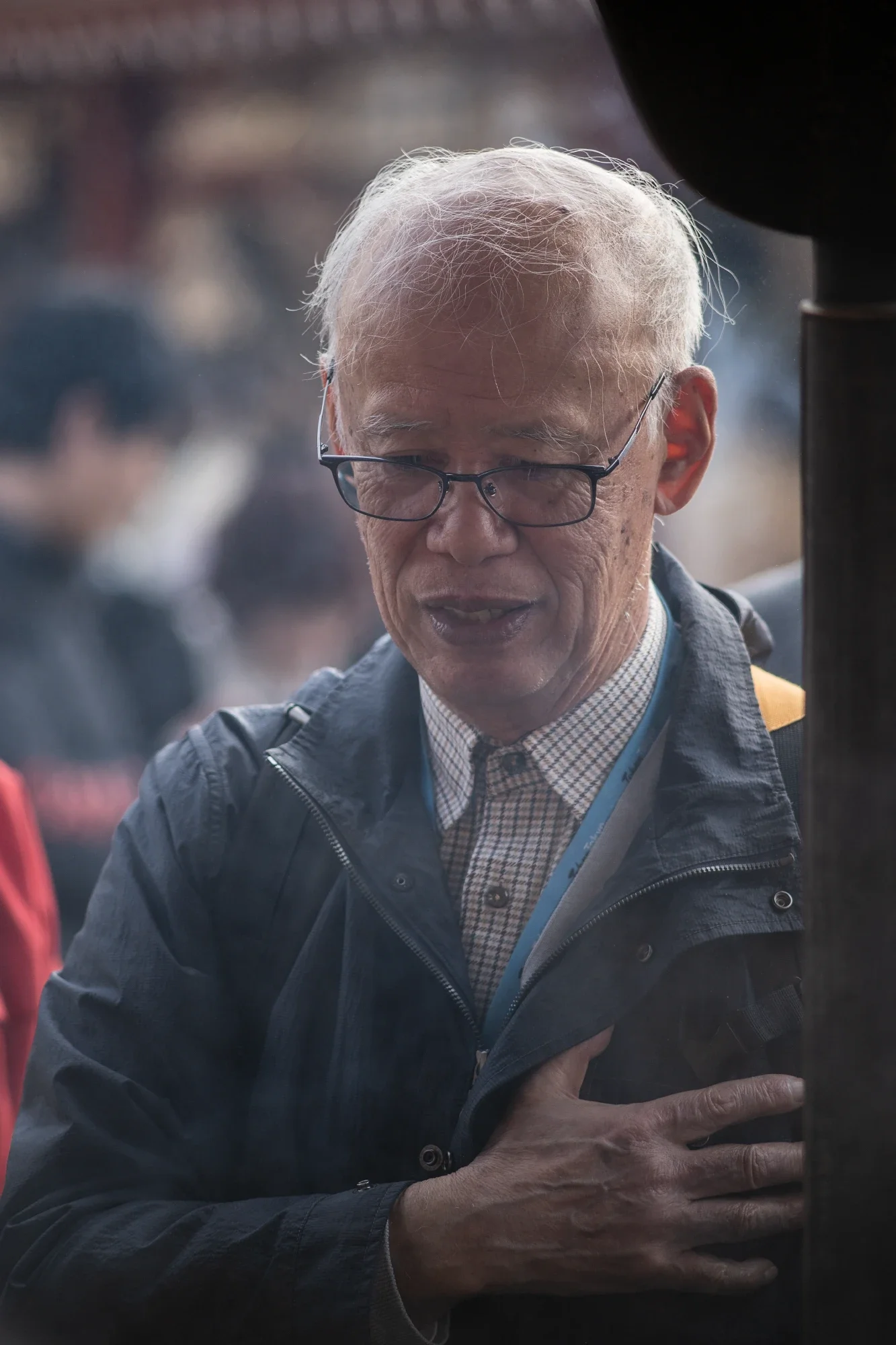
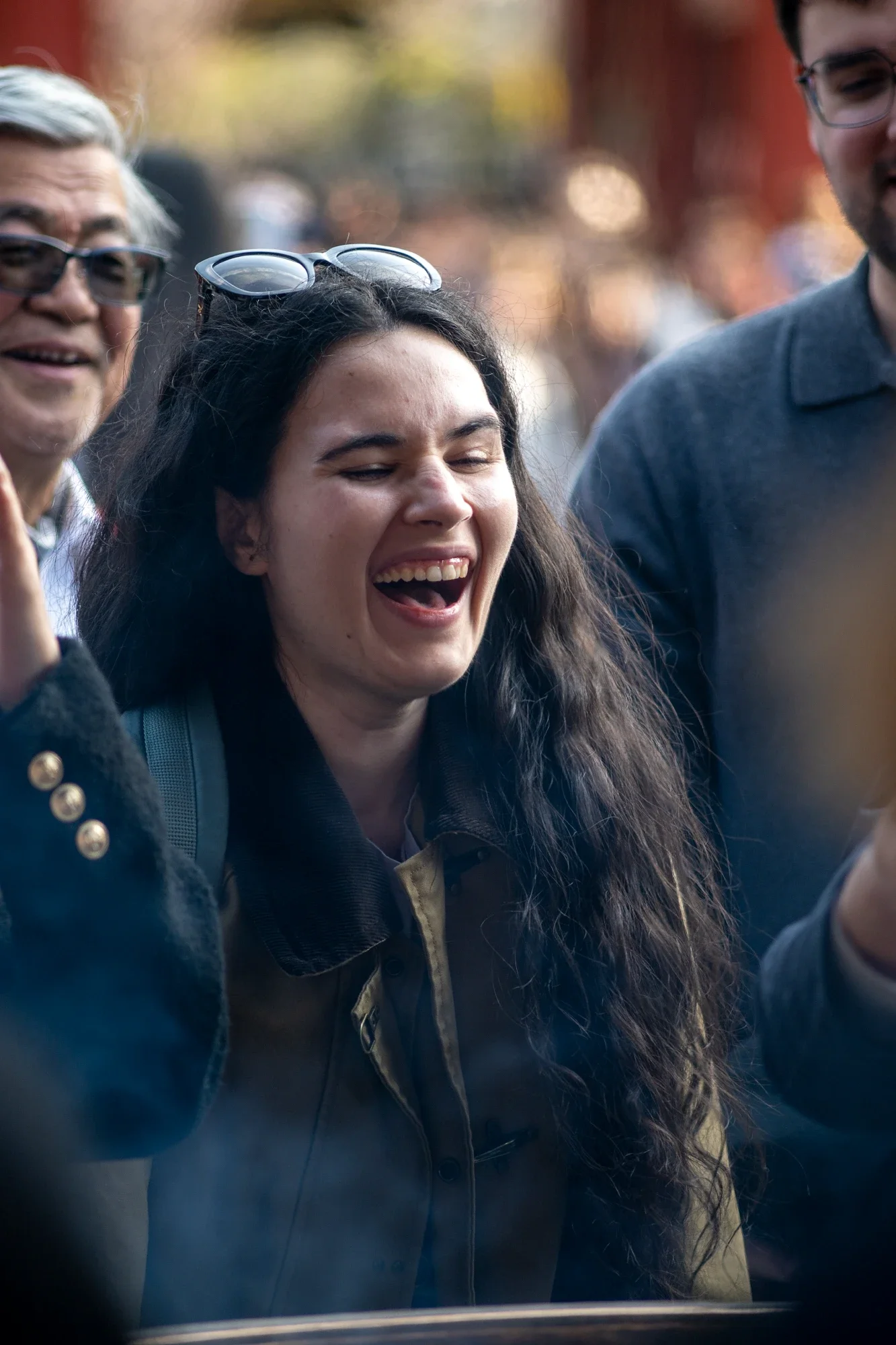
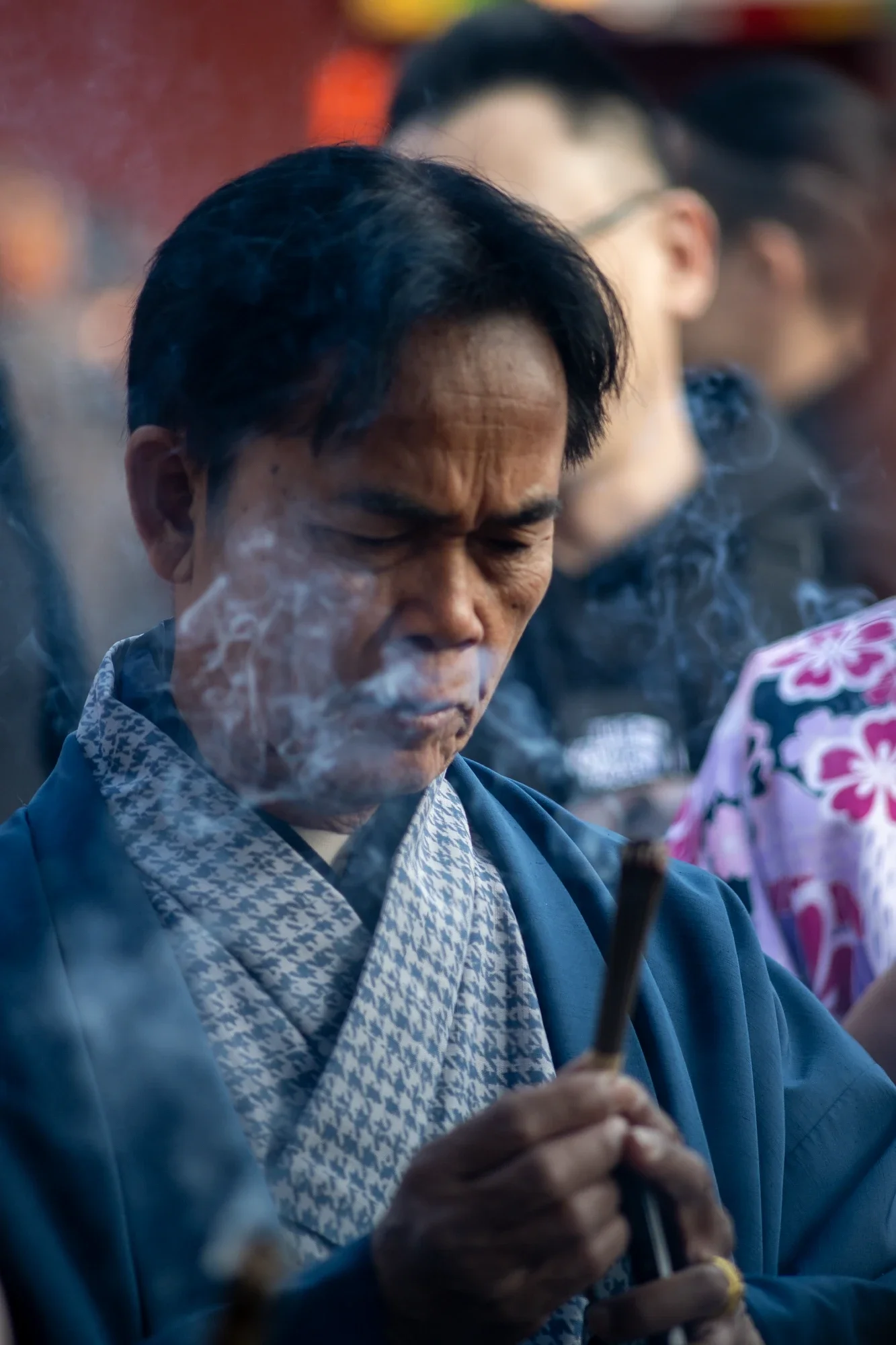
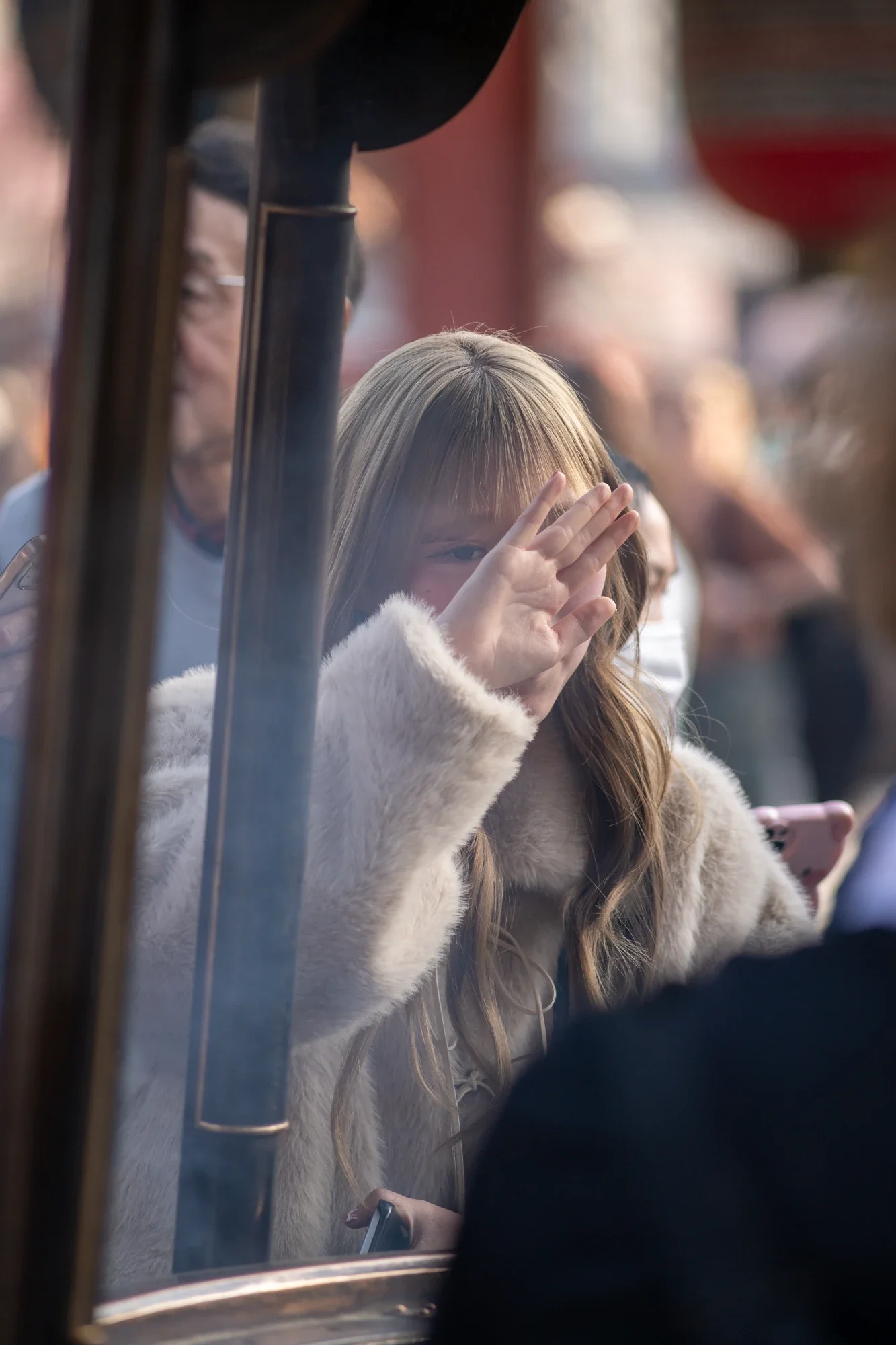
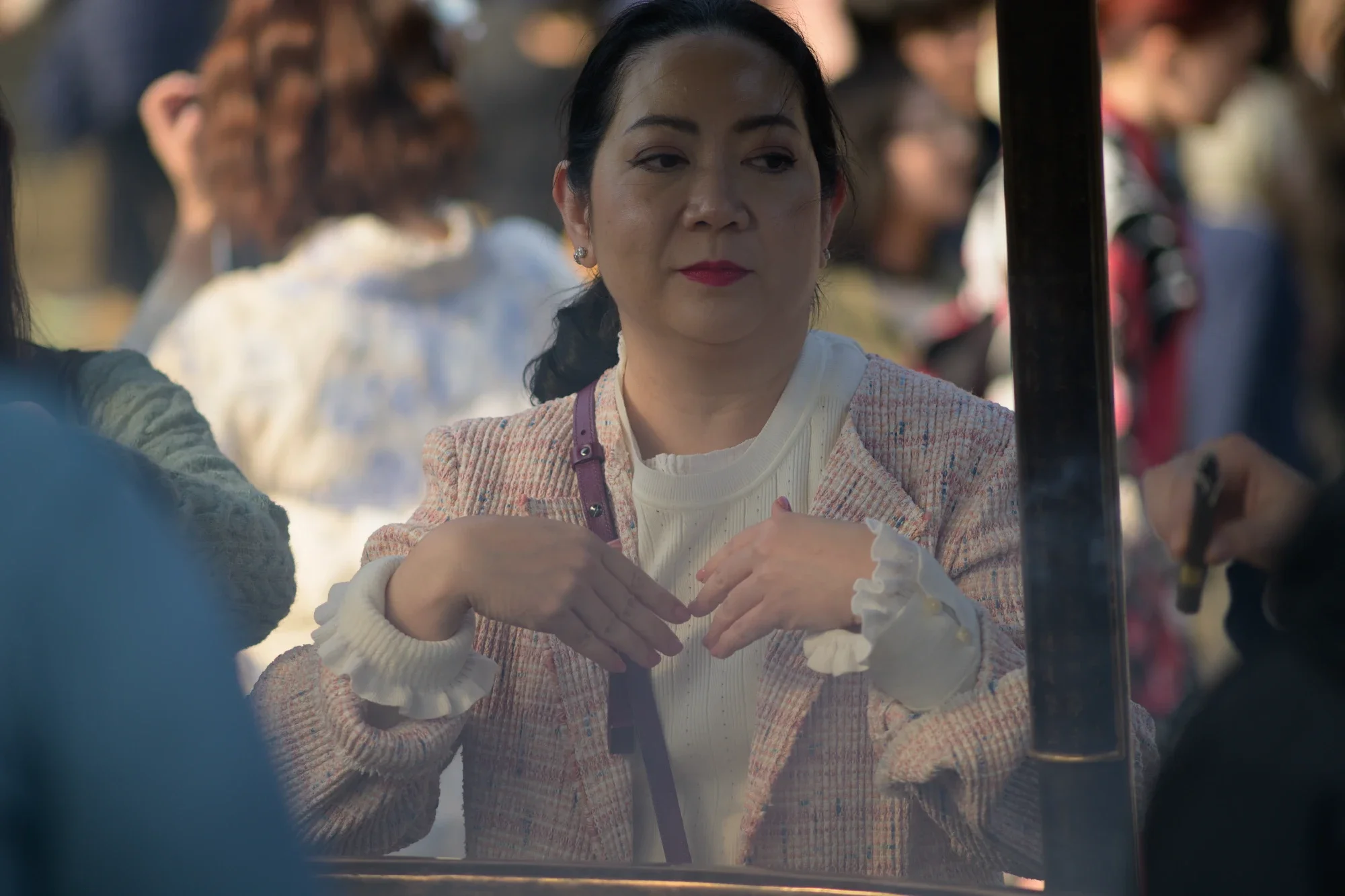
A second opportunity is afforded by using a longer focal length, such as the vintage Nikkor 200mm F4, which removes the distraction of too much context. Senso-ji Temple in Asakusa, Tokyo, features a famous, large incense burner called a jokoro in front of its main hall, where visitors participate in a purification ritual. This jokoro is the ideal location to shoot at for Senso-JI. The smoke of the incense wafting in the air, people of all faiths taking a moment to pray, and sunlight pushing through the clouds to provide gorgeous light, make this a great location for street photography in Tokyo. What happens when you have too much of a good thing? Too many people, too many hands and if you have been to Senso-Ji, often way too much incense.
I have shot here many times and used several focal lengths. I prefer the 35mm and 50mm as they both allow for subject isolation while still retaining context in the scene. During those shoots, I became drawn to the emotion on the faces of the people observing the purification rites. Every range of emotion comes across from peace to disdain, and I wanted to capture that. I wanted to focus solely on those moments.
Presented on their own, the images would work due to the emotional impact of the human experience. Shared within an article or magazine, they could serve as a full-bleed master image. That was my thinking as I graduated to a 135mm Nikkor and then to a vintage 200mm lens. The bonus, or in my case, the main reason to use such lenses is the character they provide. Designed for film, vintage lenses needed to provide character, roll-off, and a healthy finished look rendering. Add this look to the subject matter, and the possibilities are endless.
Tips for Manual Focusing in Busy Crowds
The busy crowds of Tokyo can make manual lenses difficult to use. The obvious tip is to shoot at f8 and zone focus. This is great for walking around, as you will have most things in focus. What happens when a longer focal length is used? The depth of field is shallower. Often, the point of a longer focal length is to achieve a certain amount of bokeh to help separate the subject from the background. As discussed above, the point of using a 200mm lens at Senso-Ji is to have extreme subject isolation.
My hit rate for focus was quite high. How did I achieve this? Two things: I moved left or right to follow my subject, not forward or backward. This requires micro adjustments for focus, not big pulls. Not only does it make things easier, but it also pulls me into the moment, as if I were shooting at a 35mm focal length. Secondly, I pick my frame and wait for people to walk into it. All of these shots are done through the jokoro except one, the man praying with incense. I had to fight for that one. The rest come from previsualizing the frame, focusing there and waiting.
I previously wrote about shooting Senso-ji with a vintage 135mm Nikkor. It is well worth the read, as it is quite a special lens.
"The streets never look the same way twice. I’m curious—how does this side of Tokyo hit you? Drop a comment below.
I live on flat whites and shutter clicks. If you’ve found value in these shots, toss a coffee my way to keep the sensor humming.
For those who want to skip the tourist traps and shoot the real Tokyo, my calendar is open for workshops. Explore the tours here or email me at jeff@tokyoforgeries.com.
See you in the shadows."