What Is Street Photography? An Honest Definition

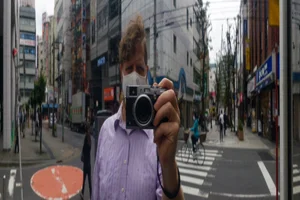
Getting ready for work at Okachimach station
What Is Street Photography?
Street photography is the candid, unposed photography of everyday life in public places — the people, gestures, and fleeting moments that happen on streets, in markets, on trains, anywhere the public moves freely. It is not posed portraiture, and it is not architecture or cityscape work. It's the human moment found inside an ordinary scene, made without arranging it, directing it, or asking anyone to pose.
That's the textbook answer. Here's the honest one.
It's simpler — and harder — than beginners expect
Most people new to it trip over the same three myths, so let's clear them first.
It does not have to be black and white. The classics were monochrome because that's what the film era gave them, not because colour is somehow less serious. Some of the best work being made right now is in colour. Shoot whatever serves the moment — we get into this when we talk about RAW, JPEG, and editing for mood.
You do not need an expensive camera. Any camera is a street camera — a phone, a battered film body, a mirrorless kit. What matters far more is the focal length you learn to see in and the settings you stop thinking about, not the price tag. More on the best focal length and the settings to start with.
It is not "just" pointing a camera at strangers. This is the one that humbles everyone. The candid part — the unposed part — is the whole discipline, and it's deceptively hard.

50mm Nikkor vintage glass in Shibuya
Candid is the entire point
Strip everything else away and street photography is one idea: the unposed moment. The second you direct someone — "stand there, look this way" — you've left street photography and walked into portraiture. Both are fine. They're just not the same craft. Kind of true, but not entirely. There is a moment between humans that we all unanimously understand; capturing/forging that is what street photography is all about. Often this moment is observed and recorded candidly. However, the most skilled street photographers can share that moment with someone and forge it into an image we can all feel.
That's also why street photography asks something of you that a studio never will: you have to work among real people who didn't agree to be there. Which raises the two questions every beginner actually loses sleep over — is this even allowed? And how do I get over the fear of doing it? Short version on the first: in most public places it's legal to shoot, though publishing a recognizable face and local laws vary, and etiquette matters as much as the law. Short version on the second: the fear is normal, and it's beaten with habit, not nerve.
Forged, not captured
Here's where I'll gently part ways with the dictionary. The word "captured" makes street photography sound passive — as if you wander, stay loose, and the universe hands you a frame. It doesn't. The great moments are found, yes, but you earn your exposure to them: by knowing a place, standing where the light is going to land, and being patient enough to still be there when it does.
That's the whole philosophy behind Tokyo Forgeries, and the reason for the name. A photograph isn't snatched by luck — it's forged out of the conditions you build. If that idea interests you, it's worth reading what actually makes a good street photograph and how you actually get better at this.
So, where do you start?
You start by going outside with whatever camera you own, picking one busy place, and shooting badly for a while — everyone does. Then you learn to shoot candidly without being noticed, you learn how to approach a stranger on the rare occasion you want to, and you keep going back to the same streets until they start showing you things they hid the first time.
That last part — learning to see a place past its surface — is the hardest to learn alone, and it's exactly what I teach one-on-one here in Tokyo. If you'd rather compress years of trial and error into a day on the street beside someone who's made every mistake already, that's what a Tokyo Forgeries masterclass is for.
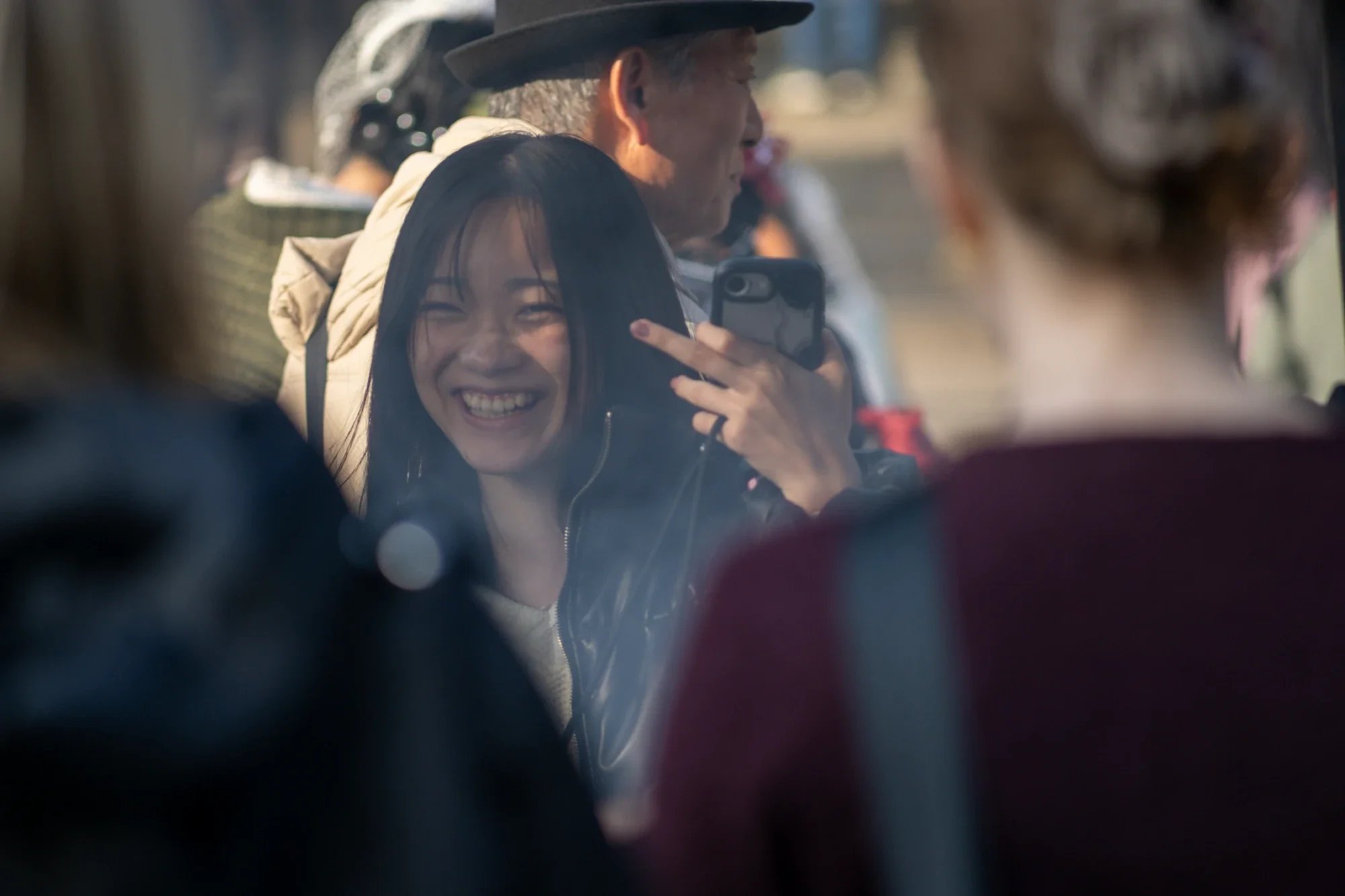
Getting the bird at Sensoji Temple
The streets never look the same way twice. I’m curious—how does this side of Tokyo hit you? Drop a comment below.
I live on flat whites and shutter clicks. If you’ve found value in these shots, toss a coffee my way to keep the sensor humming.
See you in the shadows.
Tokyo Forgeries is an evolving archive of Tokyo street photography and vintage-lens deep dives. We spend 30 days in every ward, using mid-century brass and glass to capture the city’s soul. This is a roadmap for the active pursuit of craft—documented through the geography of Tokyo and the character of its light.