Vintage Lenses for Street Photography: Glass With an Opinion
Modern lenses are the best they have ever been, and that is exactly the problem.
Today's glass resolves everything — every pore, every thread, every brick — in flawless, clinical 4K. It is technically perfect and emotionally mute. And a whole generation of street photographers has been taught to chase that sharpness as if it were the point, pixel-peeping their corners and wondering why the results look like evidence photos rather than pictures. Sharpness is not the point. It never was.
I shoot a vintage Nikkor 50mm from a different era, and it renders in standard definition, not 4K — soft where a modern lens would be surgical. That softness is not a flaw I tolerate. It is the reason I reach for it. It sits closer to how the moment actually felt than any pin-sharp record of it ever could, and it's how I'd hang a frame in a gallery or hand it to a client.

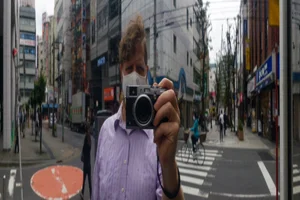
Vintage Nikkor lens set at JR Ueno Station
A lens with an opinion beats a lens with a spec sheet
A modern lens is a measuring instrument. A 1962 lens is a collaborator with a point of view. The way old glass falls off into the corners, the way it draws light, the gentle imperfection of its rendering — these aren't defects to be corrected in the next firmware update. They're a voice. When the lens has an opinion about the world, your photographs inherit it. That is character, and character is the one thing you cannot add in Lightroom after the fact.
Character is what I am after in the streets of Tokyo. It means the world to me to be able to work on these streets, and it feels disingenuous to capture it with some of the clinically perfect Z mount lenses I have. In the same way, I wouldn’t shoot a wedding on vintage glass unless it was specifically requested.
Why a fixed prime makes you better
There's a practical edge, too, beyond the look. A single prime — one focal length, learned cold — trains your eye in a way a zoom never will. After enough time on one 50mm, you stop "finding" the frame and start seeing in it: you know, walking up to a scene, exactly what it will and won't include. That fluency is part of what I mean when I talk about making your own luck — when you know your tool so completely that you never think about it, you're free to be ready for the moment instead of fumbling the settings. (If you're still weighing focal lengths, I get into the 35-vs-50 question here).
A zoom will blur the lines regarding visual literacy of focal lengths. There are some high-quality glass out there, and if a zoom is all you have or makes the most sense, then shoot with it. Try forcing yourself to use a single focal length for a specific amount of time or in a certain location. Give yourself permission to miss something; better still, move your feet to make up the difference instead of zooming.
A whole world will open up. Picture elements, secondary and tertiary layers will make their way into your frames. Zooming in and out tends to focus the eye on framing the subject, missing the background in the moment.
The brass-and-glass argument
There's also the simple, unfashionable pleasure of the object. A vintage Nikkor is brass and glass and intention — it has weight, a focus ring with resistance, a life before you. It slows you down in the right way. I keep an archive of this glass for exactly that reason; you can see some of it here. Shooting one isn't nostalgia for its own sake. It's choosing a tool that makes you shoot like you mean it.
My romantic notion is that these old lenses, whichever make, have a ghost in the glass. They had a life before me, experiences that have shaped the glass into what it is today. There is no evidence for this idea, just a gut feeling that something is right. An understanding between me and the glass when I hold it. Endless possibilities when it’s mounted on the camera and I look through the viewfinder. Admittedly less of an argument and more of an instinct, which is exactly what street photography is all about.
To be clear
This isn't gospel, and I'm not telling you to throw out your modern kit. Plenty of extraordinary work is made on clinical glass by people who know exactly what they're doing with it. The point isn't old good, new bad — it's choose your glass on purpose. Decide what you want a photograph to feel like, and pick the lens that renders that feeling, rather than defaulting to whatever scores highest on a sharpness chart.
Street photography is all about seeing the feeling in a moment. New to all of this? Start with what street photography actually is.
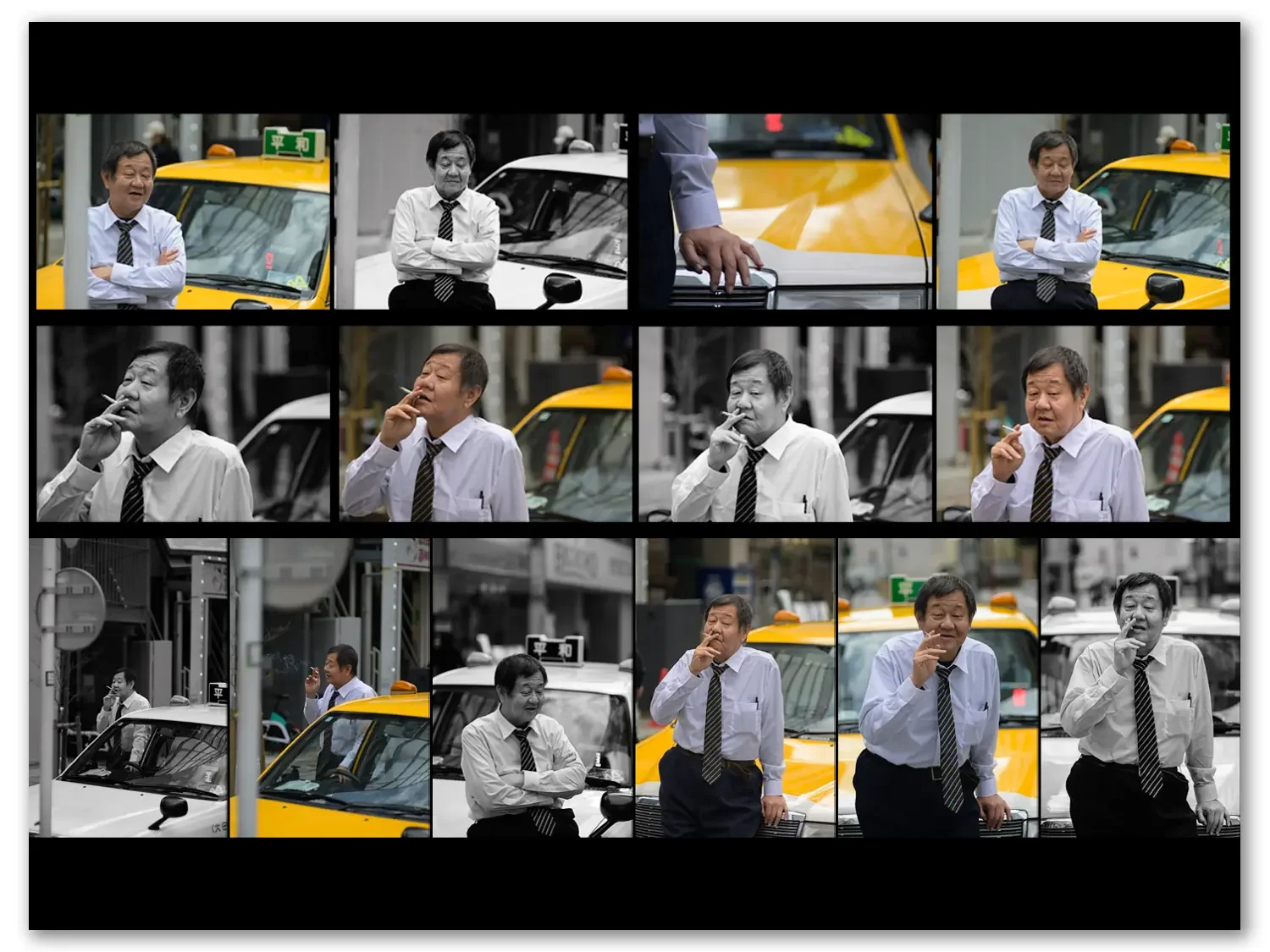
The Nikkor 135mm Auto Q f3.5 at work in Shinagawa
The streets never look the same way twice. I’m curious—how does this side of Tokyo hit you? Drop a comment below.
I live on flat whites and shutter clicks. If you’ve found value in these shots, toss a coffee my way to keep the sensor humming.
For those who want to skip the tourist traps and shoot the real Tokyo, my calendar is open for workshops. Explore the Masterclass here or email me at jeff@tokyoforgeries.com.
See you in the shadows.
Tokyo Forgeries is an evolving archive of Tokyo street photography and vintage-lens deep dives. We spend 30 days in every ward, using mid-century brass and glass to capture the city’s soul. This is a roadmap for the active pursuit of craft—documented through the geography of Tokyo and the character of its light.