Street Photography in Ueno: A Working Guide
Every photographer who lands in Tokyo runs to the same place — the Shibuya scramble, phone up, chasing a crossing that has been photographed ten million times. Meanwhile the best street photography classroom in the city sits two trains north, smells of dried fish, and most of them walk straight past it.
Ueno is not pretty, and that is exactly why it works. Shibuya gives you spectacle; Ueno gives you life — layered, unglamorous, and close enough to touch. It is where I shoot more than anywhere else in Tokyo, and where I'd send any photographer who actually wants to get better, rather than just get a postcard. I've made the longer case for it here. Here's how to work it.
Ameyoko: the strip under the tracks
Ameyoko — Ameya-Yokocho — runs about 400 metres along the JR tracks between Ueno and Okachimachi stations, roughly 400 shops deep: fishmongers, dried-goods stalls, cheap clothes, cosmetics, spice. It is the densest concentration of real life in the ward and your first stop.
Find the gap where the light pours down between the rails and the stalls. On the right mornings the whole cast of the neighbourhood walks through it at once — commuters cutting to the platforms, vendors working the first deals of the day, the odd straggler still out from the night before. Stand in that gap, learn its hour, and let it come to you. In the evening the same strip flips: neon, density, and faces lit from below. Two completely different photographs from one piece of ground.
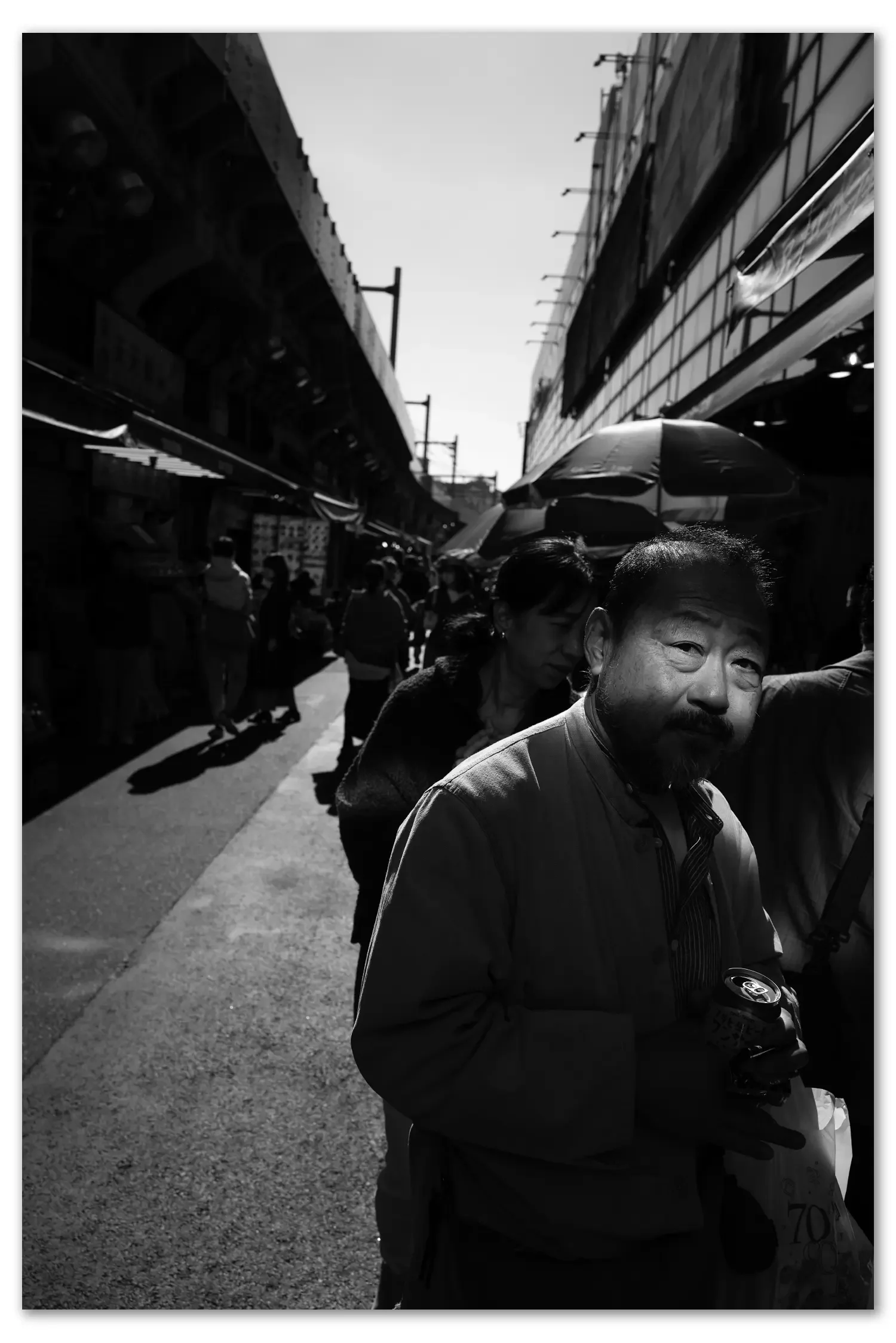
Taken with a Leica Q2 Monochrom in Ueno Market
Under the tracks (gādo-shita) and the side alleys
Step off the main run into the alleys beneath the tracks — the cramped izakaya warren that wakes up at dusk. Tight space, hard light spilling from doorways, steam, brass and grime. This is where Ueno gets cinematic. Shoot tight, watch your shutter speed, and let the mess be the picture.
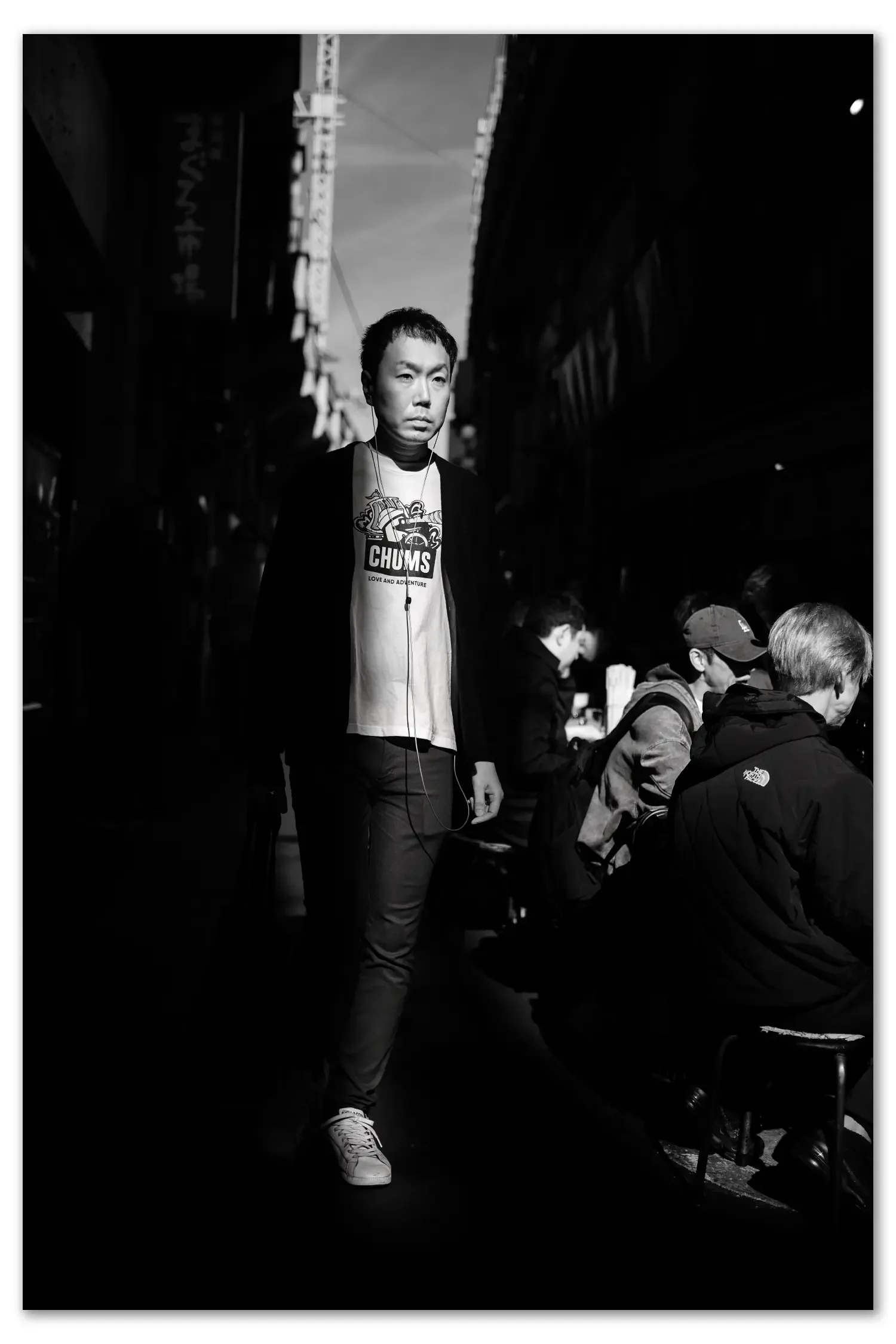
Vein of light in Ueno market
Ueno Park and Shinobazu Pond: the slow counterpoint
Walk west, and the tempo changes completely. The park draws families, museum crowds, couples, and old men feeding pigeons by Shinobazu Pond. After the chaos of the market, this is where you shoot people at rest — gesture instead of rush. A morning that moves market → tracks → park gives you a full emotional range without ever leaving the ward.
The opposite is true during the cherry blossom season, as Ueno Park transforms into one of Tokyo's busiest places. Waves of people, food vendors all the way to the horizon and the gorgeous pink beauty of Japan’s sakura.
When to go
Early morning is the connoisseur's hour: thin crowds, soft light, the stragglers and the openers, and room to work a scene without ten tourists in your frame. Arrive before the market fully wakes and you get the place nearly to yourself. Evening is the opposite trade — crowded and harder, but the neon and the press of bodies are their own reward. Pick your trade on purpose; don't just show up at noon with everyone else.
Why knowing one ward beats wandering ten
Here's the part that connects to everything else I write about. The first dozen times you shoot Ueno, you'll photograph its reputation — the obvious grit, the postcard it sells of itself. Then you start to see past the veneer. Frames you missed become possible a second time because now you know where to wait. New openings appear. Old shots you'd circled for a year finally come together. That isn't luck arriving — it's luck compounding, which is the whole argument behind making your own luck. One ward learned cold will outshoot ten wards skimmed, every time.
A word on doing it respectfully: this is someone's neighbourhood and livelihood, not a set. Shoot with courtesy — the etiquette and the legal basics are here, and if you're still nervous about any of it, start with getting past the fear. New to all this? Begin with what street photography actually is.
I teach most of my one-on-one work on exactly this ground — market to tracks to park, learning to read Ueno the way you'd read a face. If you want to spend a day building your own luck here instead of chasing a crossing in Shibuya, that's what a Tokyo Forgeries masterclass is for.
The streets never look the same way twice. I’m curious—how does this side of Tokyo hit you? Drop a comment below.
I live on flat whites and shutter clicks. If you’ve found value in these shots, toss a coffee my way to keep the sensor humming.
For those who want to skip the tourist traps and shoot the real Tokyo, my calendar is open for workshops. Explore the Masterclass here or email me at jeff@tokyoforgeries.com.
See you in the shadows.
Tokyo Forgeries is an evolving archive of Tokyo street photography and vintage-lens deep dives. We spend 30 days in every ward, using mid-century brass and glass to capture the city’s soul. This is a roadmap for the active pursuit of craft—documented through the geography of Tokyo and the character of its light.