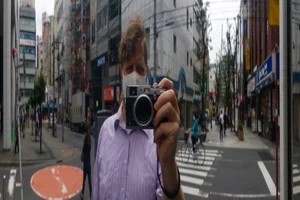
In most countries — the United States and the United Kingdom among them — it is legal to photograph people in public without asking. The harder question is what you do with the picture afterwards. Publishing, and above all commercial use, is where consent and releases come in, and some places — Germany, France, Quebec, and Japan in its own way — protect a person's image far more than others. This is general information, not legal advice.
Almost every confusion about street photography law comes from treating two questions as one. Pressing the shutter in a public place is, in most of the world, unremarkable. What you do next — post it, print it, hang it on a wall, put it in a book, sell it, license it to a company that puts it on a billboard — is where the law actually lives. The further you move toward selling something with a stranger's face on it, the more the law wants a signature.
The broad rule in the US and the UK
If you are in a public place, you can photograph what you can see, people included, without permission or a permit. Neither country has a general right to your image as some European countries do. There are narrow exceptions around sensitive sites, but an ordinary street, park or square is solid ground.
In the US, the main issue is the right of publicity, which is state law and varies by state. It is about using someone's likeness to sell something. Editorial and artistic use is broadly protected. Advertising is not.
Model releases
For personal work, exhibitions, books and editorial use, you generally do not need one in the US or the UK. If a recognizable person's face is being used to sell a product or a service, you need one effectively everywhere, and stock agencies will not license a picture commercially without it. If you are standing on a street wondering whether you need a release, you almost certainly don't. If money is changing hands because of whose face is in the frame, you do.
Where the ground tilts
- Germany. Under the Kunsturhebergesetz, distributing or displaying an identifiable person's picture generally needs their consent. There are exceptions — people who are incidental to a scene, gatherings and processions, contemporary events, and work serving a higher artistic interest — but they are narrower than photographers tend to assume, and they can be overridden by the subject's legitimate interests.
- France. Article 9 of the Civil Code protects private life, and French courts built a strong right to one's own image on it. Publishing an identifiable stranger without consent is a real risk there, art or not.
- Quebec. In Aubry v. Éditions Vice-Versa (1998), the Supreme Court of Canada upheld damages against an arts magazine that published, without consent, a photograph of a seventeen-year-old sitting on the step of a building in Montreal. The photograph was taken in public. That did not settle it.
- The EU generally. The GDPR rarely stops you from taking a photograph. Article 85 asks each member state to reconcile data protection with freedom of expression, including artistic and journalistic work, and each has done it differently. It matters most when identifiable people are stored or published alongside other information about them.
- Japan. Photographing in public is legal, portrait rights have no statute behind them, and the courts protect people where the harm goes beyond what ordinary social life asks them to tolerate. Publication is where the risk lives, and one area of photography is plainly criminal. I cover it all in my guide to street photography law in Japan.
Children
Be more careful everywhere. A child cannot consent, a parent standing beside them has every reason to object, some jurisdictions treat images of minors more strictly, and platforms treat them more strictly still. Publishing identifiable children is where you should be most conservative, whatever the local statute says.
Private property with public access
Shopping centres, private plazas, arcades, many station concourses and museums are private ground that happens to be open. The owner can set conditions, and a posted no-photography sign is one of them. Public street: your call. Private space: their rules.
Legal is not the same as right
The legal guides stop here, and the work starts. You can lawfully photograph almost anyone in a public place and still owe them something. The line I use is not a legal one: whether you are telling someone's story or taking advantage of them. The law will let you do a great deal that fails that test.
If it is the fear of all this rather than the law itself that is keeping the camera in your bag, start with the fear. If you are new, start with what street photography actually is. And if you are thinking about selling prints or publishing a book, publishing and selling street photography legally is its own question.
Part of Street Photography: Twenty Questions, Answered— a series answering the questions people most often ask about street photography.
Frequently asked questions
Is street photography legal?
In most countries, including the United States and the United Kingdom, you can photograph people in public places without their permission. Publishing — especially commercial use — and stricter image-rights laws in places such as Germany, France and Quebec are the main exceptions. This is general information, not legal advice.
Do you need a model release for street photography?
Not for personal work, exhibitions, books or editorial use in most countries. You need a signed release when you use a recognizable person's likeness to advertise or sell a product or service.
Can someone make you delete a photo taken in public?
In most countries, a member of the public has no legal power to make you delete a photograph taken lawfully in a public place. Deleting one frame when somebody is upset is often still the right thing to do.
Notes and sources
This is general information, not legal advice; laws change and vary by jurisdiction. Germany: Kunsturhebergesetz §22 (consent to disseminate or display) and §23 (exceptions, and the legitimate-interests limit in §23(2)). France: Code civil, article 9. Québec: Aubry v. Éditions Vice-Versa Inc., [1998] 1 S.C.R. 591 ([CanLII](https://www.canlii.org/en/ca/scc/doc/1998/1998canlii817/1998canlii817.html)). EU: GDPR Article 85.