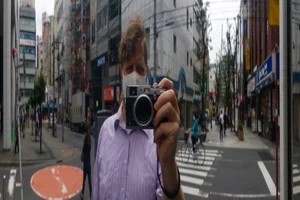
Where Is the Line Between Street Photography and Exploitation?
A street photograph crosses into exploitation when it takes advantage of its subject rather than telling their story — when someone's misfortune is doing the work the photographer didn't. The law doesn't draw this line; most of what is exploitative is perfectly legal. Two quick tests help: could you come back to this corner tomorrow and meet the person's eye, and would you be comfortable showing them the frame?
The ethics debate in street photography is mostly photographers looking for permission to keep doing what they already do. I have no interest in that. The line is real, and it is not where the law draws it.
The law tells you what you can do. It has nothing to say about what you should make. A frame can be perfectly legal and still be a theft, and every photographer who has been shooting long enough knows the difference in their stomach before they know it in their head.
Here is the line as I understand it after twenty-five years on these streets. Street photography is not about taking advantage of your subjects. It is about telling their story.
Raw emotion is not off limits. Candid is not off limits. Grief, exhaustion, anger, tenderness, the joy that catches someone before they have arranged their face — that is the material. A city photographed only in its composed hours is a postcard, and postcards are not what I do. I document those moments and I will keep documenting them.
So the line is not the feeling inside the frame. The line is what you were doing standing there.
Misfortune is the cheapest drama available to a photographer. It arrives pre-loaded with emotion you did not earn. You did not build that feeling — you walked past it and pressed a shutter, and the picture moves people because the situation is moving, not because you saw anything. Strip the misfortune out and ask what is left. If the answer is nothing, then the misfortune was the photograph, and you were a passer-by with a camera. That is taking advantage.
Same street, same second, same person: telling their story means the frame gives something back about who they are. Not what happened to them. Who they are.
Two working tests I use out there. Both quiet, both fast.
The return test. Could I stand on this corner tomorrow, and the day after, and meet this person's eye? Forging a moment means going back until a place begins to trust you. A frame that depends on never coming back is not street photography. It is tourism with a fast shutter, and it treats a city as a backdrop to be mined rather than a place you owe your patience to.
The show-it test. Not "would they consent" — most of the time you cannot ask, and asking would destroy the moment. Would I show them the frame? Hand them the back of the camera. If I would be ashamed to, I already know what I made.
On children, I hold one more rule: photograph them as part of the life of the city, never as its punchline. The moment has to hold true, not just to be cute or fun, but every bit as real as any time I click the shutter.
And I will not pretend any of this is clean.
I have deleted frames because the person was uncomfortable and deleting felt like the right thing to do. I have other frames I love that make me uncomfortable, and I have never published them. They sit in the archive. I am not certain I am right about either decision.
That is the honest position, and here is why it has to be. A rule wants to be specific. Street photography resists that, because what we are doing is making moments of life tangible for people who were not there to witness them. Life is not specific. We follow the rules as best we can and life declines to cooperate. Life is messy. It stands to reason that photographing messy is also messy.
Anyone selling you a clean rule for this has stopped paying attention.

Beautiful light for street photography in Ueno Market.
The common counterpoint
Street photography is documentary work, and an honest record of public life includes its unflattering parts. Poverty, grief and disorder are facts of the city; edit them out, and you produce a pretty, dishonest archive. Half the canon would fail the tests above, and we are still looking at it fifty years later. Ethics is the photographer's private business. The image stands on its own merit, not on the manners of the person who made it. Self-censorship is cowardice wearing the costume of virtue.
My answer
I agree with the premise and reject the conclusion.
The record must include the unflattering. A city sanded down to its pleasant hours is a lie, and I am not arguing for a photography of nice things. I am arguing against speed.
Look at the work people reach for when they defend the three-second frame. Bruce Davidson photographed one block — East 100th Street in East Harlem — from 1966 to 1968. Two years, on one street, refusing a telephoto so he had to stand in front of people. "I entered a lifestyle," he said, "and, like the people who live on the block, I love and hate it, and I keep going back." Mary Ellen Mark met a thirteen-year-old girl called Tiny in Seattle in 1983 and went on to photograph her for more than thirty years, into middle age and ten children.
None of that was made in three seconds. It was made by staying. What the culture has borrowed from those photographers is their permission and not their patience.
There is a real tension here with something I believe: the image must stand on its own merit, not on the context in which it was made. That rule exists so a weak frame cannot be rescued by a good story. It was never a licence. Merit is not a defence you get to claim after the fact.
So shoot it. Then sit with it. Shooting and publishing are not the same act, and the archive is allowed to hold what the wall should not. I know that firsthand — some of my best frames have never left it.
The line is not consent. It is whether you stayed long enough to have the right.
Part of Street Photography: Twenty Questions, Answered — a series answering the questions people most often ask about street photography.
Frequently asked questions
Is it ethical to photograph people in distress or poverty?
Difficult moments aren't off-limits, but the question is what the photograph is doing. If the person's misfortune is the only thing making the picture work, it is taking advantage. If the frame shows who they are rather than what happened to them, it can be honest work — and the strongest examples in the documentary tradition came from long relationships, not passing moments.
Is legal the same as ethical in street photography?
No. The law tells you what you are allowed to do. It says nothing about what you should make, and a photograph can be entirely legal and still exploitative.
Should you delete a street photo if the person seems uncomfortable?
Often, yes. I have deleted frames because the subject was uncomfortable, and I keep others I value but have never published. Taking a frame and publishing it are separate decisions.
Notes and sources
Bruce Davidson photographed East 100th Street in East Harlem between 1966 and 1968 — [Magnum Photos, "Bruce Davidson's East 100th Street: Harlem, 50 Years On"](https://www.magnumphotos.com/arts-culture/society-arts-culture/bruce-davidson-east-100th-street/). His quotation is from the [Museum of Modern Art's 1970 press release for East 100th Street](https://www.moma.org/momaorg/shared/pdfs/docs/press_archives/4518/releases/MOMA_1970_July-December_0037_97.pdf). Mary Ellen Mark met Erin Blackwell ("Tiny") in Seattle in 1983 and photographed her for more than thirty years — [Aperture, "Tiny: Streetwise Revisited"](https://aperture.org/exhibition/tiny-streetwise-revisited-mary-ellen-mark/).