How to Overcome the Fear of Photographing Strangers
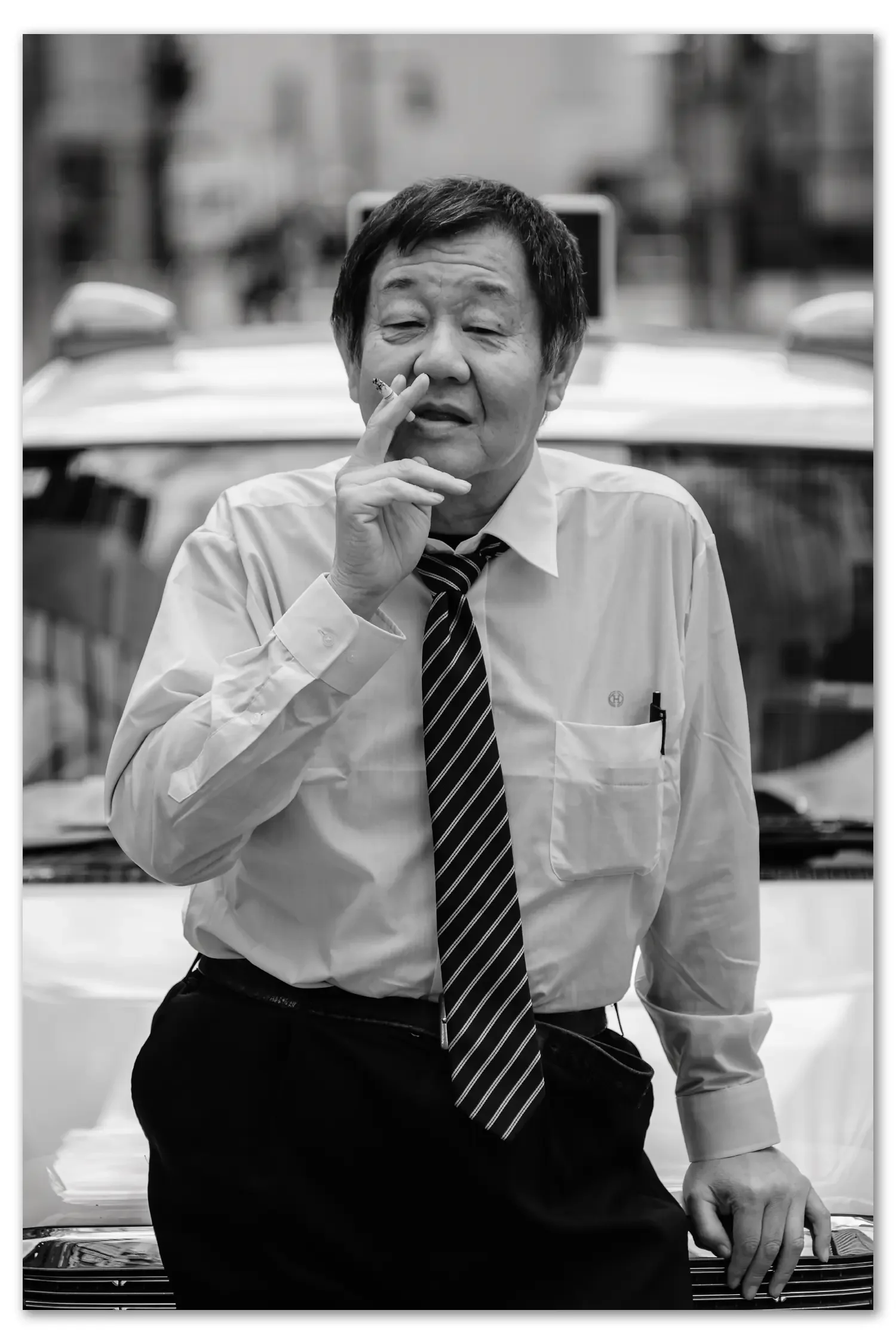
A Shinagawa taxi driver was happy to pose for a street photography portrait.
How to Overcome the Fear of Photographing Strangers
The fastest way to get over the fear is to remove the confrontation entirely: shoot where it's busy so you blend in, pre-frame an interesting spot and let people walk into it (the "fishing" technique), give yourself a narrow assignment so you focus on the task instead of your nerves, and start with wide scenes before you ever step in close. Confidence here is built through repetition — it has almost nothing to do with personality.
That's the short answer. Here's how to actually do it.
First, the reframe: the fear is normal, and it's a habit problem
Almost every street photographer you admire felt exactly what you're feeling. The racing heart, the certainty that everyone is watching, the conviction that you're doing something wrong — that's the universal entry fee, not a sign you're not cut out for it. And here's the part that should encourage you: courage on the street isn't a personality trait you either have or don't. It's a habit you build, one frame at a time. The same way a place gives you better pictures the more you shoot it, your nerve gets stronger the more reps you put in. Confidence isn't the thing you need before you start. It's the thing shooting gives you.
The techniques that actually work
Shoot where it's busy. A crowded market, a festival, a packed crossing — when there's a lot going on, nobody is paying attention to you, and a camera is just part of the scenery. This is why I send nervous photographers straight into a place like Ueno's Ameyoko market: the density does half the work for you. Quiet streets are far harder; start where you can disappear.
Use the "fishing" technique. Instead of chasing people — which feels aggressive and looks it — find a strong background, a pool of light, an interesting doorway, and wait. Pre-frame the shot and let the right subject walk into it. You stop being a hunter and become a fisherman, and the whole emotional weight of the act drops away.
Give yourself an assignment. "Today I only shoot the colour red." "Today, reflections." A constraint pulls your attention off your own anxiety and onto a problem to solve. You'll forget to be scared because you're busy looking.
Start wide, then close the distance. Begin with wider scenes where no single person is the obvious subject — far less confronting. As your nerve builds across the session, let yourself step closer. You don't have to be at arm's length on minute one.
Learn to shoot without raising the camera to your eye. Pre-focusing and shooting discreetly take the staring contest out of it — I cover the how of shooting candidly without being noticed, as well as the technical side, including the best camera settings to start with.
Break the seal on purpose. If the dread is really sitting on you, get the scariest thing out of the way first: walk up to a few people, tell them they look great, and you're working on a street project, and ask for a quick portrait. Most say yes and are flattered. After two or three friendly interactions, candid shooting feels like nothing. More on how to approach strangers.
What to say if someone notices
Stay calm — a guilty scramble is what turns a non-event into a confrontation. Smile, tell them plainly what you're doing ("I'm a street photographer, I just liked the scene here"), and add a compliment. If they're still unhappy and ask you to delete it, delete it and move on; one frame is never worth someone's day. Knowing you're on solid ground helps, too — see is street photography legal. (short version: in most public places, yes — but ethics matter as much as the law).
The honest part
The fear never disappears completely, and it shouldn't. A little of it keeps you respectful and awake to the people in front of you. The goal was never to feel nothing — it's to act anyway, reliably, until acting becomes ordinary.
That's the thing that's hard to build alone and fast to build with company. The single quickest way past the fear is to spend a day on the street beside someone who's done it ten thousand times, taking the first shots together until your hands stop shaking. That's exactly what a one-on-one Tokyo Forgeries masterclass is built to do.
How do I overcome the fear of photographing strangers?
Shoot in busy places where you blend in, pre-frame a scene and let subjects walk into it (the fishing technique), give yourself a narrow assignment, and start with wide scenes before close-ups. Confidence is built through repetition, not personality.
Is it normal to feel scared doing street photography?
Yes. Nearly every street photographer feels fear when starting out. It is the universal entry point, not a sign you are unsuited to it, and it fades steadily the more you shoot.
What is the fishing technique in street photography?
Instead of chasing subjects, you choose a strong background or pool of light, pre-frame the composition, and wait for the right person to walk into it. It removes the confrontational feeling of approaching people directly.
What should I say if someone catches me photographing them?
Stay calm, smile, explain plainly that you are a street photographer who liked the scene, and offer a compliment. If they are still unhappy and ask you to delete the photo, delete it and move on.
The streets never look the same way twice. I’m curious—how does this side of Tokyo hit you? Drop a comment below.
I live on flat whites and shutter clicks. If you’ve found value in these shots, toss a coffee my way to keep the sensor humming.
For those who want to skip the tourist traps and shoot the real Tokyo, my calendar is open for workshops. Explore the Masterclass here or email me at jeff@tokyoforgeries.com.
See you in the shadows.
Tokyo Forgeries is an evolving archive of Tokyo street photography and vintage-lens deep dives. We spend 30 days in every ward, using mid-century brass and glass to capture the city’s soul. This is a roadmap for the active pursuit of craft—documented through the geography of Tokyo and the character of its light.