Is Street Photography Legal? Do You Need Permission?

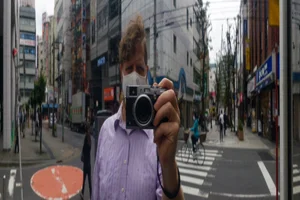
Tokyo Forgery Street Photographer Jeff Austin on the streets of Tokyo
Is Street Photography Legal? Do You Need Permission?
In most countries — including the United States and the United Kingdom — it is legal to photograph people in public places without their permission, because there's no reasonable expectation of privacy in public. The complications start when you publish: selling an image commercially usually needs a model release, and some countries (notably Germany, France, and Italy) have stricter privacy rules. This is general information, not legal advice — laws vary, so check the rules where you actually shoot.
With that said, here's the fuller picture.
The general rule: public space is fair game:
In the US and UK, if you're standing in a public place, you can photograph what you can see — including people — without asking. There's no permission requirement and no permit. It's the legal foundation on which the entire genre rests. A handful of narrow exceptions exist (in the UK, for instance, certain military sites), but for ordinary streets, parks, and squares, you're on solid ground.
The real catch is what you do with the photo.
Taking the picture and using it are two different questions, and this is where beginners get tripped up.
Editorial, artistic, and personal use — showing work in a gallery, a book, your portfolio, or in a news or documentary context — is generally permitted in most Western jurisdictions.
Commercial use — using someone's recognizable face to sell or advertise a product — typically requires a signed model release. Without one, the person can have a legitimate claim. If you're shooting for art and editorial, you usually don't need releases; the moment money and advertising come into play, the rules change.
Where it's stricter
Privacy law isn't uniform, and a few places deserve extra care:
Germany and France have stronger personal privacy and image rights protections — be cautious about publishing identifiable individuals, especially commercially.
- Italy prohibits photographing children in public without a parent or guardian's permission.
- The EU more broadly: GDPR generally doesn't stop you from taking photos, and carves out artistic and journalistic use, but publishing identifiable people with additional identifying data can raise issues.
- Japan — my home ground — is instructive: it's legal to photograph in public, but publishing a clearly identifiable face can become a civil privacy matter, and the cultural etiquette is stricter than the law. (More on the etiquette of how to approach strangers.
Private property is a different thing
Shopping malls, private plazas, some station concourses, and museums are private property with public access, and the owner can prohibit photography. A posted "No Photography" sign is binding. Public street: your call. Private space: their rules.
Shooting in Japan, expect these rules to be enforced. Initially, very politely, followed by a second polite request. However, once the police are called, the matter becomes serious. Even for minor infractions. Disturbing the peace is frowned upon and will be addressed. It is best to be humble, smile and move on to the next possibility, of which Tokyo has an abundance.
The law is the floor, not the ceiling
Here's where I'll add the part that the legal guides leave out. "Legal" and "right" are not the same word. You can lawfully photograph almost anyone in public — and still owe them basic decency. I don't shoot people at their most vulnerable to make myself look edgy, and I respect a genuine "no" even when I don't have to. Shooting with that kind of respect isn't a legal requirement; it's what separates a street photographer from a nuisance with a camera. If the fear of all this is what's holding you back, start by getting past the fear, and if you're brand new, here's what street photography actually is.
Knowing exactly where the legal and ethical lines sit is a huge part of shooting with confidence instead of guilt — and it's one of the first things we settle in a one-on-one Tokyo Forgeries masterclass, out on real streets, with real people.
(Again: general information, not legal advice. When in doubt about commercial use or a specific country, consult a qualified professional.)
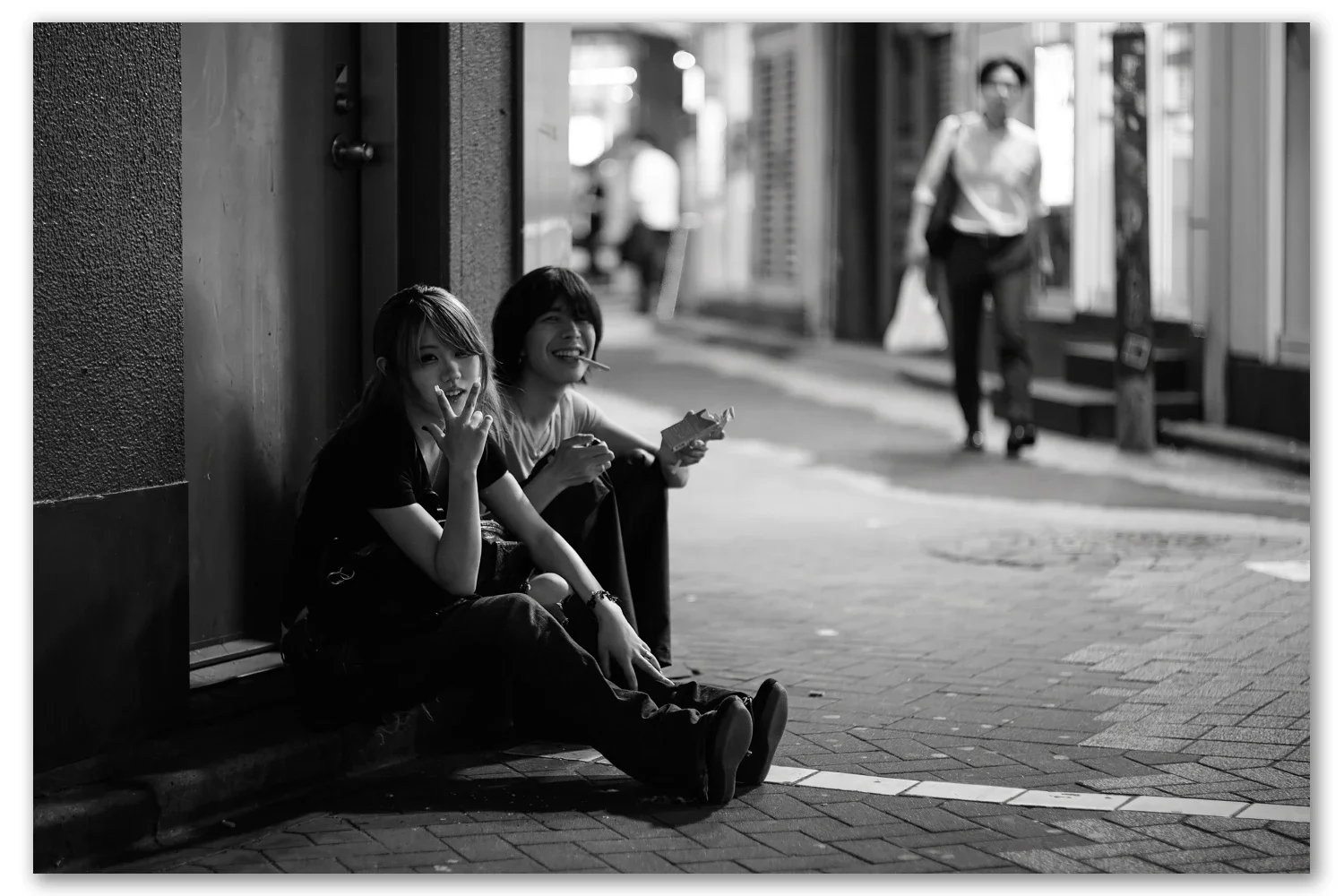
Shibuya Back Street, young couple enjoying a cigarette break.
Is street photography legal?
In most countries, including the United States and the United Kingdom, it is legal to photograph people in public places without their permission, because there is no reasonable expectation of privacy in public. Commercial publishing and stricter laws in some countries are the main exceptions. This is general information, not legal advice.
Do you need permission to photograph someone in public?
Generally no. In public spaces in countries like the US and UK, you can photograph people without asking. Permission and a model release are usually required only when you use a recognizable person's image commercially.
Do you need a model release for street photography?
Not for editorial, artistic, or personal use in most Western countries. You typically need a signed model release only when using someone's recognizable likeness for commercial or advertising purposes.
Is street photography legal in Japan?
Photographing in public places is legal in Japan, but publishing a clearly identifiable person's face can raise civil privacy issues, and cultural etiquette around photographing strangers is stricter than the law requires. When in doubt, ask, and shoot respectfully.
The streets never look the same way twice. I’m curious—how does this side of Tokyo hit you? Drop a comment below.
I live on flat whites and shutter clicks. If you’ve found value in these shots, toss a coffee my way to keep the sensor humming.
For those who want to skip the tourist traps and shoot the real Tokyo, my calendar is open for workshops. Explore the Masterclass here or email me at jeff@tokyoforgeries.com.
See you in the shadows.
Tokyo Forgeries is an evolving archive of Tokyo street photography and vintage-lens deep dives. We spend 30 days in every ward, using mid-century brass and glass to capture the city’s soul. This is a roadmap for the active pursuit of craft—documented through the geography of Tokyo and the character of its light.