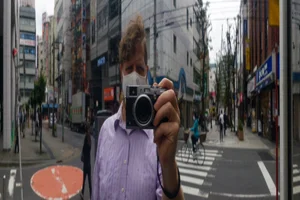
How to Approach Strangers (and What to Say If Confronted)
How to Approach Strangers in Street Photography
To approach a stranger for a photo, keep it simple and warm: make eye contact, smile, and either gesture toward your camera or say a short, honest line — "You look great, I'm working on a street portrait project, may I?" Most people say yes and are flattered. If someone objects, stay calm, explain what you're doing, and respect a "no." Confidence comes from doing it a few times, not from a script.
Here's how to do it well.
Most street photography is candid — but asking is a skill worth having
A lot of the time, you won't approach anyone at all; you'll shoot candidly (that's a separate skill, and beating the fear comes first). But the street portrait — asking, connecting, shooting — is one of the fastest ways to build nerve and some of the most rewarding work you'll make. Knowing how to ask turns strangers from obstacles into collaborators.
The approach that works
Lead with warmth, not apology. Confidence reads as respect; nervous skulking reads as suspicious. Smile first.
Be honest and specific. "I'm a street photographer and the light on you here is wonderful — may I take a quick portrait?" Specific compliments land; generic ones sound like a line.
Use the language barrier to your advantage abroad. A smile and a gesture toward the camera communicate everything. In Japan, a small bow and a friendly point work when words won't.
Shoot quickly, then thank them. Don't make it a session. Two or three frames, a genuine thank-you, and move on. People remember the courtesy.
Take "no" gracefully. A cheerful "no problem, thank you!" leaves the street warmer for the next photographer. Never argue.
The Japan layer
Where I shoot, etiquette matters more than the law allows. Many people are uncomfortable being photographed by a stranger, so I ask more often than I would elsewhere, I never corner anyone, and I read the room before I raise a camera. The respect isn't a constraint on the work — it is the work. (The legal basics, country by country, are in Is Street Photography Legal.)
You don't have to be a ninja, but don't go out of your way to bother people either. This is true the world over, but especially so in Japan. One of the cardinal sins is to be a nuisance. It is very difficult for someone in Tokyo to call you out, as that can make them a nuisance to others observing as well. I know this doesn’t make any sense, telling someone who is loud to be quiet requires you to be loud as well. It is shameful to be that person in this culture. Causing someone to be uncomfortable being photographed is strike one; when they have to speak with you about it, it is strike two.
What to say if someone confronts you
Stay calm — most confrontations are really just confusion. Introduce yourself, explain plainly ("I'm a street photographer, I liked _______"), and add a compliment and say thank you. Smile, and keep walking. Don’t rush or exhale audibly as you leave; assume they are watching you.
Conversely, ask for permission to take another image. It may not be what you are trying to shoot, but it’s not going to hurt to grab a quick portrait of them. After a couple of frames, I will ask them a question or two, a simple conversation. If you were drawn to their wardrobe, ask them where they bought it. While they talk, keep shooting, and just like that, you are back to candid images.
The legality of street photography in Tokyo
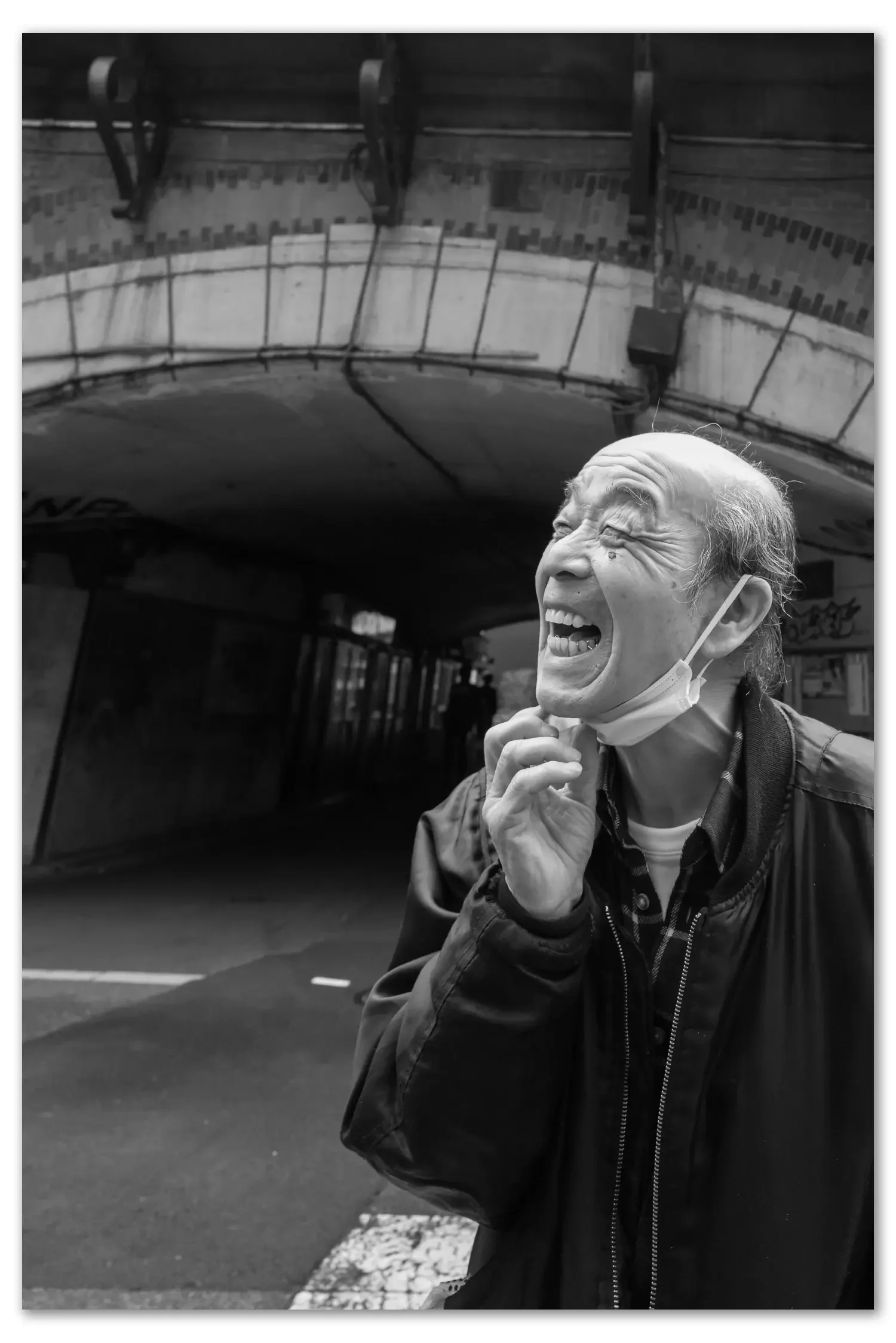
Avoid making your image's subject the aggressor; if your instinct tells you to show them, do it. It will de-escalate the situation. 99% of the time I have done this, they always end up smiling. They now appreciate you, not fear you.
If they ask you to delete the photo, delete it without a fight; one frame is never worth someone's distress. A defensive reaction escalates; a warm one almost always defuses.
This is exactly the kind of thing that's hard to rehearse alone and easy to learn with someone beside you — we practice real approaches and interactions in a one-on-one Tokyo Forgeries masterclass. (New here? Start with what street photography is.
How do you approach strangers in street photography?
Make eye contact, smile, and either gesture toward your camera or say a short honest line such as 'You look great, I'm working on a street portrait project, may I?' Shoot two or three quick frames, thank them, and move on. Most people say yes.
What do you say when asking to photograph someone?
Be honest and specific: explain you're a street photographer and give a genuine, specific compliment, then ask permission. Specific compliments feel sincere; generic ones sound like a line.
What should you do if someone confronts you for taking their photo?
Stay calm, introduce yourself, explain plainly what you're doing, and offer a compliment. If they ask you to delete the photo, delete it without arguing. A warm response almost always defuses the situation.
The streets never look the same way twice. I’m curious—how does this side of Tokyo hit you? Drop a comment below.
I live on flat whites and shutter clicks. If you’ve found value in these shots, toss a coffee my way to keep the sensor humming.
See you in the shadows.
Tokyo Forgeries is an evolving archive of Tokyo street photography and vintage-lens deep dives. We spend 30 days in every ward, using mid-century brass and glass to capture the city’s soul. This is a roadmap for the active pursuit of craft—documented through the geography of Tokyo and the character of its light.