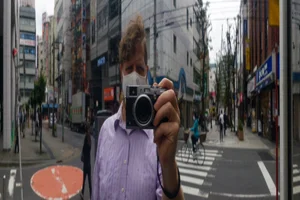
Vintage Nikkor Auto N-C 24mm First Impressions
Nikkor Auto N-C 24mm: First shoot
New lenses are always an exciting time for any photographer. It is very much like Christmas morning for a child who anticipates a good year of presents under the tree. I recently spent the morning in Akihabara browsing used camera stores, only to find two of the lenses on my camera gear list. The 24 mm Auto NC f/2.8 and the 85mm Auto H f/1.8. Both good copies and reasonably priced. Merry Christmas to me.
Due to previous commitments and the crazy schedule of a father of 3 who technically works from home, I could not field-test either lens for 2 days. Yesterday was the day. I have an ongoing project in Ueno that requires a little more work, which provided a great location to test these lenses.
I love the 85mm focal length and felt I would be drawn to it, but the opposite was true. Once I mounted the 24 mm Auto NC f/2.8, it was love at first sight. I haven’t shot very much wide-angle in several years, but this lens felt like putting on your favourite pair of jeans. They just fit and make you immediately comfortable.
I visited a few of my go-to spots in Ueno Market, thinking it makes for an easy transition with a new lens. Get a few good shots with a slightly different vantage point to see how this lens works. What I found was that it transformed those locations into something completely different. New angles and new ideas sprang forth quicker than I could explore them with the camera.
Nikkor Auto N-C 24mm: Performance
Sharpness, colour, feel, vintage quirks, contrast, and overall rendering were all above board. It was very much what my research suggested it would be: a very strong performer, with good control over distortion. I was satisfied with all of the above.
What surprised me was how it changed the way I shoot. I have a propensity to shoot street photography, nearly all in portrait orientation. Not just with portrait lenses, but all the way through my line-up, 50 mm, 40 mm, 28 mm. With the 24mm Nikkor, 50% of my selected images were in landscape. That number jumped to 75% of the processed images in landscape. This is a major departure of process for me.
This departure went unnoticed while I shot in Ueno Market. It was all very organic in practice. The sun was out, which is how I always choose to shoot the market. I was there earlier than most people and therefore didn’t get closer. The frame simply rotated 90 degrees. It wasn’t a conscious decision; it was just what the moment demanded.
I concede this is not a magic lens that transformed the way I shoot, and that any 24mm lens could have had the same effect. That said, I do feel a strong connection with this lens and look forward to shooting with it quite a bit this year.


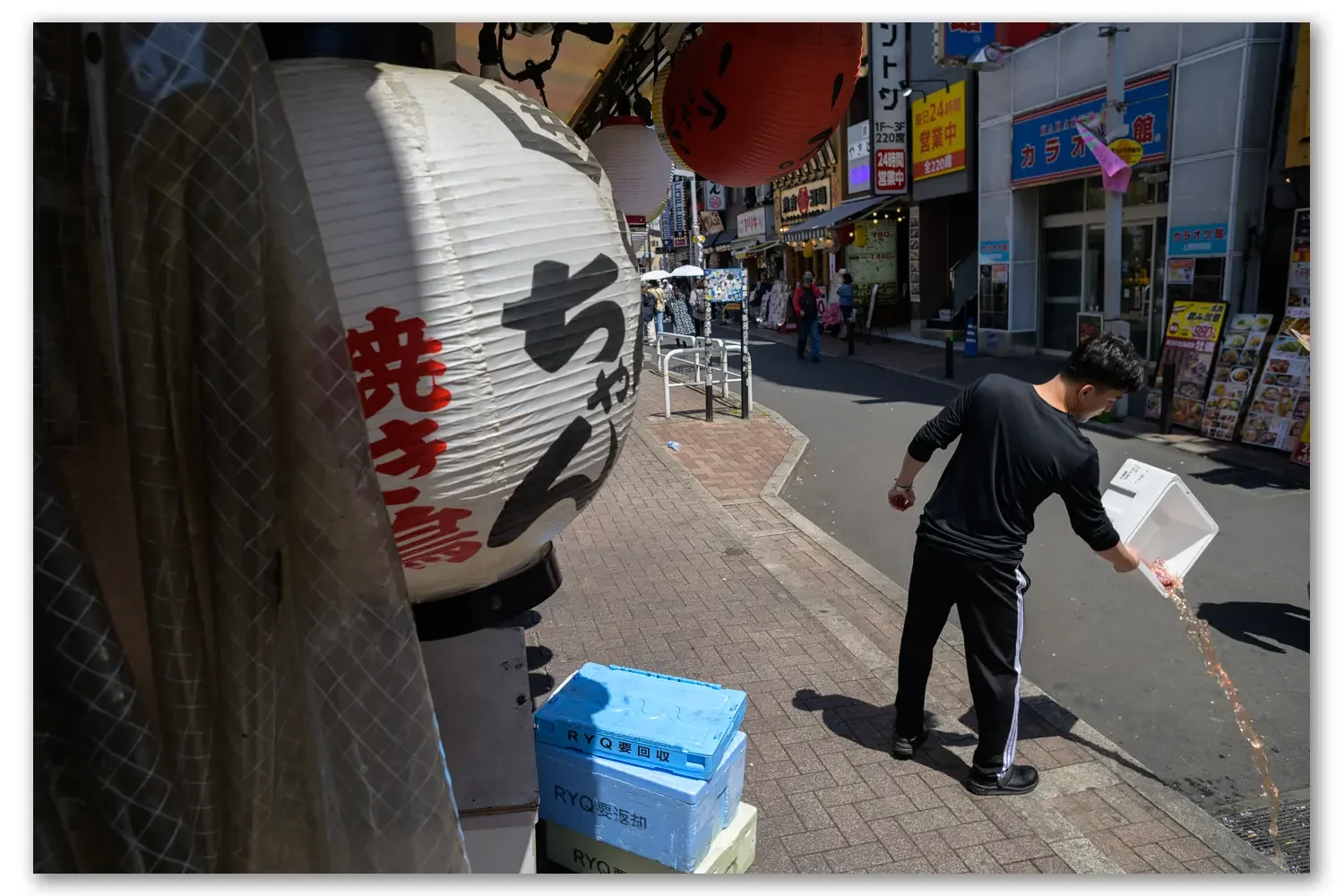
The Nikkor-N.C Auto 24mm f/2.8: Its history, pedigree, and performance
The Nikkor-N.C Auto 24mm f/2.8 isn't just a lens; it’s a piece of optical alchemy from a time when Nikon was transitioning from "solid" to "legendary." For the streets of Tokyo, where the light is a chaotic mix of sodium vapour, LED, and deep shadows, this lens offers a specific kind of selective truth.
The Pedigree of a Pioneer
Released in the early 1970s, the "N.C" variant represents a critical turning point. The "N" denotes the seven-element formula (Septem), while the "C" signifies the arrival of multi-coating. Before this, wide-angle lenses were notoriously prone to "veiling glare"—a milky wash that kills contrast. In a city built on neon and glass like Tokyo, multi-coating was the difference between a usable frame and a ruined one.
But the real soul of this lens lies in the Close Range Correction (CRC) system. This was the first lens in history to utilize floating elements, a design by Yoshiyuki Shimizu that ensured sharpness remained consistent from infinity down to its 0.3m minimum focus. This technical feat transformed the 24mm from a mere "landscape lens" into a tool for intimate, high-stakes street photography.
Performance: Grit with Grace
While modern 24mm glass aims for clinical flatness, the N.C renders with a three-dimensional weight.
The Micro-Contrast: It possesses a biting center sharpness that preserves the "tactile honesty" of textures—be it a rain-slicked sidewalk in Shinjuku or the grain of a salaryman's suit.
The Fall-off: The corners exhibit a gentle vintage vignette and a slight softening. For a "Tokyo Forgery," this is ideal; it naturally frames the subject, preventing the eye from wandering out of the edges of the story.
The Colour: There is a subtle amber warmth to the glass. It tames the harsh, clinical blues of modern digital sensors, giving your files a cinematic, "captured memory" aesthetic straight out of the camera.
Why 24mm is the Tokyo Standard
Tokyo is a city of impossible layers—claustrophobic alleys that open into skyscraper canyons. A 35mm often feels too polite, failing to capture the scale of the architecture, while a 21mm can feel too distorted, pushing the human element too far away.
The 24mm frame is the sweet spot. It provides enough width to capture the "cracked vibrance" of the city’s skyline while remaining tight enough to maintain a sense of presence. Because of the CRC system, you can step into a subject’s personal space—getting close enough to see the "life in flux"—without losing the context of the street behind them.
It creates an immersive perspective that says, "I was standing right here," rather than "I was watching from across the street."
In a city that often feels like a beautiful fake, the Nikkor-N.C 24mm f/2.8 provides the weight and optical character needed to find something real.
The streets never look the same way twice. I’m curious—how does this side of Tokyo hit you? Drop a comment below.
I live on flat whites and shutter clicks. If you’ve found value in these shots, toss a coffee my way to keep the sensor humming.
For those who want to skip the tourist traps and shoot the real Tokyo, my calendar is open for workshops. Explore the Masterclass here or email me at jeff@tokyoforgeries.com.
See you in the shadows."
Tokyo Forgeries is an evolving archive of Tokyo street photography and vintage-lens deep dives. We spend 30 days in every ward, using mid-century brass and glass to capture the city’s soul. This is a roadmap for the active pursuit of craft—documented through the geography of Tokyo and the character of its light.