Street Photography Hunter or Fisher?
Ask a street photographer how they work, and they will describe their method without knowing they are describing themselves. The hunter who can't stay still. The fisher who builds the frame before anyone walks into it. The discipline you default to is not a technique. It is a temperament.
There are two fundamentally different relationships with the city. One requires that you move through it. The other requires that you let it move through you. Both produce photographs. Both produce exhaustion. They ask entirely different things.
The Hunt
Hunting is kinetic. You move, you cover ground, you trust instinct over patience. The hunter reads the street in motion — the angle of light two blocks ahead, the crowd thinning around a corner, the fraction-of-a-second geometry that only exists if you're already walking toward it. It is a physical practice. The city becomes a body of information, and you are moving through it at speed, processing continuously, never quite arriving because arriving means stopping and stopping is not the discipline.
The risk is that you're always slightly too late, or slightly too early. The decisive moment, when you're hunting, has a way of landing in the half-second before the frame. You round the corner, and the shadow has already shifted, the figure has already passed, the thing you would have made is now a memory you can't photograph. You learn to live with that. You learn, over time, to read faster — to see the frame assembling while it's still assembling, to fire before certainty arrives.
The reward is volume and variety. A hunting day accumulates. You cover ground, you change neighbourhoods, you move through light that shifts from morning to afternoon to that particular golden decay that Tokyo does in the hour before the trains fill up. The unexpected finds you because you keep placing yourself in new positions. You don't plan what you find; you find it by moving.
The Fish
Fishing is the opposite discipline. You find a wall, a doorway, a patch of afternoon light falling at the right angle onto the right surface, and you wait. The scene comes to you. You have pre-visualized the frame — the geometry is already there, the light is already doing what it will do — and you're simply waiting for a subject to walk into what you've already seen.
Cartier-Bresson fished. So did Meyerowitz. There are images in the archive that are, more than anything, the product of patience — a photographer standing in one place long enough for the world to organize itself into a frame. The wall doesn't move. The shadow falls at the same angle every afternoon. What changes is the person who walks through it, the coat they're wearing, the angle of their head, the rhythm of their step. You're waiting for the variable to arrive inside the fixed.
The risk is patience itself. You might wait an hour for nothing. The light changes, the crowd thins, the moment you were waiting for never assembles — and you have to accept that and move on, or wait longer, which is its own act of discipline. Most photographers are bad at waiting. The instinct to move is strong. Standing still in a city that never stops feels like a form of resistance that the city is winning.
The reward is intentionality. When it works, the frame is exactly what you saw in your mind before the shutter fired. There is a particular satisfaction in that — a confirmation not just of the image but of your ability to read a space before the image exists. You saw it. You waited. It came.
What the Lens Does
The vintage lens changes the equation slightly. Slower to focus, a narrower margin for error, a longer throw between near and far — it is not built for the hunter's reflexes. Modern autofocus is designed for pursuit. The vintage lens is designed for something else, something closer to the act of drawing than the act of catching.
What it does, gradually, is pull a hunter toward fishing instincts. You start to pre-see rather than react. You learn the distances your lens is comfortable at, and you begin to move through the city holding those distances in your body, placing yourself where the geometry is right before the subject arrives. The imprecision of the glass becomes a kind of instruction. Slow down. Find the frame. Wait.
There is a technique that lives at the intersection of both disciplines: zone focusing. Set the aperture to f/8, fix the focus at two meters, and stop adjusting. The lens is no longer a variable. You have made the patience decision in advance — committed to a geometry, a distance, a field of acceptable sharpness — and now you move. The depth of field becomes your net. You work within it.
Zone focusing on the 85mm is not the same as on a 28mm or 35mm, where the depth of field at f/8 is forgiving enough to be almost careless. At 85mm, two meters is specific. You feel it in your body — the distance from your chest to an outstretched arm, roughly the width of a narrow alley, close enough to read the texture of a coat. You begin to move through crowds with that measurement as a kind of internal sonar, placing yourself at exactly the distance where the glass will render what you want it to render. The pre-visualization happens at the level of proximity, not just composition.
It is hunting with a fishing mind. The kinetics are still there — you're covering ground, staying in motion, trusting the accumulation. But the stillness is built into the lens itself. You've already made the choice the fisher makes before you took a single step.
A Day of Hunting
I spent the day in constant motion. I did not stop for more than a few moments while shooting. From Akabane down through Ikebukuro — the west side first, then east — to Takadanobaba, then Kagurazaka, and finally Nakano. Six neighbourhoods, one continuous arc through the city, moving without agenda other than the next frame.
It was mentally exhausting in a way that fishing never is. Hunting requires sustained alertness with no natural pause. There is no moment of stillness inside it — every stillness feels like a missed opportunity, every corner turned is a new field of information the mind has to process immediately. By the time I reached Nakano, I was on the other side of something. Not empty exactly, but depleted in a specific way, the way you feel after a long conversation that required you to be completely present the entire time.
I tend to fish more than I hunt. Standing in one place, holding a frame in mind, waiting — that is closer to my nature. The patience required is not comfortable, but it is familiar. Yesterday was an experiment in the other direction, a deliberate choice to stay kinetic and trust the accumulation.
What I found is that hunting produces a different kind of seeing. Not better. Not worse. The images from a hunting day have a quality of encounter — they were found, not waited for. There is a slight breathlessness to them, a sense that the frame arrived before the plan did.
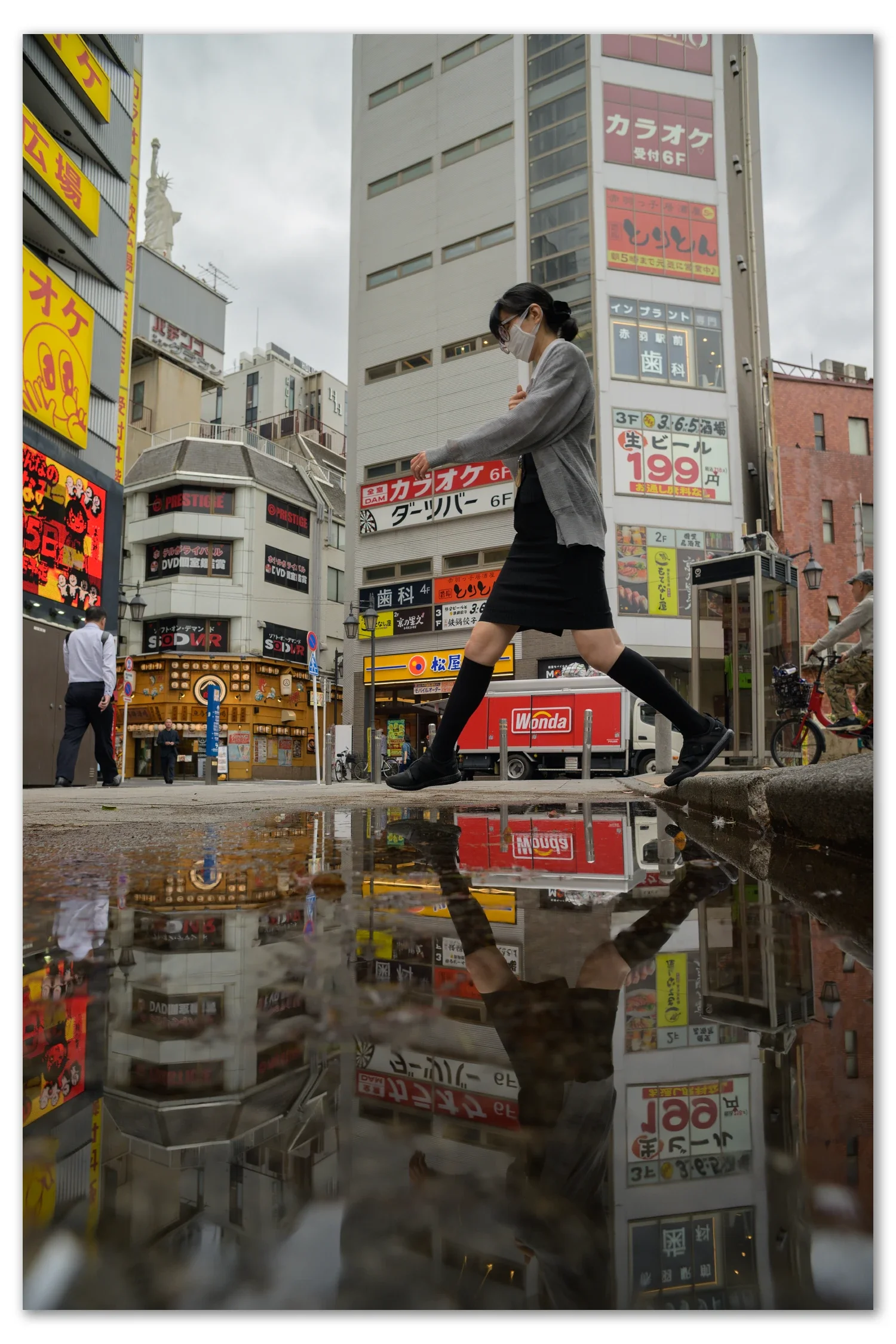
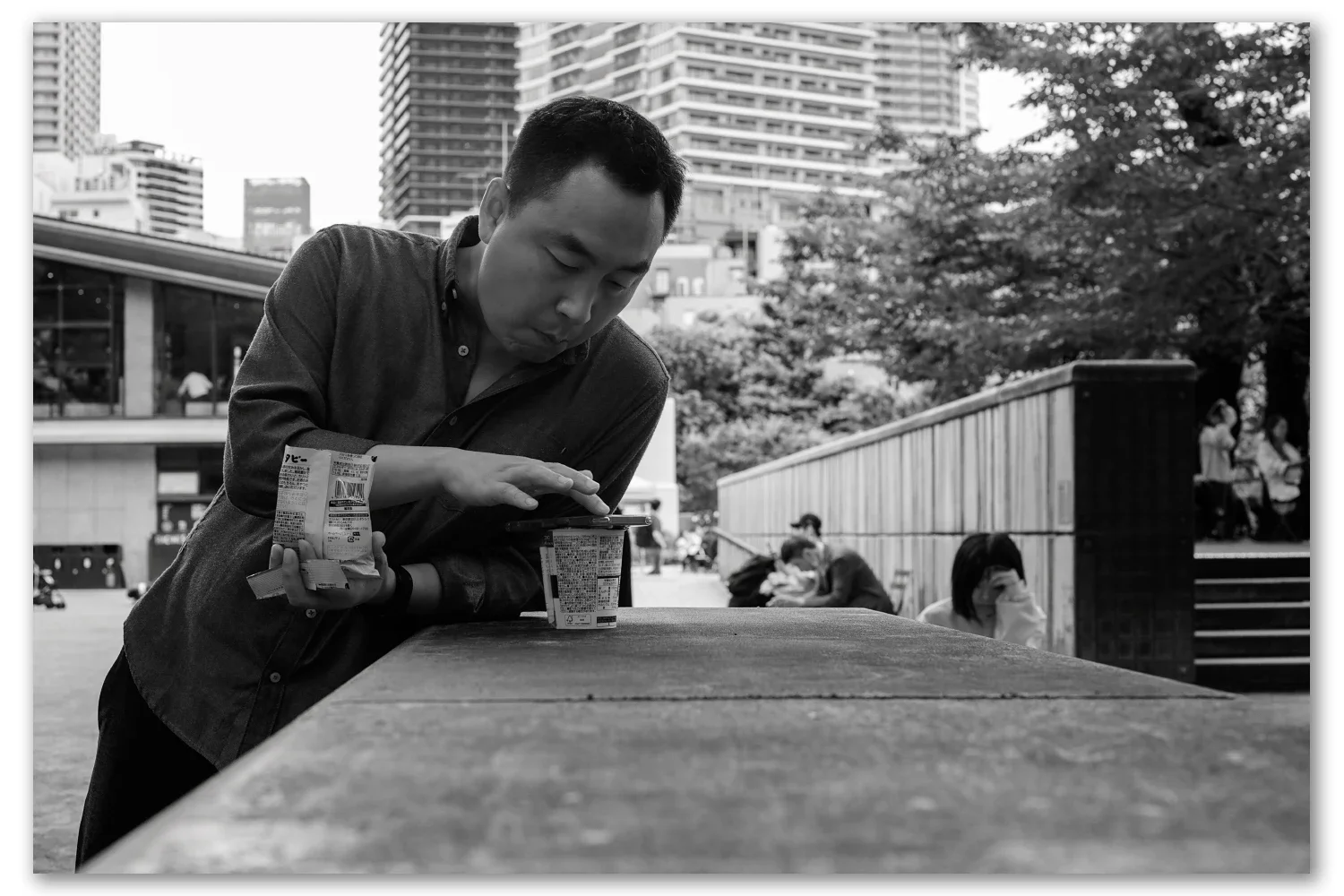
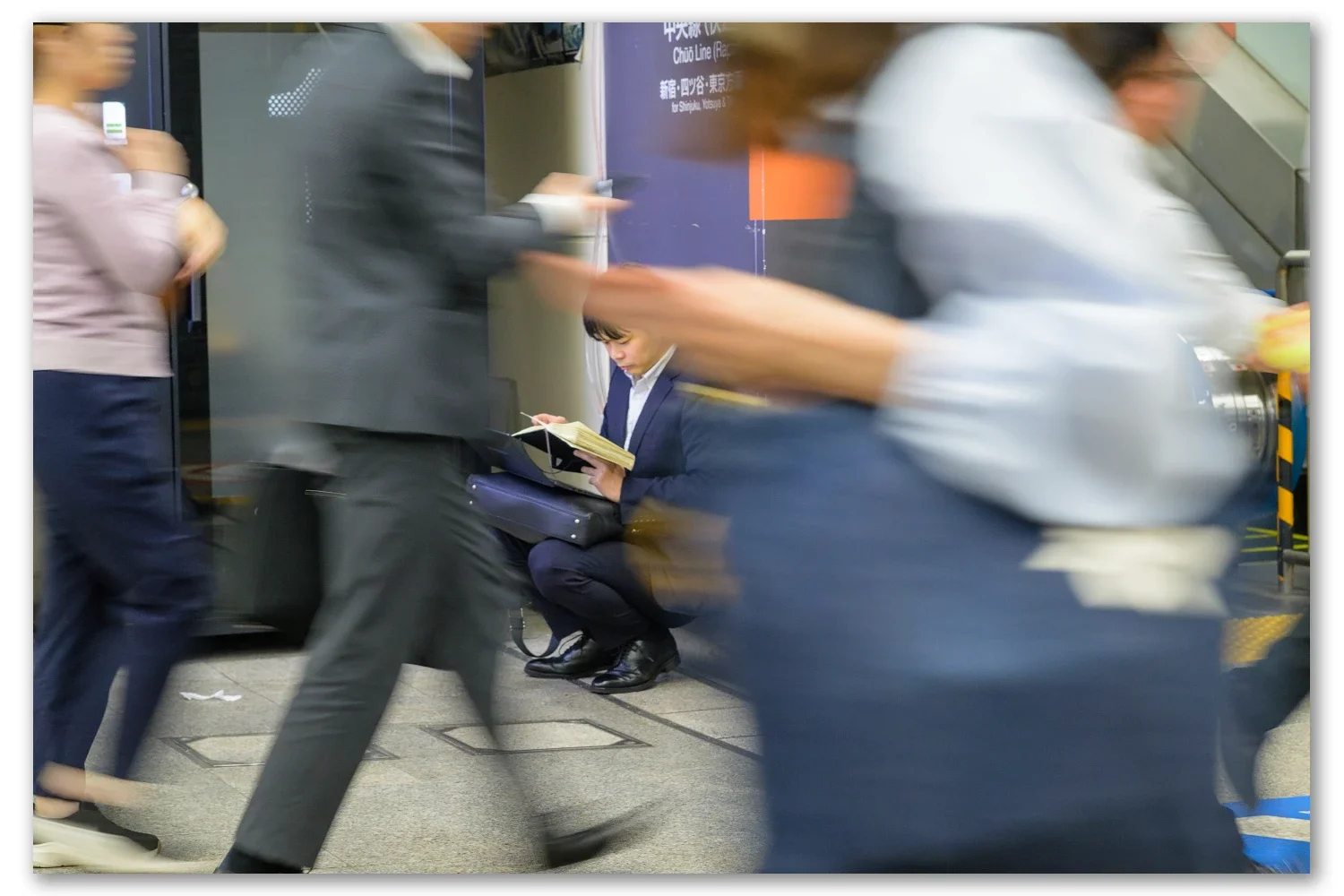
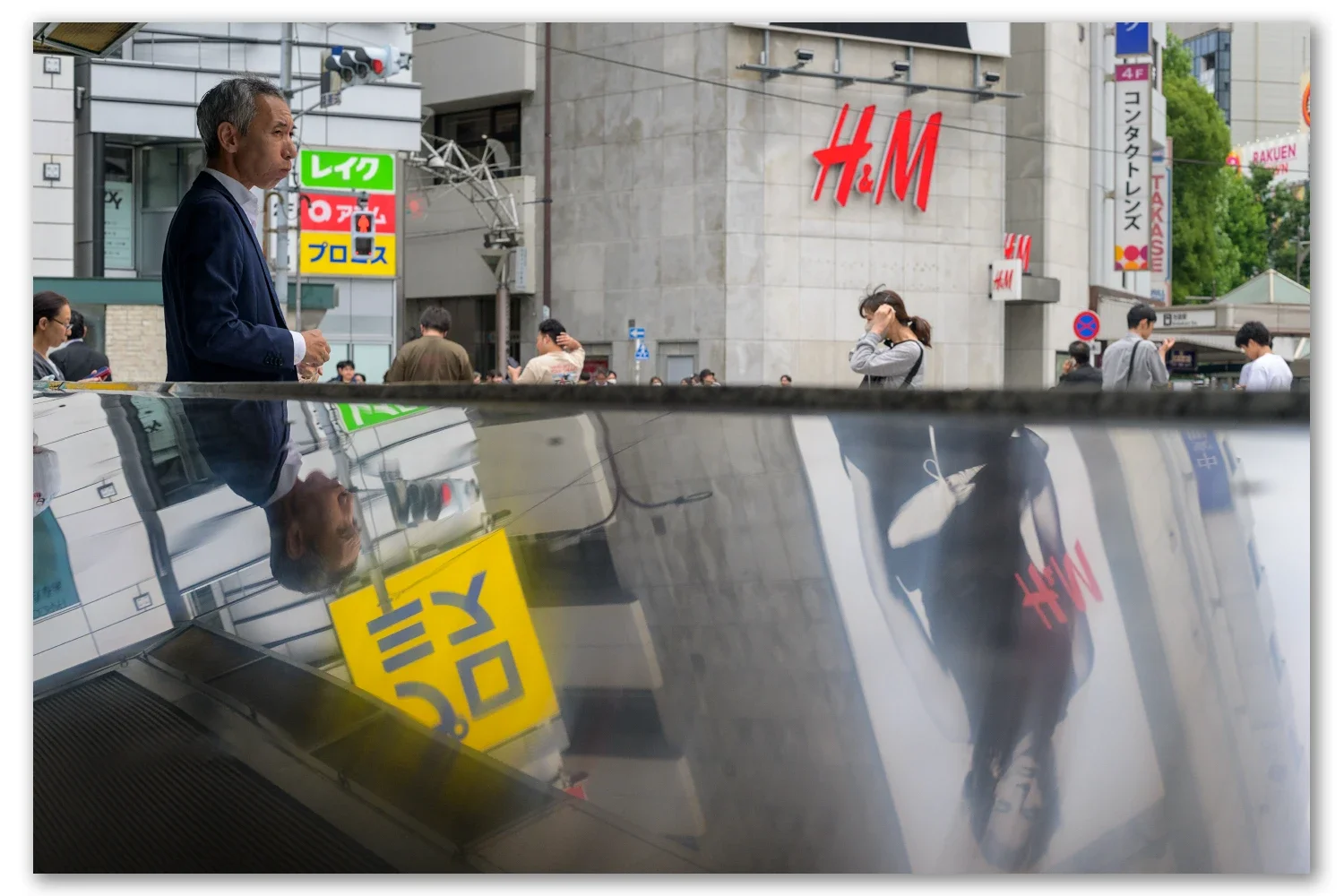
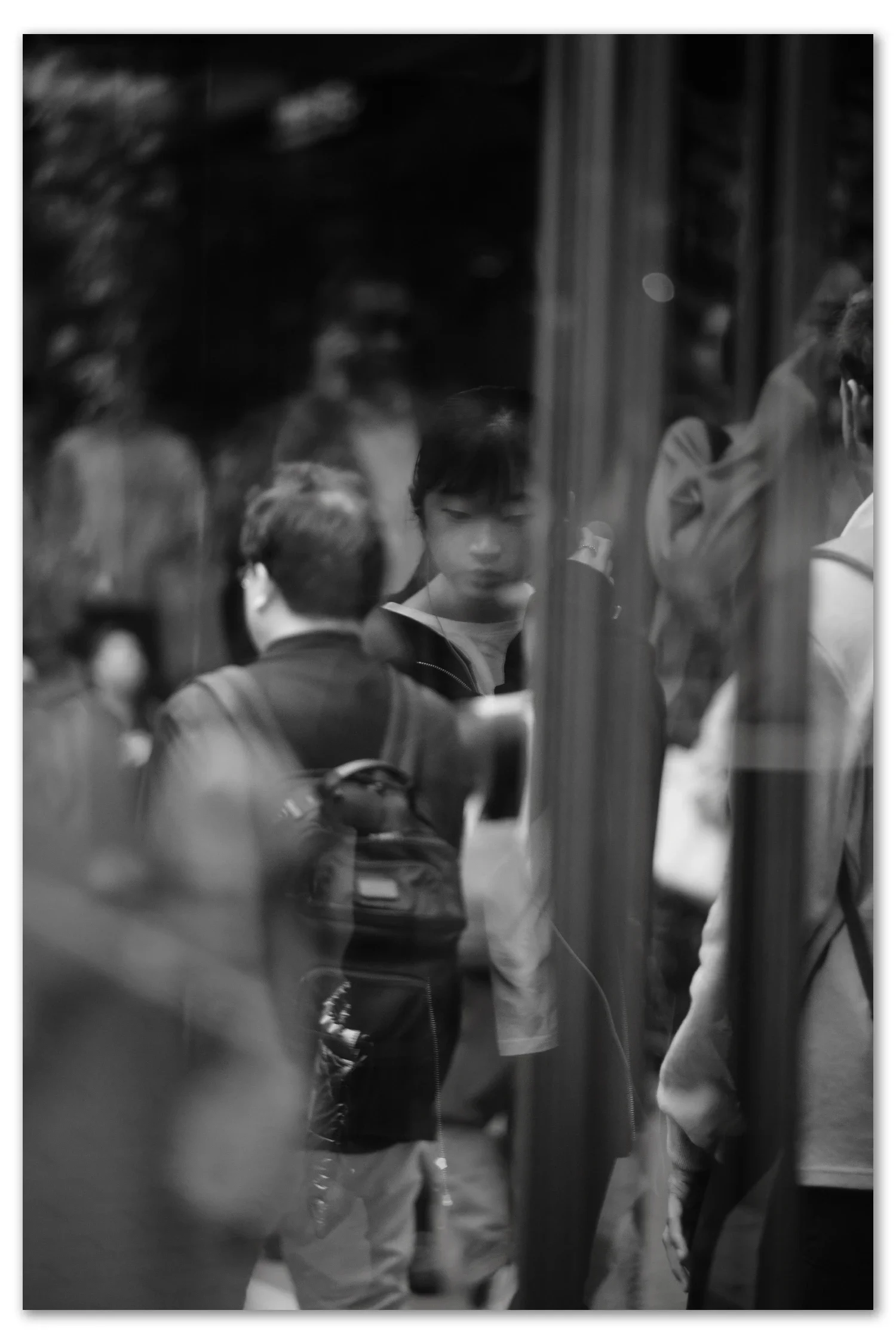
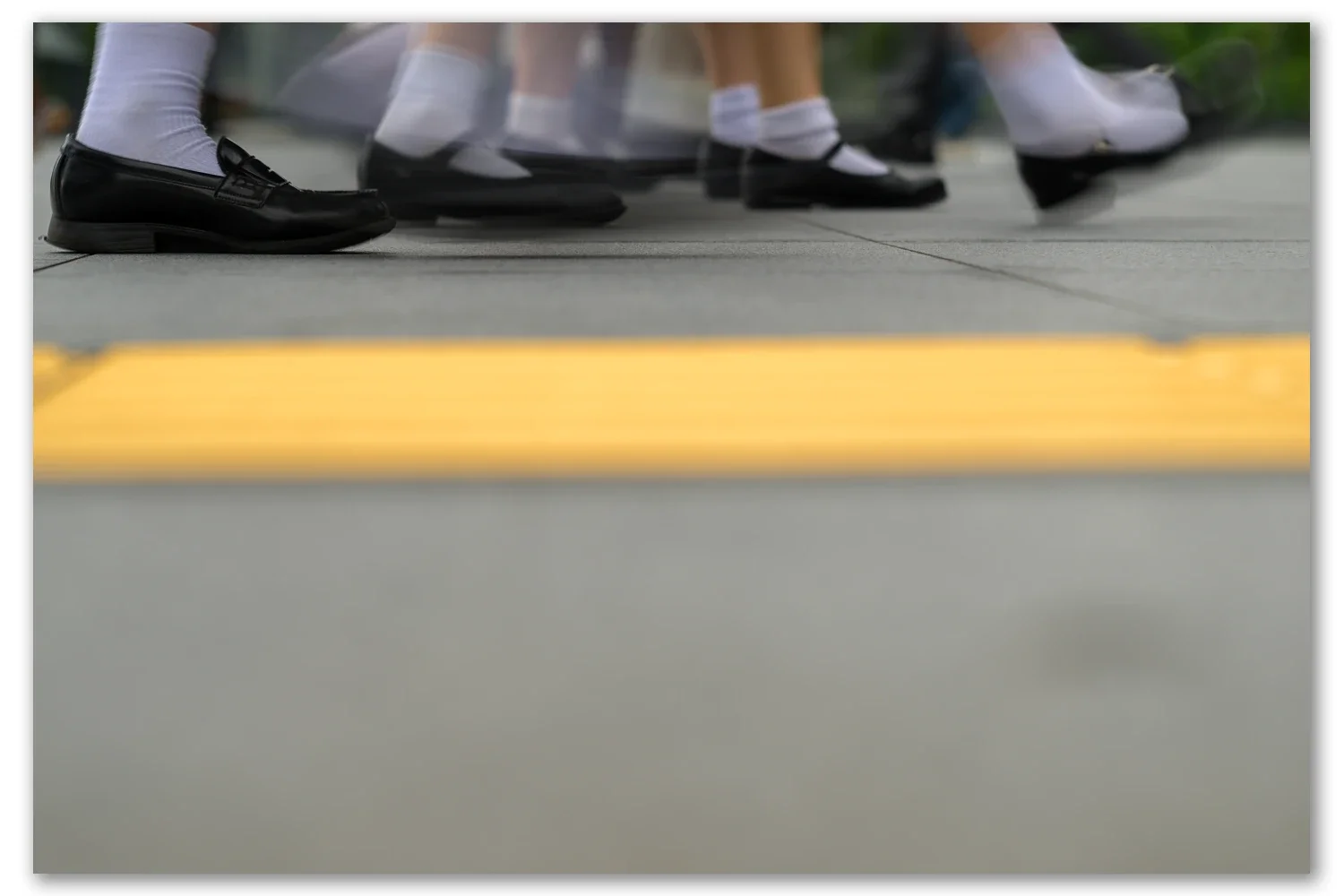
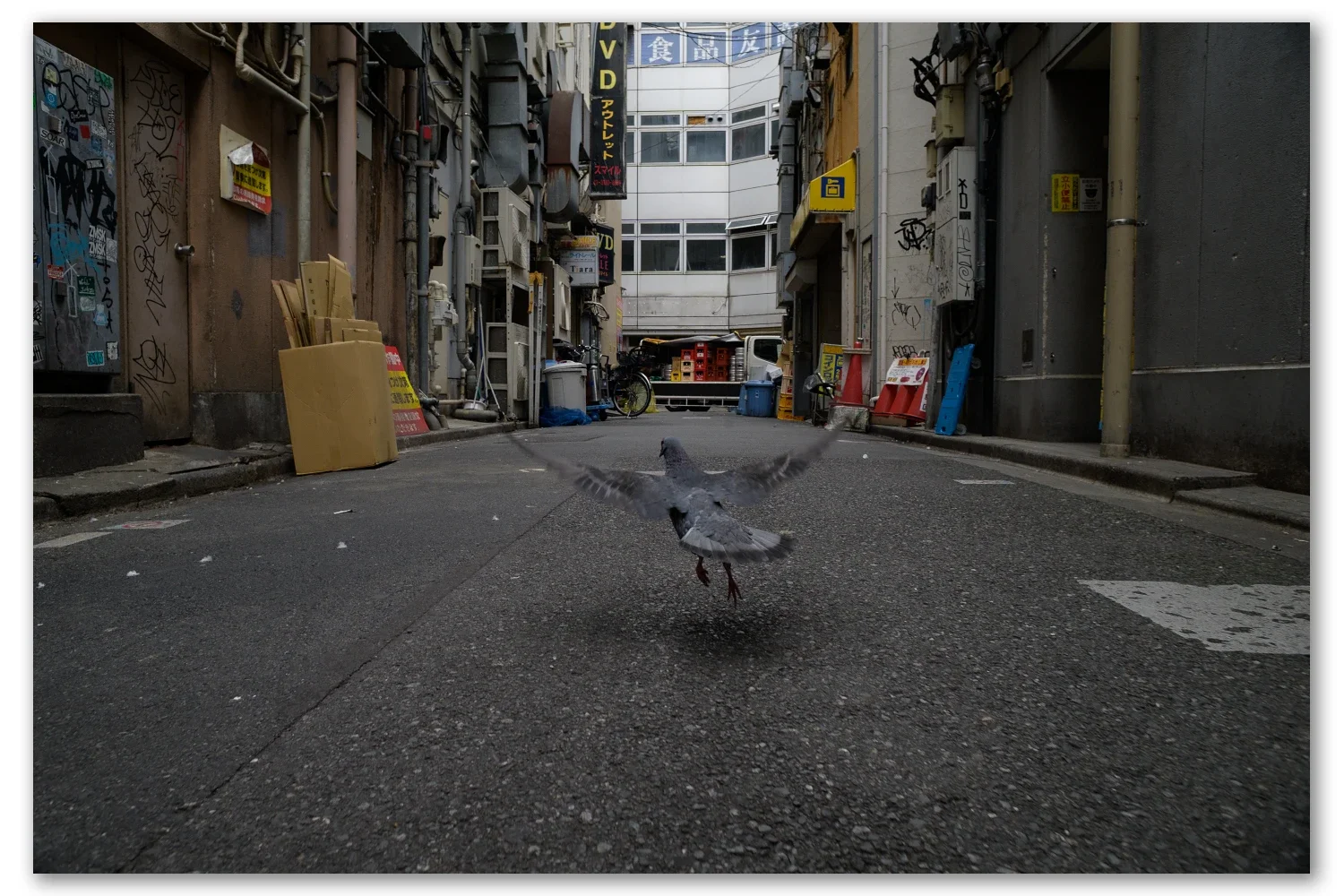
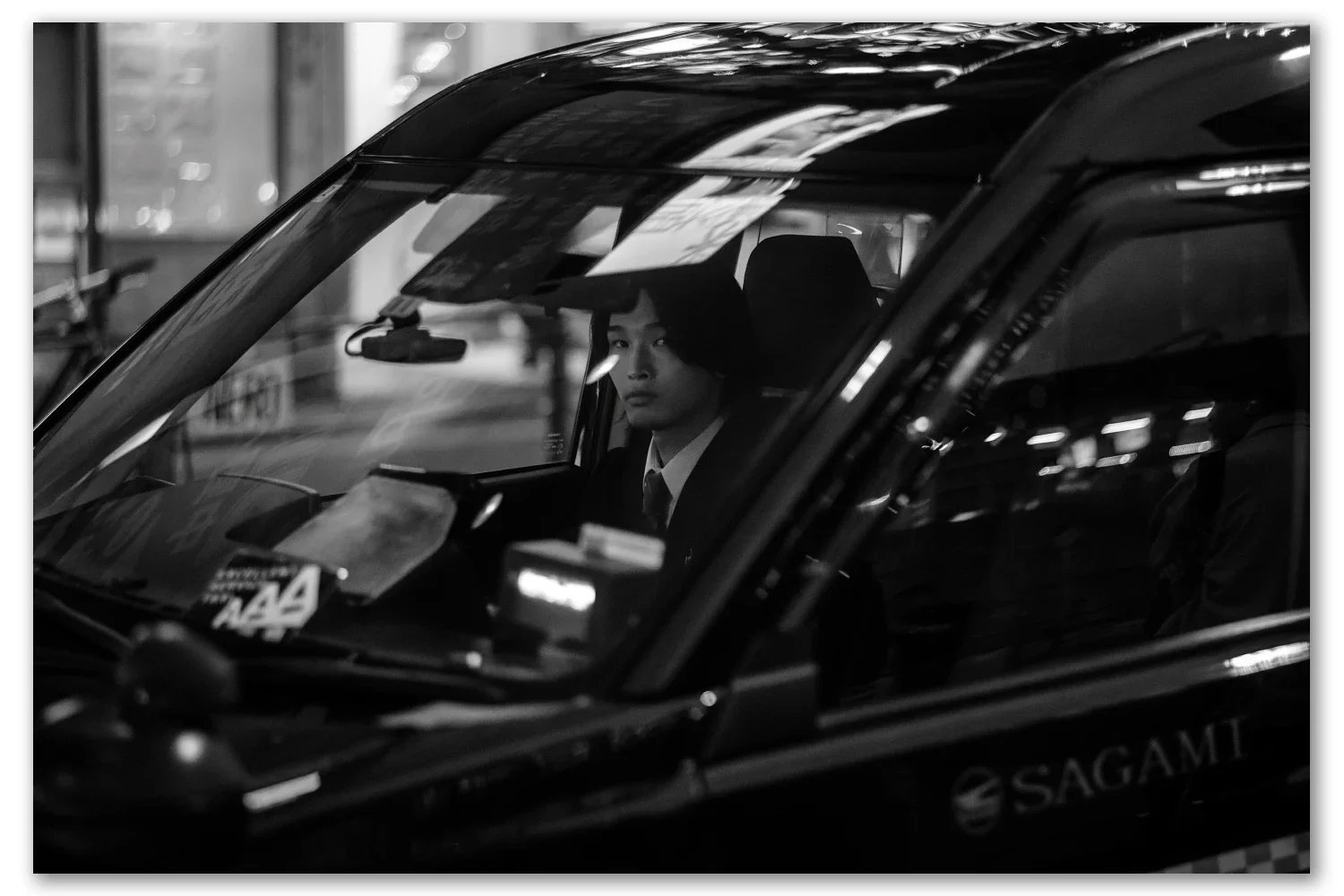
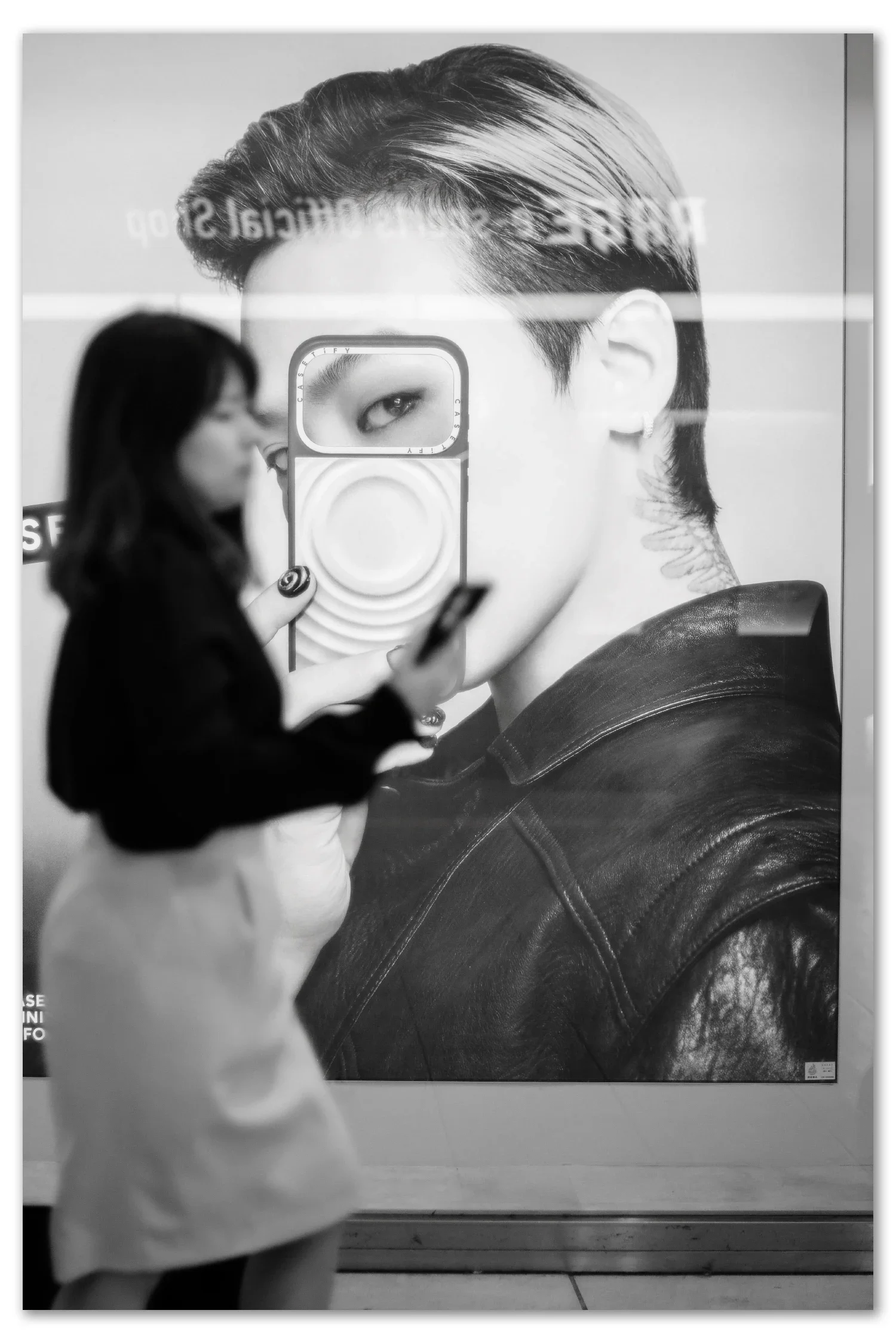
Most street photographers do both without naming it. A hunting day produces the unexpected. A fishing session produces the inevitable. The practice is not choosing between them but understanding which one the city is asking for on a given day — and which one you are capable of.
Some days the city is still. Some days it moves faster than you can. The discipline is knowing the difference before you raise the camera, and adjusting your relationship accordingly.
The frame doesn't care how it was made. It only cares that you were paying attention.
The streets never look the same way twice. I’m curious—how does this side of Tokyo hit you? Drop a comment below.
I live on flat whites and shutter clicks. If you’ve found value in these shots, toss a coffee my way to keep the sensor humming.
For those who want to skip the tourist traps and shoot the real Tokyo, my calendar is open for workshops. Explore the Masterclass here or email me at jeff@tokyoforgeries.com.
See you in the shadows."
Tokyo Forgeries is an evolving archive of Tokyo street photography and vintage-lens deep dives. We spend 30 days in every ward, using mid-century brass and glass to capture the city’s soul. This is a roadmap for the active pursuit of craft—documented through the geography of Tokyo and the character of its light.