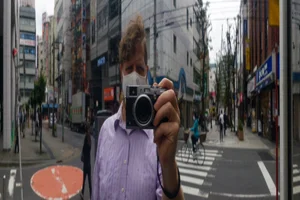
Street Photography in the Authentic Tokyo
The Authentic Tokyo
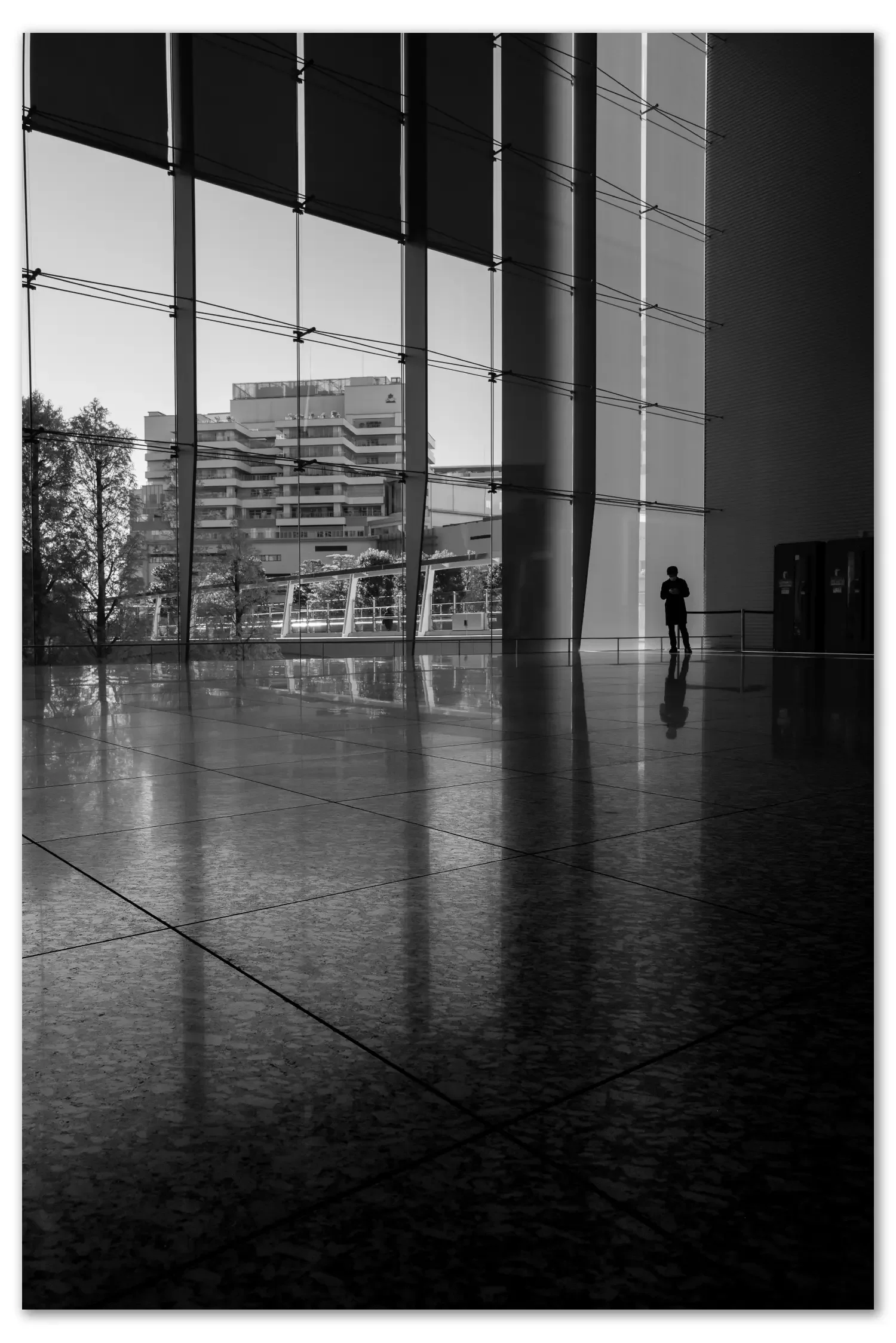
What is the authentic Tokyo? For many, it is the city's non-tourist areas. For me, all of Tokyo is the authentic Tokyo, even the overcrowded tourist traps. As a street photographer, I document life around me, even if my goal is to make a fine art image, it still documents the location. It is a record of history now, even if that is not the image's intended purpose.
I carry the above concepts in my heart every day I go out shooting street photography in the vibrant city of Tokyo. It doesn't really matter which area I'm in; I have a personal connection that goes beyond the current popularity of the location. I see Shibuya as a place where I used to work, Shinjuku as a place to socialize, and Ikebukuro, Ueno, Asakusa, Shinbashi, and Akihabara as places where I spent my early days as a street photographer.
I understand the need to find the real Tokyo; we all strive for purity and disregard the watered-down version of reality. Why would any street photographer want to shoot the lesser version of any city, especially one as rich in history as Tokyo? The uncool truth is that the watered-down version is just as much a part of this city as any other. What makes it a great photo is you. If you aim to shoot locals, then you need to go where they are. The real Tokyo is found in the periphery of those tourist hubs. As little as one train stop away, another world awaits.
Street Photography in the Real Tokyo
One of my go-to locations is Omiya. It is 20(ish) minutes by train from Shinjuku/Shibuya madness. I go here because it is often called "little Shinjuku." It is a significant station hub in its own right, with multiple Shinkansen lines and commuter and limited-express trains. Omiya boasts an ample shopping and nightlife area as well as a famous Shrine. The minor amount of gentrification mixed with significant history creates a compelling juxtaposition ideal for street photography.
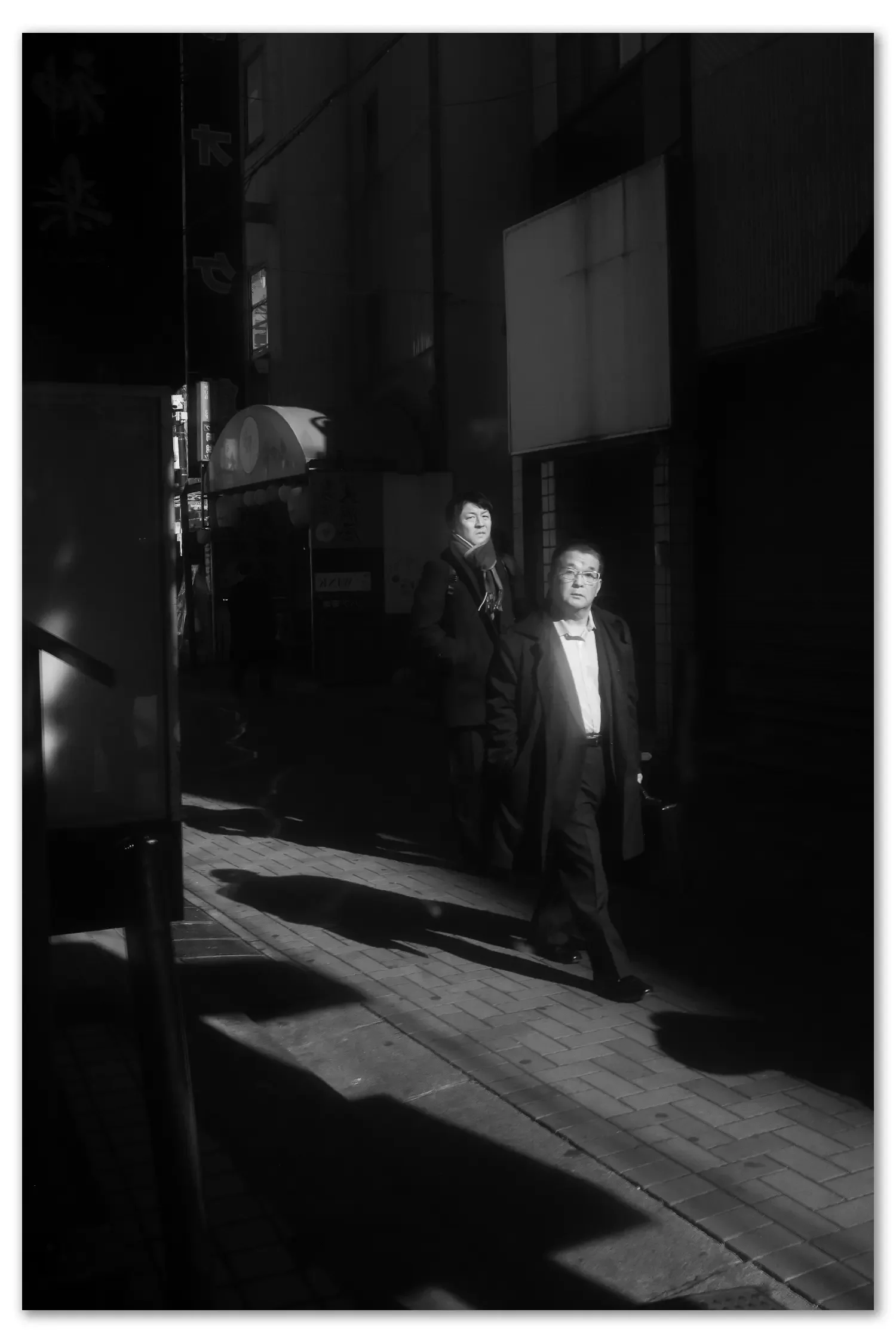
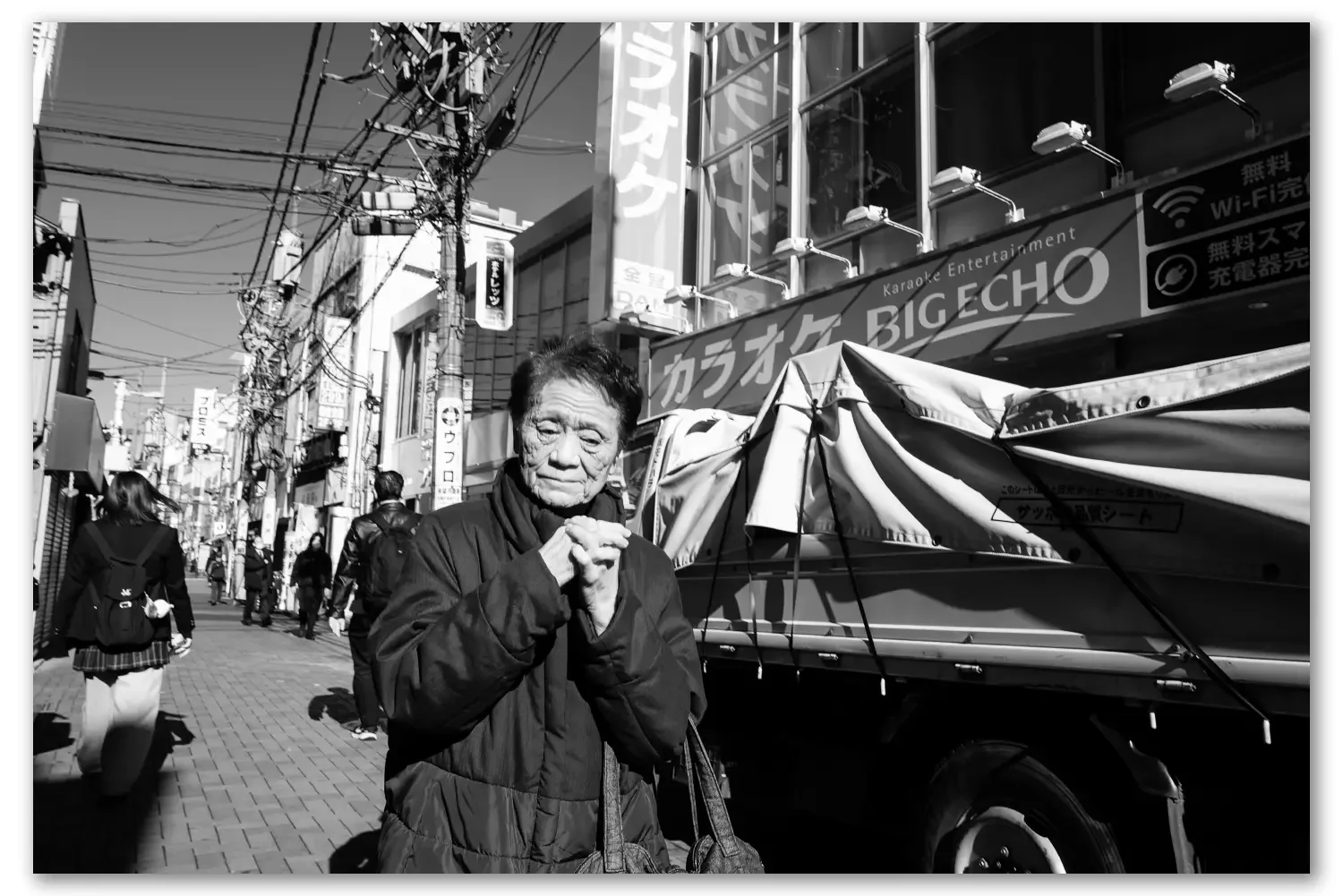
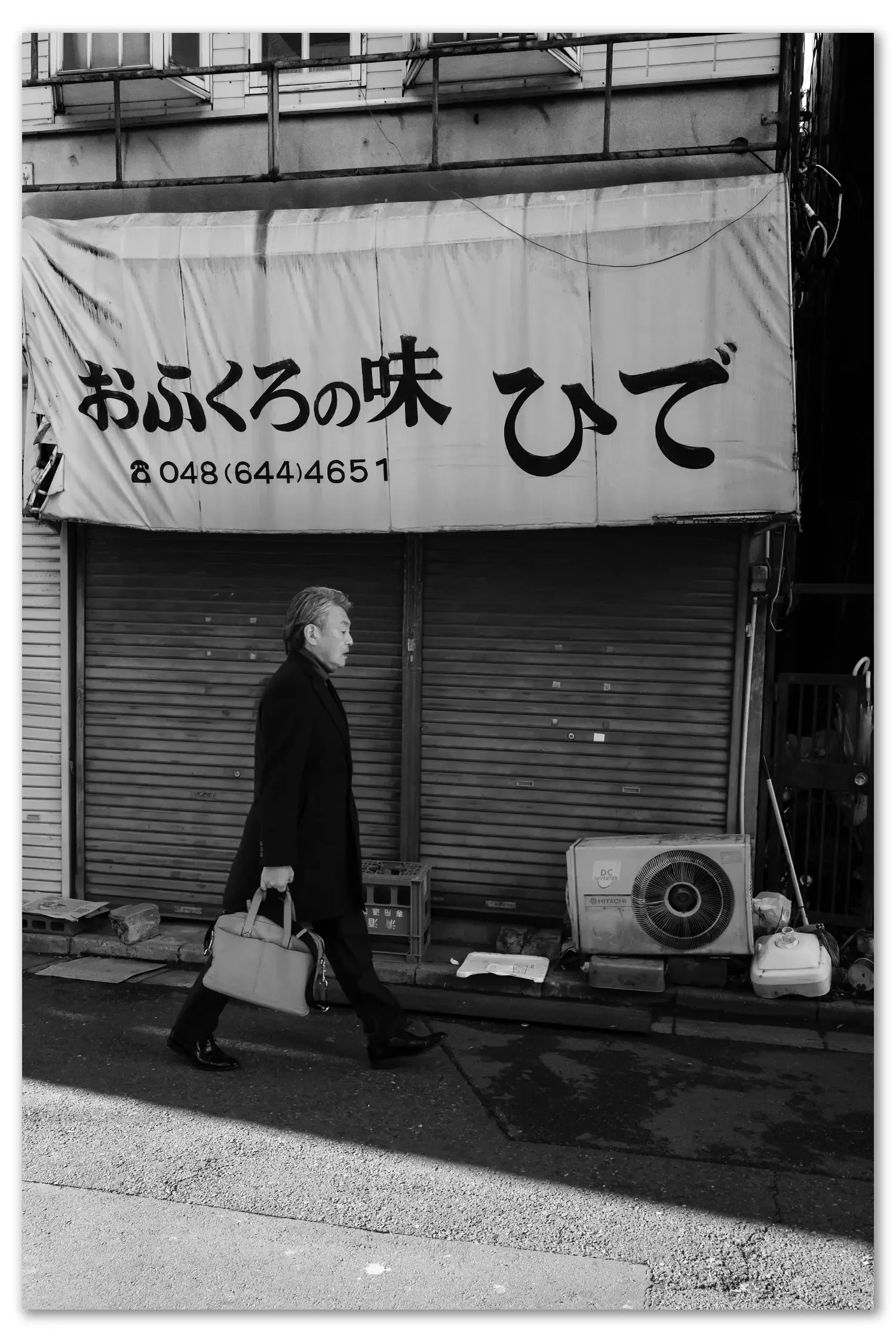
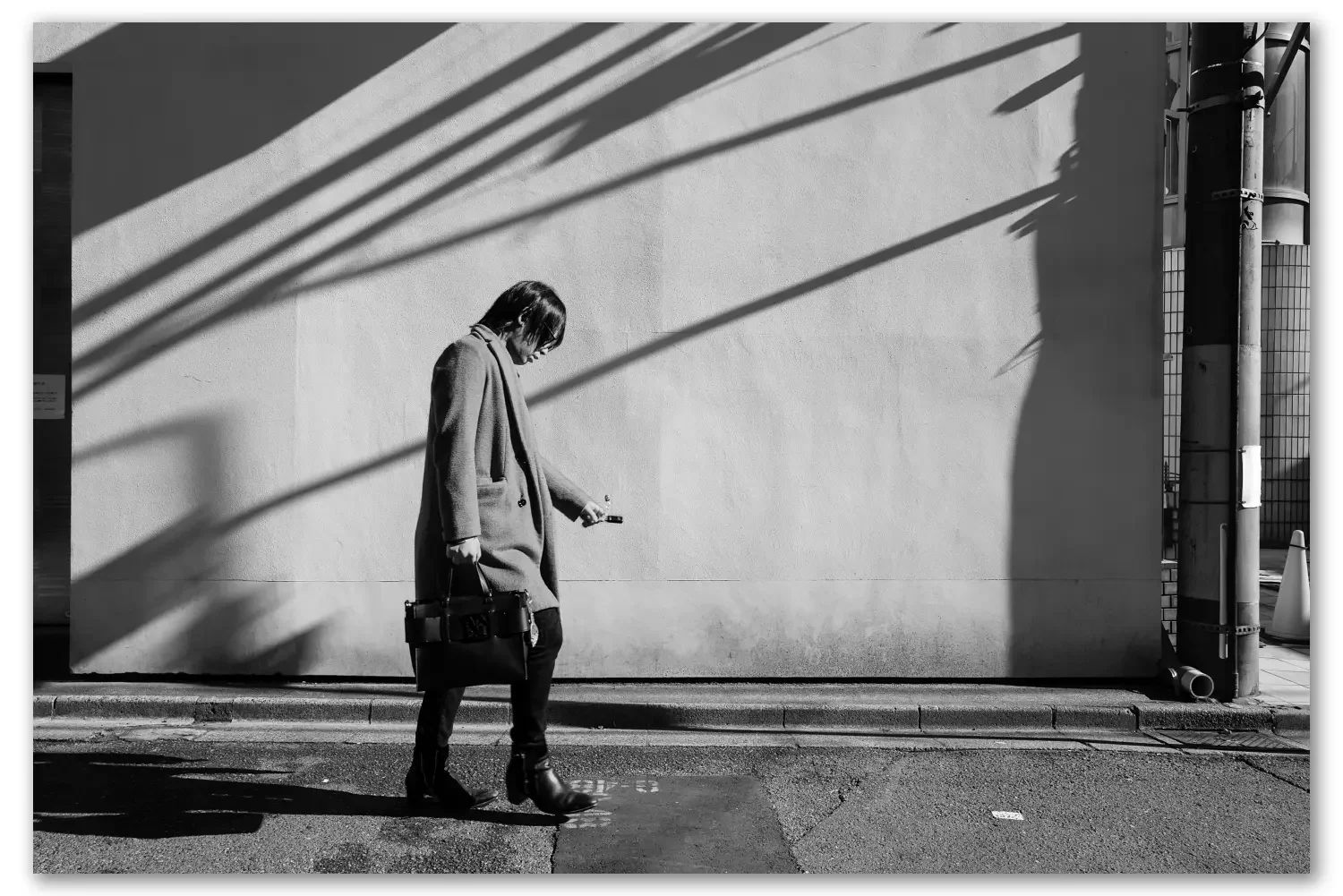
I walk the red-light areas at midday, hoping to catch the high-contrast light of the narrow alleys. The shadows of the overgrown powerlines, the ample signage, which is too old to compete for new patrons, sunning itself in the harsh light of winter. With any luck, a glimpse of those still in party mode from the night before and definitely the locals who work at these establishments.
The Shrine and the shopping areas are buzzing with local tourists excited about a day out. Despite being just a few blocks apart, there is a world of difference between the two locations. The grit and grime of the red light alleyways are nearly all washed away, except for a little in the corners—the kind of stain left by history.
As always, I would love to hear your story in the comments below. If you feel so inclined, share a coffee with me. I am a flat white kind of guy. Happy shooting, everyone.
To book a tour, visit my photo workshop/photo tour website, or email directly jeff@tokyoforgeries.com