The Gift of Getting It Wrong in Shibuya
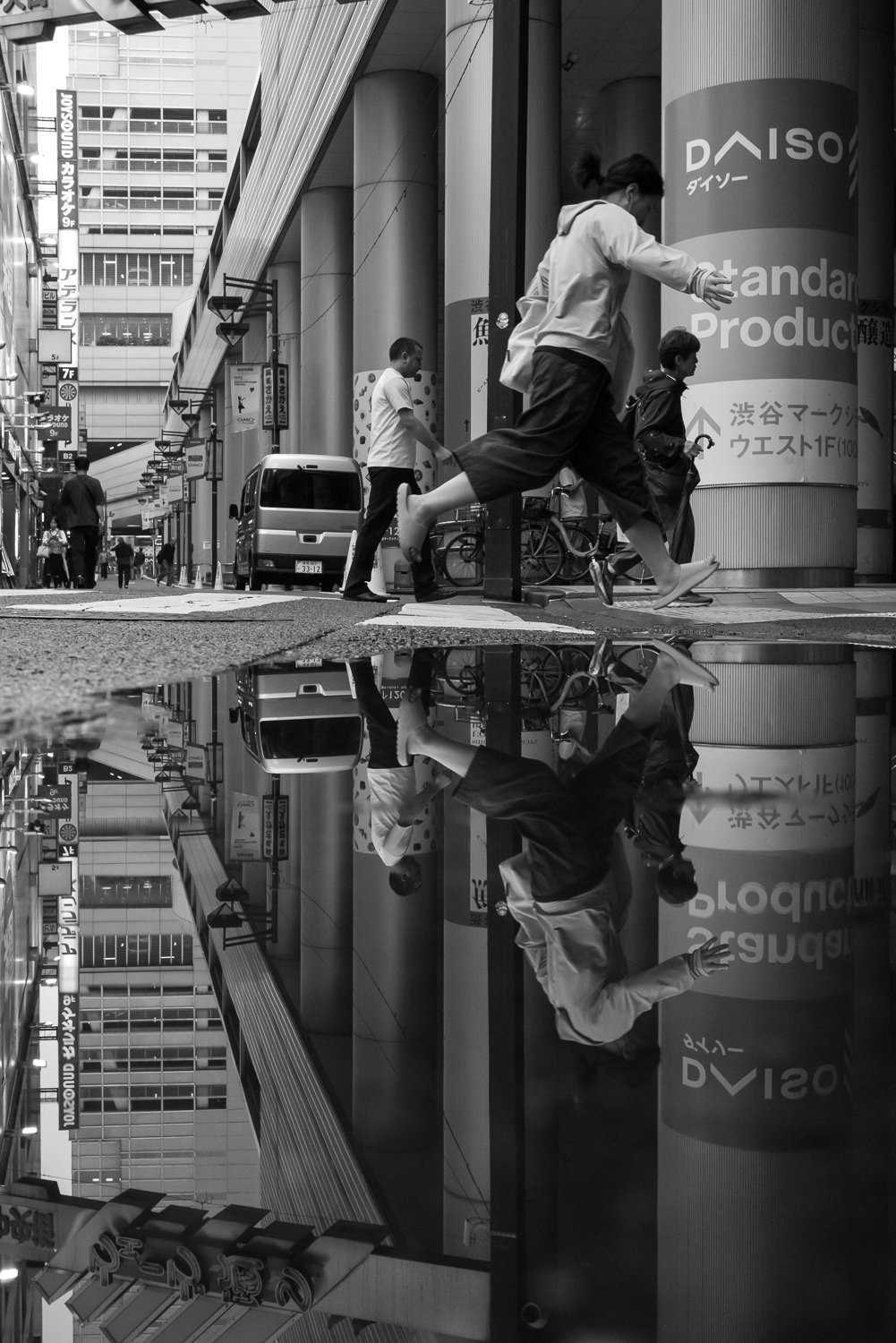
Shibuya after 34 days straight of rain in Tokyo
We've all seen the critiques online, or heard it muttered at local photography meetups: "Shibuya is overrated." The argument goes that it's been shot to death, that the Scramble is a cliché, and that the neon-soaked streets have nothing new left to offer.
But I've come to realize that people who think Shibuya is easy simply aren't paying attention.
Shibuya is not overrated. It is daunting. It is a relentless, chaotic gauntlet of moving parts, blinding light and crushing crowds that can overwhelm your senses in seconds. It does not hand you beautiful compositions on a silver platter; it actively fights against them.
And that is exactly why I am so grateful for it.
The ultimate training ground
For a street photographer, Shibuya is the ultimate training ground. It provides a massive, beautiful and unforgiving arena for failure. On any given night, the fast pace and visual noise will outrun your reflexes. You will miss focus. A stray salaryman will step directly into your perfect frame. The light will shift, the moment will evaporate, and you will walk away with a memory card full of missed opportunities.
That is not unlike any other day, in any other location, for street photography in Tokyo. It's mostly loss.
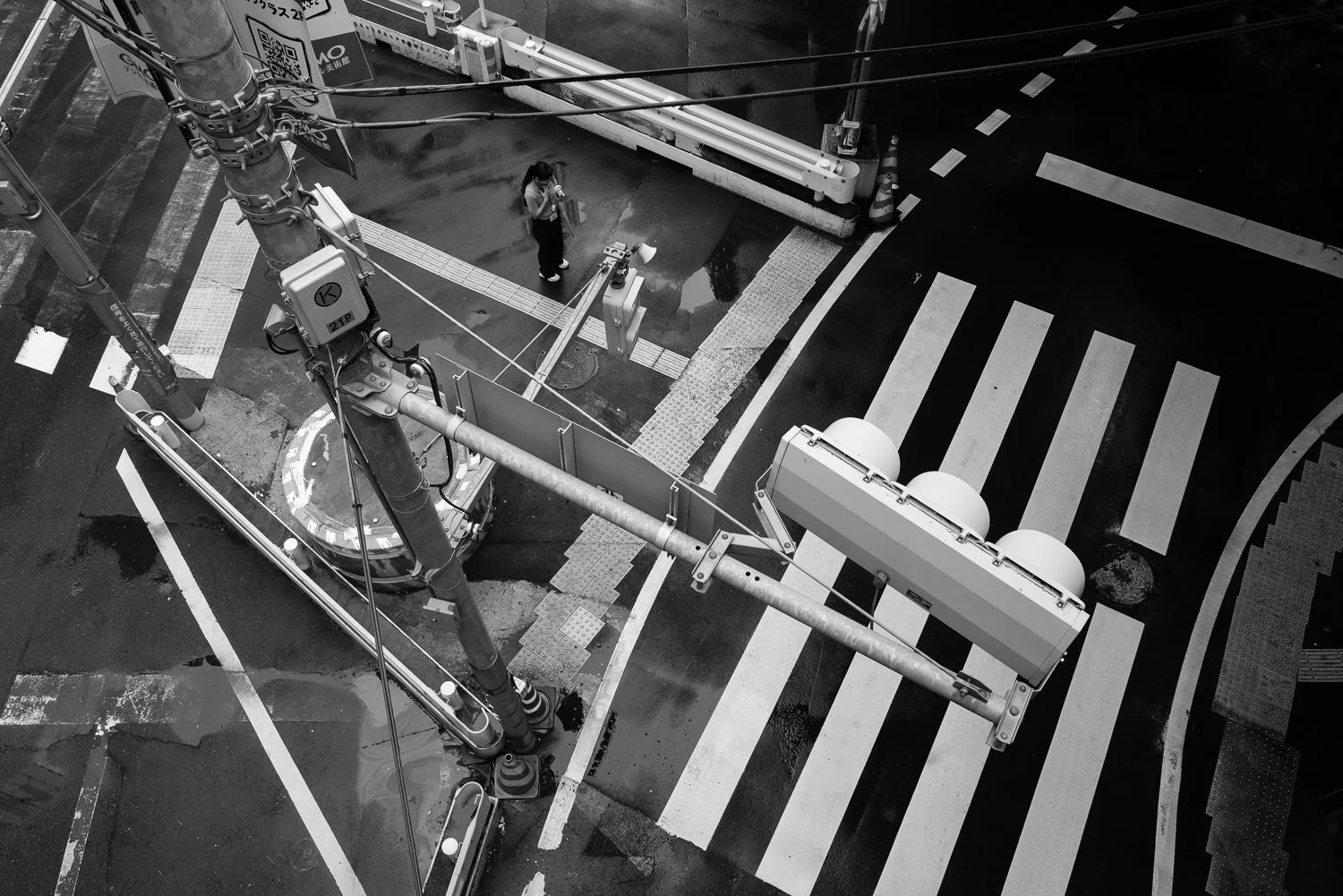
The real Shibuya Crossing.
How the valley became a postcard
The name tells you the place’s shape. The second character of 渋谷 means valley, and Shibuya Station sits at the bottom of one. Every street out of it climbs: Dogenzaka to the southwest, Miyamasuzaka to the east, the lanes of Udagawacho and Center Gai to the northwest. The crowd pours down those slopes into the one flat spot, and that is the Scramble.
The crossing's all-way pedestrian phase dates to 1973. On a busy cycle, up to three thousand people cross at once, and a 2014 survey counted around 260,000 people a day on weekdays and 390,000 on days off. Then the films arrived, Lost in Translation and The Fast and the Furious: Tokyo Drift among them, and the Scramble stopped being a junction and became a postcard. The best-known window over it, the Starbucks in the Tsutaya building, reopened in 2024 after a renovation. There are now more ways to look down on the crossing than ever: from the café, from rooftop decks, from the observation deck on top of Shibuya Scramble Square.
This is the heart of the "overrated" complaint, and it isn't entirely wrong. The crossing itself is a stage set. Everyone comes for the picture, and it gets taken again every two minutes.
The complaint misses the other half of the story. Shibuya is in the middle of what its developers call a once-in-a-century rebuild. Hikarie opened in 2012; Shibuya Stream and Shibuya Fukuras in 2018; Scramble Square's east tower in 2019; and Shibuya Sakura Stage, south of the station, in 2024. The finish line has moved from 2027 to 2034, and the plan ties the whole station together with elevated walkways, pedestrian decks and new plazas. The ward has also been tidying the streets. Since October 2024, drinking in public around the station has been banned from 6 p.m. to 5 a.m. every night of the year, the first year-round ban of its kind in Japan, brought in after years of Halloween trouble.
For a street photographer, all of this cuts both ways. Some of the old grain is going. But new layers keep being added to a valley that was already full, and each deck and bridge is a new place to stand. Three of the day's frames were made looking down from them.
What the critics get right, and wrong
The usual complaint goes further still. There's nothing left in Shibuya, the critics say. It's completely gentrified. It's full of foreigners. Everyone's been there and done that. On the facts, they aren't entirely wrong.
But all the gentrification, which comes in the form of half a dozen new skyscrapers, has created a labyrinth of fascinating areas to shoot. And I'm as foreign as any of them. It's just people, and that's really what street photography is all about: photographing moments, typically moments of humanity. What's the difference if they're Japanese or not?
Anyone who thinks everything's been shot in Shibuya really hasn't spent much time exploring. There's a labyrinth of skyscrapers, back streets, sketchy neighbourhoods and fancy shopping on each corner of the famed Shibuya Crossing. All you have to do is walk a block or two.
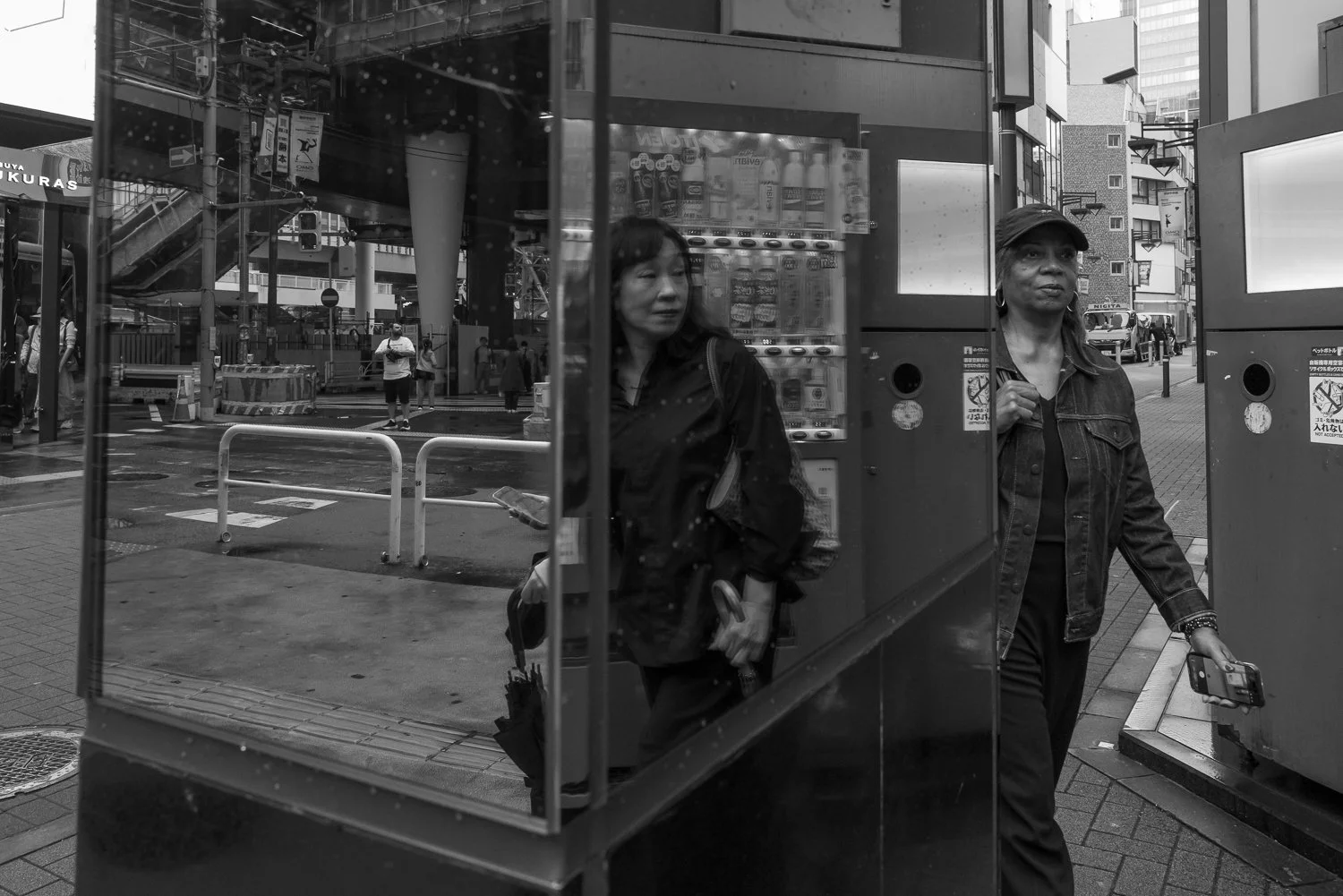
The best reflection street photography shot in Shibuya
A block or two in every direction
That's exactly what I did yesterday. I walked a gigantic loop around Shibuya Crossing without actually stopping there. Eventually, I had to cross it to get back to Shibuya Station and catch my subway home. For several hours, I walked through neighbourhood after neighbourhood, and through the skyscraper area, which is almost a skyscraper district now. Much of it is connected by pedestrian bridges. I walked through a really weird love hotel area, and a sketchy Dogenzaka that seems never to have changed but doesn't quite feel familiar anymore either. To be honest, I would have loved another hour or two of walking, had my schedule allowed it.
If you want to make the same loop, think of the crossing as the hub of a wheel and walk the spokes. East, over the station's pedestrian decks and past the bus terminal, is the new tower district of Hikarie and Stream. South, across the tracks, is Sakura Stage, the newest tower, sitting on the Sakuragaokacho slope. West is Shibuya Mark City, and Dogenzaka climbing beside it into the love hotels of Maruyamacho. Northwest is Center Gai and Udagawacho: loud, young, cramped and still changing. None of it is more than ten minutes from the Scramble, and very little of it looks like the postcard.
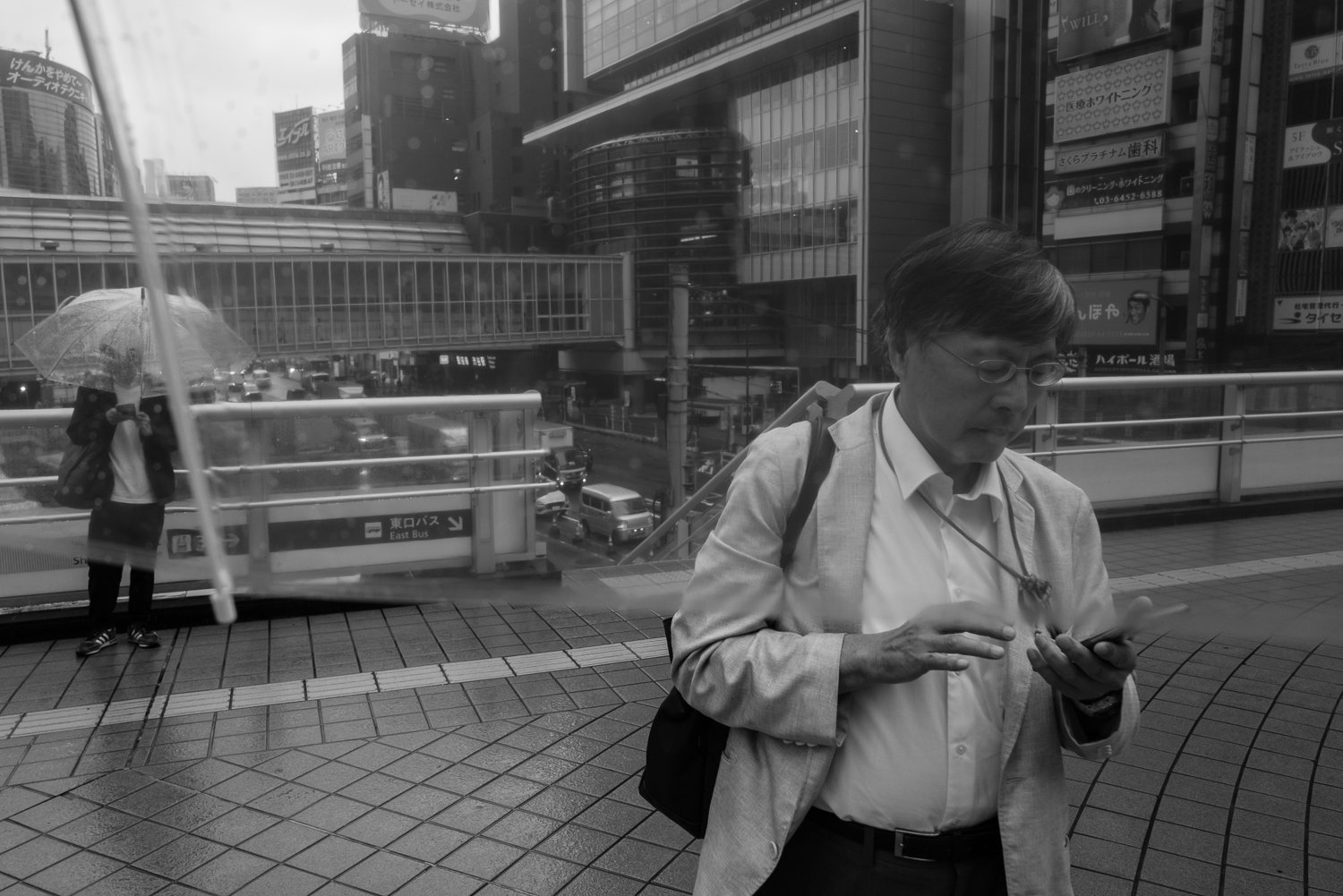
Umbrellas in Shibuya
The pace
There's a lot there, almost too much, but you have to work for it a little bit. It's a fast-paced location, maybe the fastest in Tokyo. Anyone who's there is on their way to do something with someone. Nobody's lollygagging around, hanging out, except maybe me. Everyone else is on the move.
They're not interested in being photographed. They're interested in having their dinner date, going out with their friends, seeing the concert, doing the shopping, and stopping by here before meeting up with people over there. There is a great deal of opportunity in failure in Shibuya. That failure comes from having to move at the pace of the place (even if that isn't your internal pace) to keep up with it, or to get ahead of it, and to really, truly see it and photograph it.
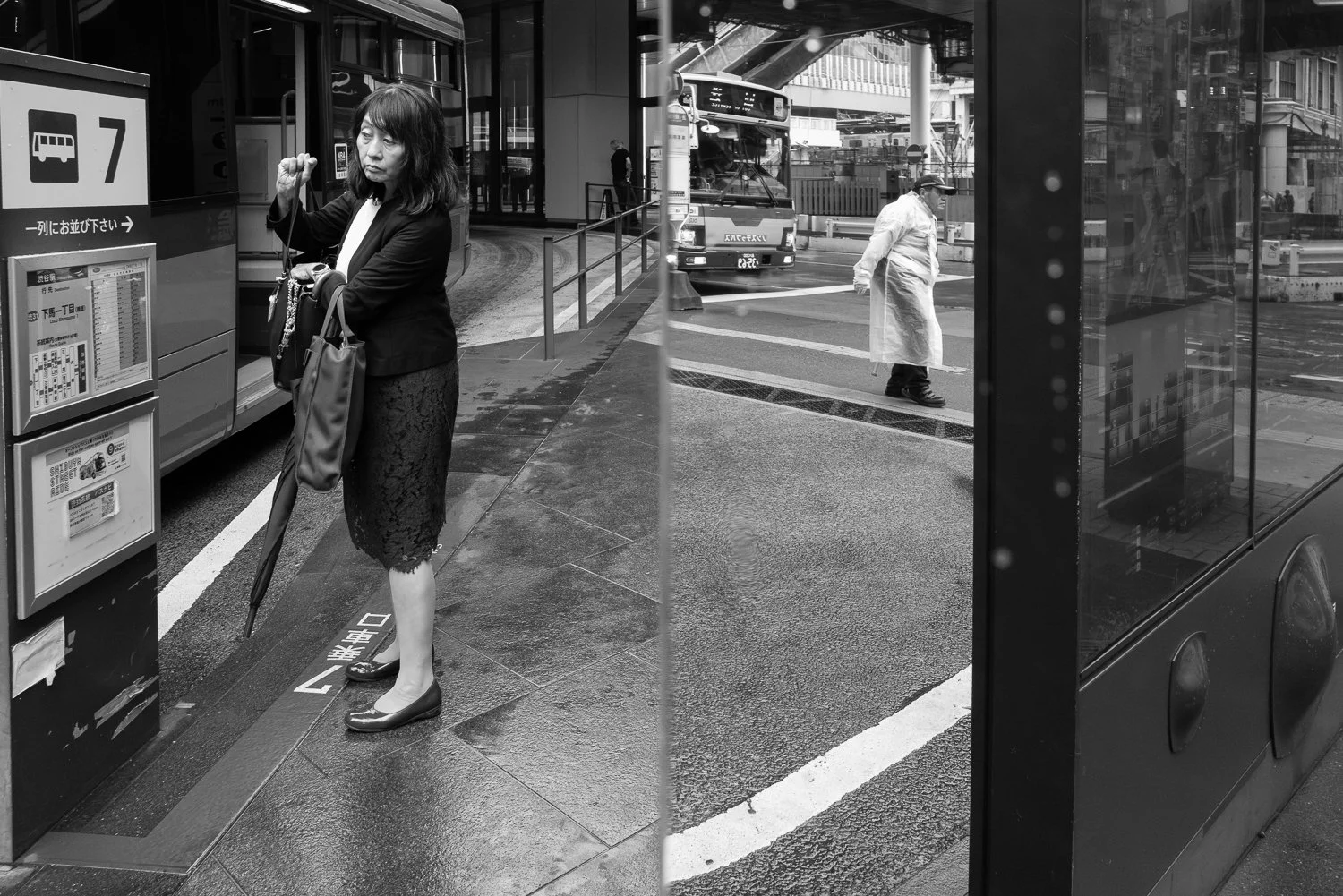
Shibuya bus number 7. The second-best reflection shot at Shibuya Station
Effort
That pace is the polar opposite of who I am. I'm slow. I'm molasses. I'm lava, just creeping along, moving at my own pace and in my own time, which created a tremendous amount of garbage. But in that garbage was effort:
- effort to shoot here
- effort to shoot down there
- effort to shoot across
- effort to get close
All that effort is a chance to learn. All that effort is experience, and all that effort is really just what they call practice.
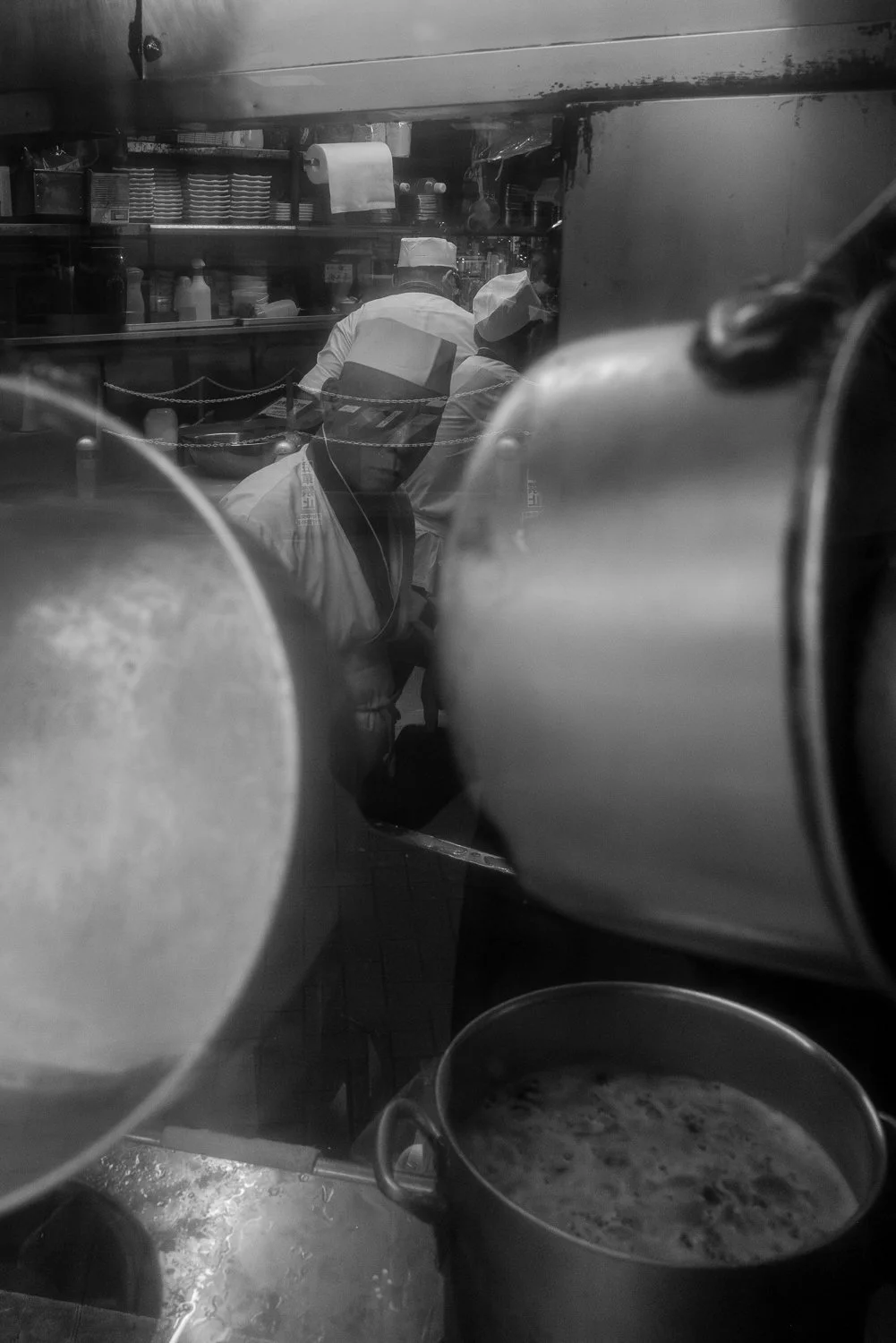
The cook at the most famous yakitori restaurant in Shibuya.
Eight hundred frames
On this day, I failed spectacularly, even for street photography. The failure on the screen only tells half the story. That story is 800 frames taken, 60 selected, and only a select few edited. Truthfully, those aren't quite good enough either.
The other half is all the missed opportunity: when you can see something, but it's happening quicker than you can react, quicker than you can frame and calculate and photograph. It's happening quicker than you can get over your own fear. The pace of shooting is so relentless that I'm sure I missed more that was never recorded than all the failures I did record.
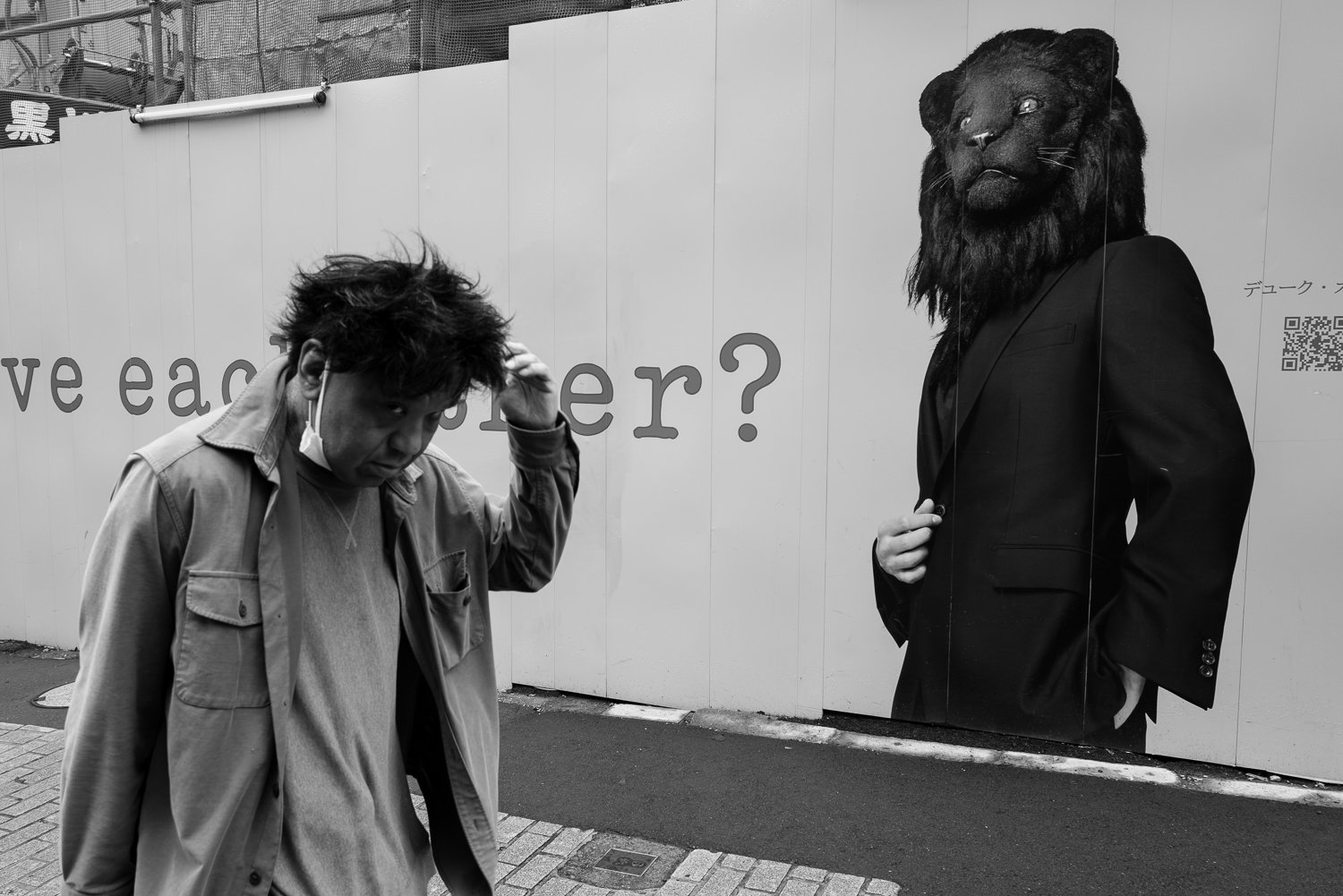
Famous construction billboard in Shibuya, love each other?
A note on the glass and gear
I shot the whole day on a Leica Q2 Monochrom with its fixed 28mm Summilux, mostly at f/8. Shibuya asks a lot of one focal length. At 28mm there is nowhere to hide: to fill the frame, you have to get close, and in a crowd this fast, getting close is where most of the failure happens, and where the few frames worth keeping are forged. From the bridges I slowed the shutter right down and let the taxis smear across the crossings below, the one place in Shibuya where standing still is an advantage.
Back to the gutter
These are the exact reasons I will go back tomorrow and spend the afternoon and evening there, which I suspect will provide even more opportunity to fail. Others will pass on the highly overrated Shibuya. I'll be in the gutter.
— Jeff Austin, Tokyo Forgeries · Shibuya: the east exit, Sakuragaokacho, Mark City, Dogenzaka · 28 September 2026
The streets never look the same way twice. I’m curious—how does this side of Tokyo hit you? Drop a comment below.
I live on flat whites and shutter clicks. If you’ve found value in these shots, toss a coffee my way to keep the sensor humming.
For those who want to skip the tourist traps and shoot the real Tokyo, my calendar is open for workshops. Explore the Masterclass here or email me at jeff@tokyoforgeries.com.
See you in the shadows.
Tokyo Forgeries is an evolving archive of Tokyo street photography and vintage-lens deep dives. We spend 30 days in every ward, using mid-century brass and glass to capture the city’s soul. This is a roadmap for the active pursuit of craft—documented through the geography of Tokyo and the character of its light.