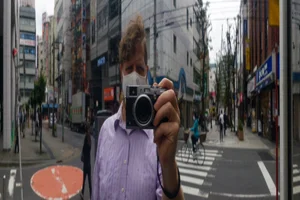
How to Overcome the Fear of Photographing Strangers
You don't get rid of the fear of photographing strangers; you learn to work while it's there. Most of it isn't fear of confrontation but embarrassment at being seen wanting a picture, and practical habits shrink it: shoot the place before the people, stand still, work wide and close, set the camera in advance, and keep returning to the same streets. If someone objects, stop, face them, say one simple sentence, offer to delete the frame, and leave calmly.
Everybody tells you the fear goes away. It does not, and the people saying so have either forgotten or are selling something.
Twenty-five years in, I still feel it — a small tightening before I raise the camera at someone who did not agree to be there. What changes is not the fear. What changes is what I do while I am afraid.
That is a better promise than the one you usually get, because the usual one sets you up to fail twice: once when the fear does not disappear, and again when you decide that means you are not cut out for this.
Name it correctly first
Photographers say they are afraid of confrontation. Almost nobody is. Confrontation is rare — you will go months without one, and when it comes, it is usually a look rather than a fight.
What you are actually afraid of is being seen wanting something. Being caught in the act of desiring a picture. That is a shame reaction, not a danger reaction, which is exactly why reassuring statistics never help. Nobody was ever talked out of embarrassment with a number.
Once you know that is the animal you are dealing with, the whole problem changes shape.
There are two fears, and confusing them is the real mistake
The first is general nerves. It arrives before every frame; it has no particular subject, and it is about you.
The second is specific. It is the quiet unease about this person, this frame — the sense that something here is not right. That one is not fear. That is your ethics arriving a half-second before your brain, and it is the most valuable signal you own.
Most photographers try to eliminate both, which is why they end up either frozen or coarsened. Work through the first. Obey the second. Always.
The test that separates them takes one second: does the unease have a subject? I feel exposed is about you. I should not do this to him is about him. Act on the second one.
What actually reduces the general fear
Not willpower. These:
- Shoot the place before the people. Arrive early, work the light, the shutters, the stacked crates, the wet pavement. This is not stalling — you are paying the arrival cost, and your hands are getting busy, which is most of what nerves need.
- Stand still. The photographer circling a block is approached far more often than the one leaning on a pillar not doing much.
- Go wide and close, not long and far. Counter-intuitive and true. A long lens from across the street reads as surveillance to everyone watching and feels like sneaking to you, which feeds the shame. A small wide lens, used near, obviously present, feels honest — and being honest is the thing that settles your hands.
- [Set the camera before you need it](/blog/zone-focusing-street-photography). Aperture, distance, ISO, all decided at the curb. Fumbling is what makes a person look furtive, and looking furtive is what generates the reaction you are afraid of.
- Give yourself a number, not a standard. Ten frames of strangers today. All of them allowed to be terrible. The fear attaches itself to the outcome, so remove the outcome.
- Go alone. A friend doubles your visibility and provides an audience for your embarrassment.
And the one that actually fixed it for me: go back. The fear is worst on a street you do not know. Work four streets until the vendors nod at you and the tightening drops to almost nothing — not because you got braver but because you stopped being a stranger. Fear is a stranger's problem, at both ends of the camera.
When someone does get angry
Stop shooting. Lower the camera. Turn and face them properly — squaring up sounds like the wrong advice and it is not; angling away reads as guilt, and guilt escalates people.
Say one simple thing. すみません。写真を撮っていました。 Then stop talking. Do not explain your project, do not invoke the law, do not perform your sincerity. The silence is not your enemy — it gives them room to become a person again instead of an objection.
If they want it deleted, delete it in front of them and let them see the screen. Thank them. Leave.
Do not run. Running turns a misunderstanding into a story about a man who ran.
Afterwards the shame will be enormous and completely out of proportion to what happened. It passes in about ten minutes. And here is the part that matters: keep shooting that day. If you go home after a bad interaction, you have taught yourself that a stranger's mood ends your work.
I still get this wrong sometimes. There are frames I regret and a couple of moments I handled badly, and that is the bill for a practice where you point a camera at people who did not ask for it.
The fear does not leave. It just stops being in charge.
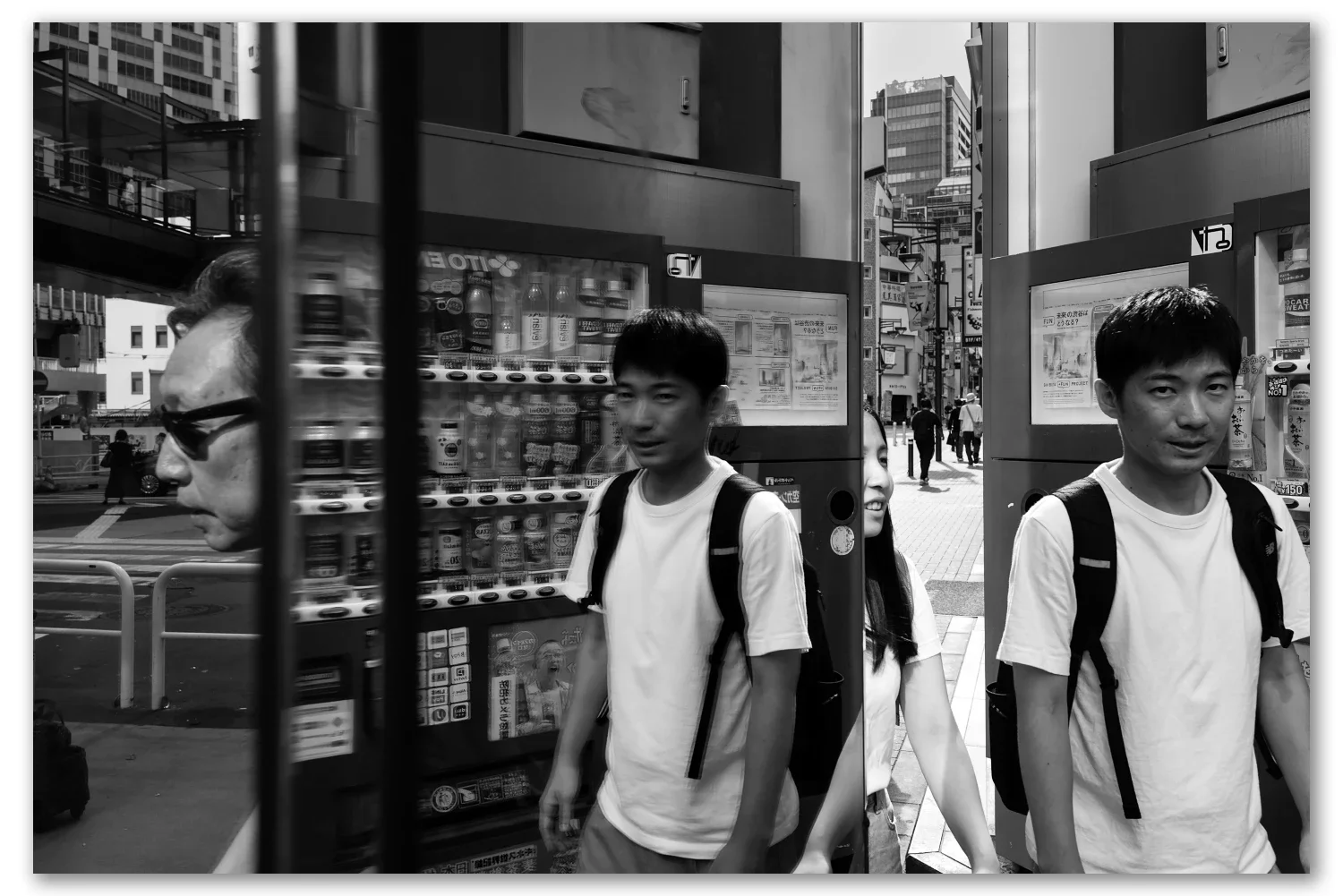
Returning to the scene of the crime near Shibuya Station
The common counterpoint
The fear is there for a reason, and this entire genre is built on coaching people to override a healthy instinct. Your discomfort is your conscience telling you that pointing a lens at a stranger is an intrusion, and "push through it" is precisely how you manufacture photographers who have successfully deadened the one signal that was protecting their subjects. Notice the shape of the advice: a programme of graded exercises designed to make you comfortable doing something to other people. If you need that, consider that the something might be the problem rather than your nerve.
My answer
This is the best objection to everything I have said here, and it is half right — which is why I built the answer around the distinction it misses.
The specific unease about a particular person is conscience, and I have already said it: obey it, every time, without negotiation. Nothing in that list of exercises is meant to quiet it, and a photographer who has trained himself past it has broken the only instrument that keeps this work decent.
But the general fear is not moral information, and the proof is that it cannot tell the difference. It fires identically whether you are about to make a careful photograph of a man absorbed in his work or something cruel. A signal that cannot distinguish between those two is not a conscience. It is stage fright — and treating stage fright as a moral verdict is how careful people end up never making the photograph that was worth making.
The deadening risk is real, though, and I will not pretend otherwise. I have met photographers who overrode everything, and you can see it in the work. It has a coldness to it, a quality of having been taken from people rather than made with them.
So the honest instruction is not get comfortable. It is this: stay slightly uncomfortable for the rest of your life, and get very good at knowing which discomfort is which.
Part of Street Photography: Twenty Questions, Answered— a series answering the questions people most often ask about street photography.
Frequently asked questions
Is it normal to be scared of photographing strangers?
Yes. Photographers with decades of experience still feel a tightening before raising the camera at someone. What changes with practice is not the feeling but what you do while you have it.
### What should I do if someone gets angry that I photographed them?
Stop shooting, lower the camera and face them. Say one simple sentence — in Japan, すみません。 写真を撮っていました。 — and then stop talking. If they want the photo deleted, delete it in front of them. Don't argue about the law, and don't walk away mid-conversation.
### How do I tell healthy caution from ordinary nerves?
Ask whether the unease has a subject. "I feel exposed" is about you, and you can work through it. "I shouldn't do this to this person" is about them, and it is worth obeying every time.