What Is Street Photography? (And Does It Need People?)
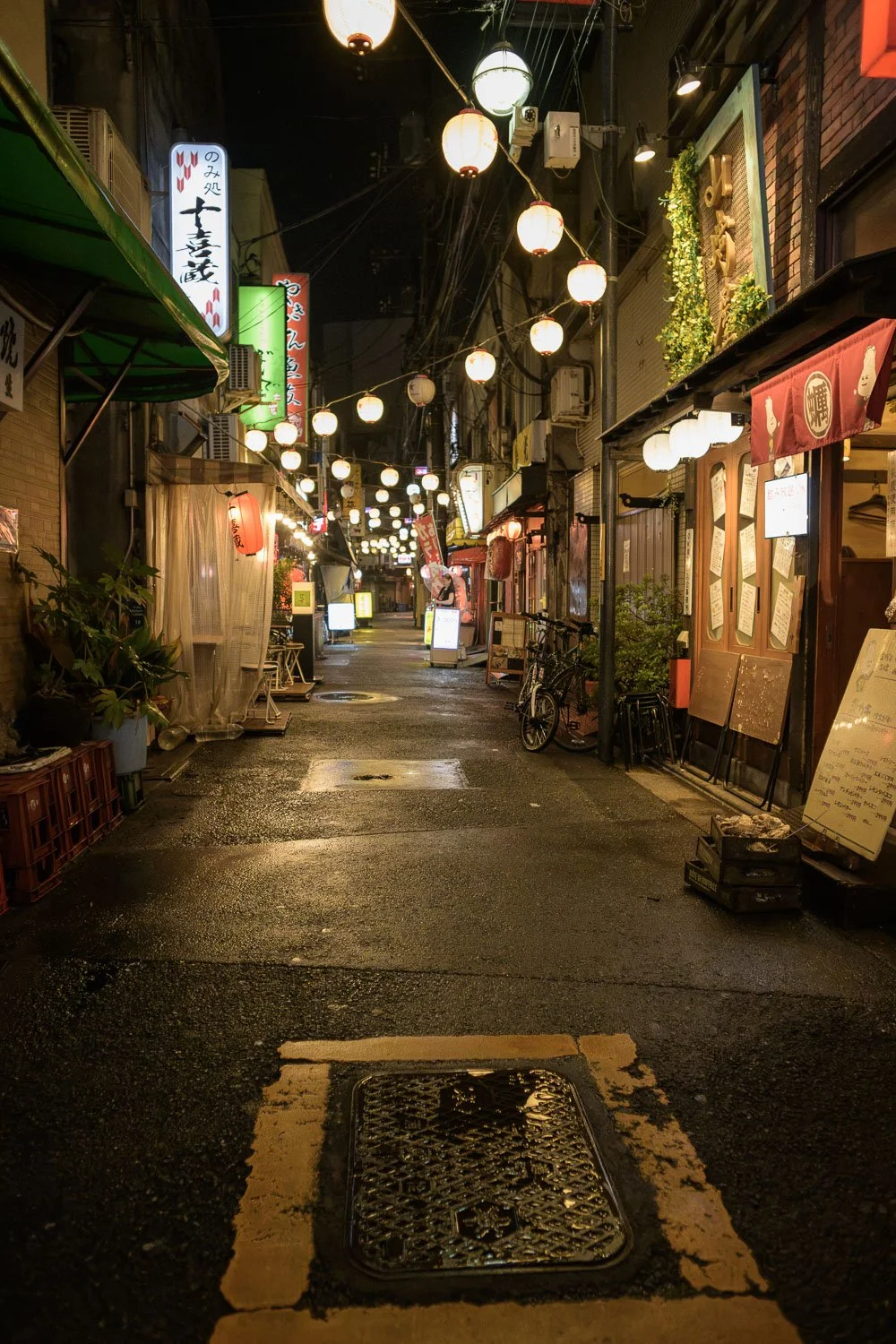
Ok Yokocho in Akabane, Tokyo as the street photography subject
Street photography is photography of public life that you did not arrange. You don't direct anyone, bring the light or choose the moment — you arrive at something already happening and take a position inside it. It doesn't need people in the frame, but it does need evidence of them: an empty alley counts if it shows what people did there.
Nobody asks this question neutrally. It is asked as a permission slip — does what I am doing count? — and it is usually answered by people guarding a door they do not own.
So let me give you a definition that is actually useful, and then tell you why the border patrol is a waste of your afternoon.
Street photography is not defined by its subject. It is defined by its relationship to control.
You did not arrange it. You did not direct anyone, hire anyone, build anything, bring the light, or choose the hour at which the thing happened. You arrived at something already in progress and took a position inside it. That is the whole invariant, and everything else people argue about is negotiable.
Look at how cleanly it separates the neighbours. A portrait is arranged — the subject knows, the terms are agreed, the photographer sets the conditions. Commissioned documentary work arrives with its story already assigned before you leave the house. Architectural photography makes the subject hold still and hands the photographer control of almost everything. Travel photography extracts and moves on. None of these are lesser. They are simply not this.
So does it need people? No. It needs evidence of people
An empty alley at five in the morning is street photography if the alley is full of what people did in it. Crates stacked the way one man stacks them. A shutter half down. A cigarette still burning on a ledge. The wear on a step where a hundred thousand feet have stood. A city is a physical record of human decisions, which is exactly why it can be photographed without anybody in the frame.
What disqualifies a photograph is not an absent body. It is absent consequence.
A façade photographed with the people patiently waited out, lit to show the architect's intentions, is architecture, and good luck to it. That same façade photographed showing use, or neglect, or somebody's small decision about where to put a bicycle — that is street photography, and the difference is not the presence of a human being. It is whether the picture knows that humans happened here.
Three tests, in order
1. Did you arrange it? If yes, it is something else. Not worse. Else.
2. Would this have happened if you had not come? If the answer is no — if the scene exists because you are standing there — you have made a portrait or a performance.
3. Is there human consequence in the frame? Not a human. Consequence.
Most of the arguments online die on the third test, because the purists keep testing for bodies.
The history does not support the purists
Eugène Atget, 1857 to 1927, started photographing in the late 1890s and spent the first quarter of the twentieth century working through the urban texture of Paris — shopfronts, courtyards, doorways, early light. He hung a sign on his studio reading documents pour artistes, images for other artists to use as raw material, which was his modest description of a life's work. And the Museum of Modern Art, which holds his archive through the Abbott-Levy Collection, notes that photographs of human figures in his work are rare.
Empty streets. A century of photographers looking at cities owe him something. If your definition cannot hold Atget, your definition is too small.
And it does not require a famous city
This is the other thing beginners get told wrongly. You do not need Tokyo or New York. Tokyo is not special because it is Tokyo — it is special to me because I have twenty-five years of returns inside it, and that is a thing you can build anywhere there are people and a street. A photographer who works one small town properly will beat a photographer who has photographed forty cities once each. Every time.
Stop asking whether it counts. Start asking what it is about.
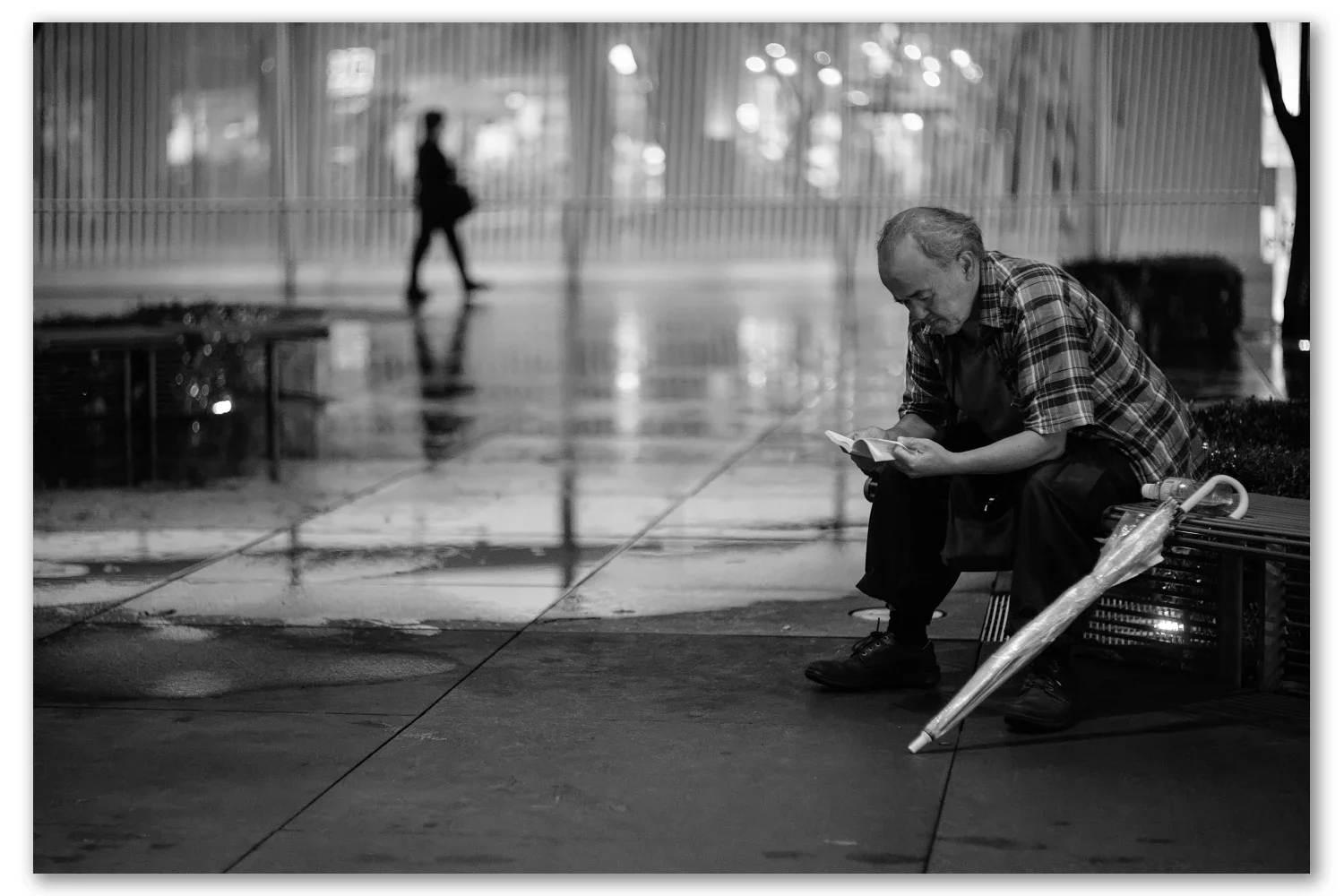
Tokyo moment at the International Forum
The common counterpoint
Definitions exist for a reason and this one is mush. Street photography means candid photographs of people in public places. That is what the tradition means, that is what the phrase has always meant, and stretching it to cover empty alleys, textures and doorways makes the term useless — once everything is street photography, nothing is. Look at what the hashtag actually contains now: walls, puddles, bins, reflections, an endless supply of pictures that would collapse instantly if they had to hold a human moment instead of a nice bit of light. And be honest about the motive. "It doesn't need people" is, nine times out of ten, a licence issued to photographers who are too frightened to photograph people, and calling their avoidance a genre does them no favours.
My answer
The fear diagnosis is correct, and I am not going to soften it. A great deal of urban-texture work is avoidance wearing better clothes, and the photographer who has spent two years photographing shutters because strangers terrify him knows it, somewhere. No definition will fix that. If that is you, shoot the shutters—and separately, deliberately, go work on the fear, which is a different question with a different answer.
"Once everything is street photography, nothing is" is also fair, and it is precisely why I gave you a criterion instead of an amnesty. Human consequence is a real filter with teeth. It admits the empty alley at dawn and throws out most of the bins, because a bin photographed for its rust is a texture study, and a bin photographed for what somebody did with it is not.
Where the objection breaks is on its own history. The strict definition would have to exclude the man whose empty Paris streets shaped how photographers have looked at cities ever since, and a rule that ejects Atget from the conversation about photographing cities is not a rule. It is a preference with a uniform on.
And underneath it all, the border patrol is the least interesting thing available to do with this genre. Nobody has ever made a better photograph by winning an argument about what to call it. The people most anxious about the definition are almost always the least willing to be judged on the only question that matters: whether the picture is any good.
Part of Street Photography: Twenty Questions, Answered — a series answering the questions people most often ask about street photography.
Frequently asked questions
Does street photography have to include people?
No. It needs evidence of people, not people themselves. An empty street that shows human use — stacked crates, a half-closed shutter, the wear on a step — is street photography. A building photographed with every trace of people waited out is architecture.
What is the difference between street photography and portrait photography?
Control. A portrait is arranged: the subject knows, the terms are agreed, and the photographer sets the conditions. Street photography comes from situations the photographer did not arrange, and that would have happened anyway.
Do you need to live in a big city to do street photography?
No. What matters is returning to the same streets often enough to learn them. A photographer who works one small town properly will do better than one who has photographed forty cities once each.
Notes and sources
Eugène Atget: dates (1857–1927), the late-1890s start, his work on the urban texture of Paris, the studio sign reading documents pour artistes, and the rarity of human figures in his photographs are all from the Museum of Modern Art, which holds his work in the Abbott-Levy Collection — MoMA, Eugène Atget: "Documents pour artistes".