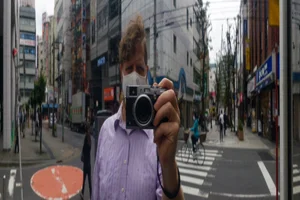
East Side Tokyo: Keep Moving, From Akabane to Jimbocho
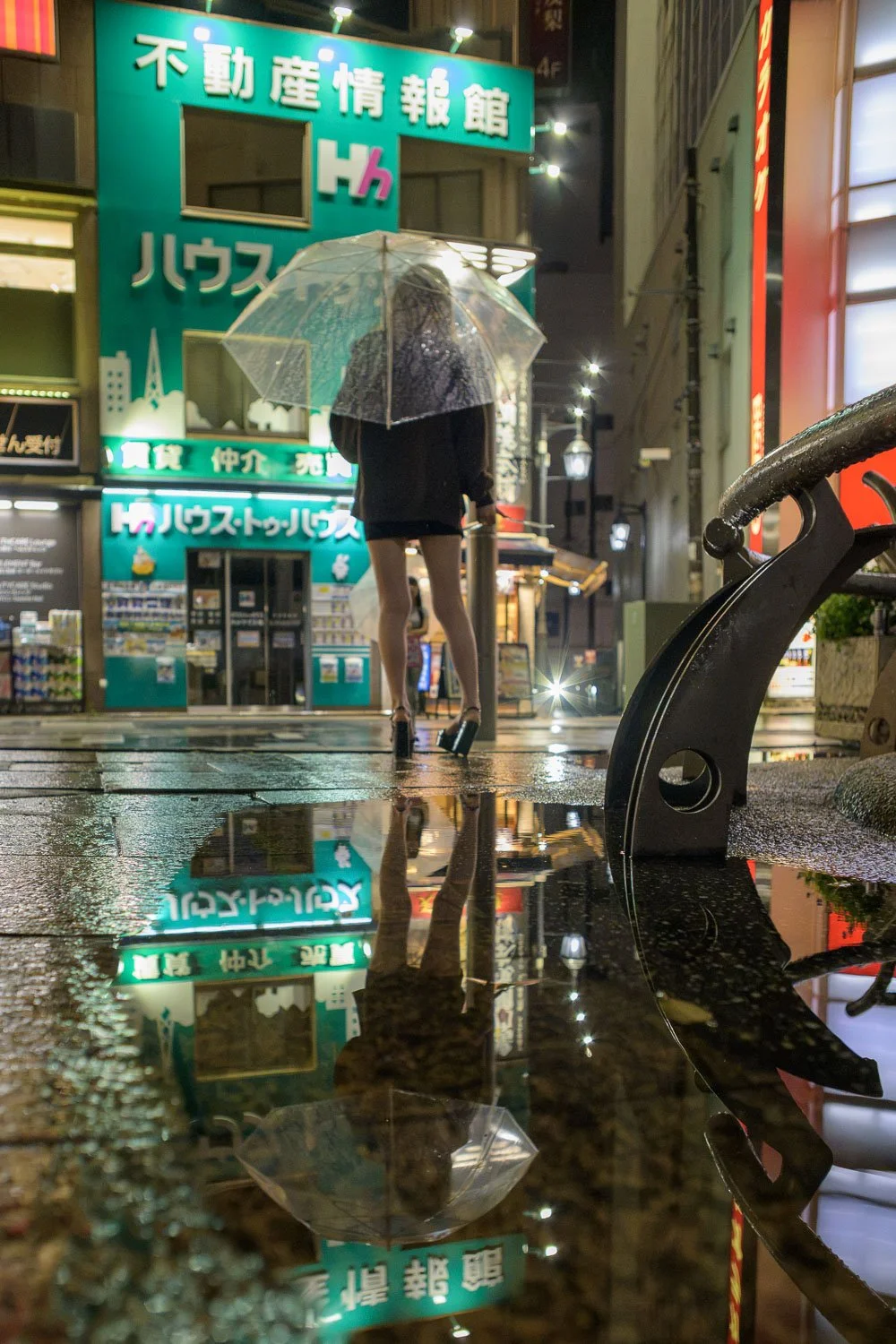
Akabane at night with vintage Nikkor lenses.
I've said on many occasions that Tokyo is the best city in the world for street photography. That statement is overly romanticized and misleading.
It brings to mind wondrous images of gritty backstreets, surging crowds, hip neighbourhoods, anime girls, fugu restaurants, stoic old Japanese men and vibrant neon. What is less understood is the effort required to find and create those shots. Being the best at anything requires a tremendous amount of effort. To get the best images from Tokyo, you'll need to equal that effort.
An overwhelming city
The city can be overwhelming. The sheer volume of everything, a chaos that's tightly organized, can leave you in a difficult headspace about what to shoot. Despite living and shooting here for over twenty-five years, I can find myself in exactly that position. Where do I shoot now? What do I shoot? How do I see my favourite neighbourhood anew?
Keep moving
The answer to this dilemma, for me at least, is to keep moving. Because Tokyo is so huge, there are two ways to do that.
The first option is to pick your neighbourhood and just walk it: up, down, back, forth, around and around. No camera. Just move and shoot, observe and shoot. Keep moving. Option number two is to move from neighbourhood to neighbourhood all day long.
I do both, but I choose option two more often than not.
I'll walk a neighbourhood as much as I feel I need to, and in many cases I'll just walk to the next one. When I'm tired, I'll hop on the train, cross over into a new area of Tokyo and walk that neighbourhood. On and on until my shooting day has ended.
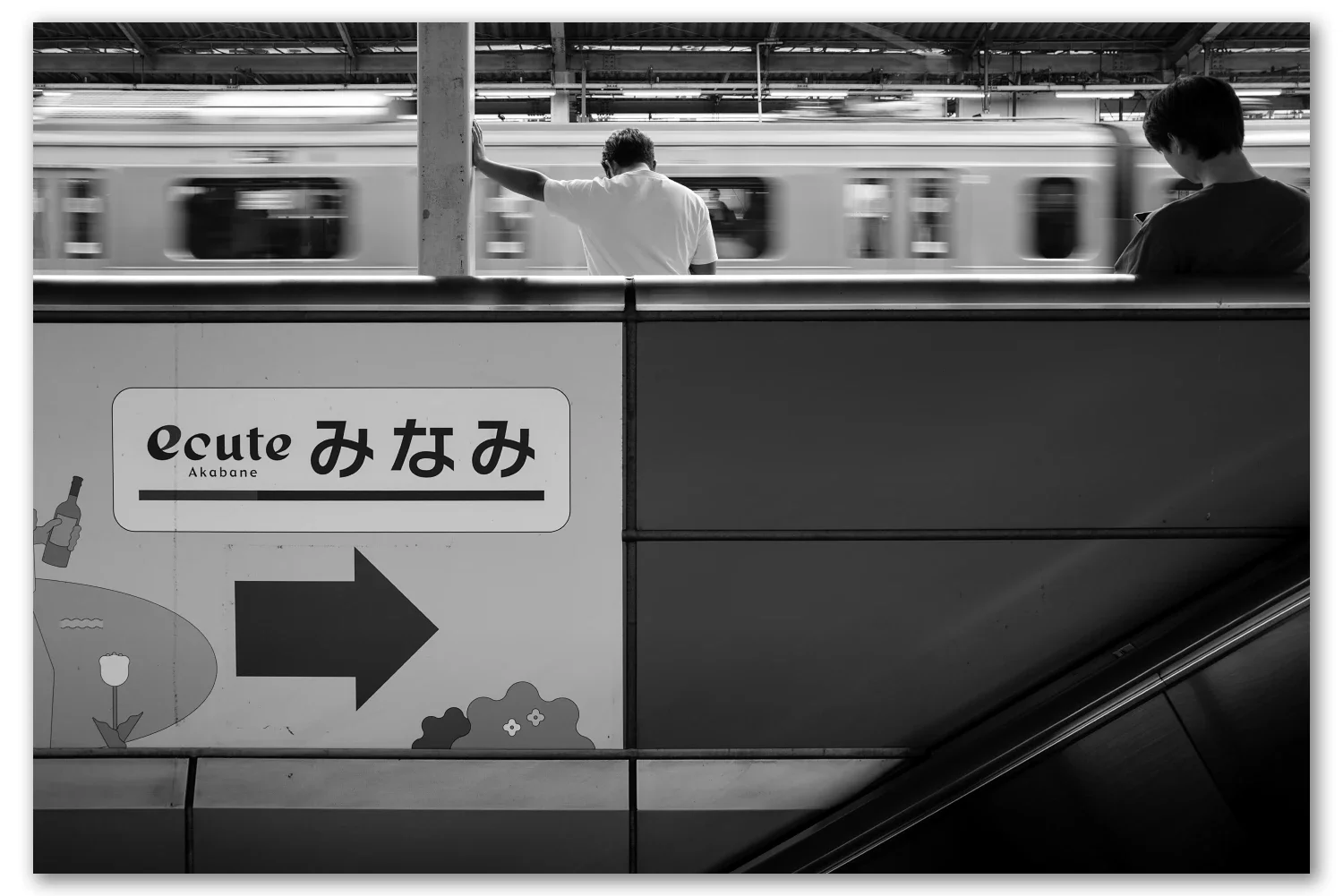
Akabane Station trains in motion
Part one: Akabane to Jimbocho
Nonstop movement was my practice in street photography this week. I would start on the streets of Akabane, as it's both the most convenient for me and easily one of the best places in Tokyo to photograph. Such a beautiful history: rustic, old, nostalgic streets with so much character. It's a locals-only kind of place, and it's one of the few places in Japan where I feel a little bit local. From here it's easy to hop on a train or subway and go to east, central, west or south Tokyo. Ideal when you get on the train and really don't know your destination.
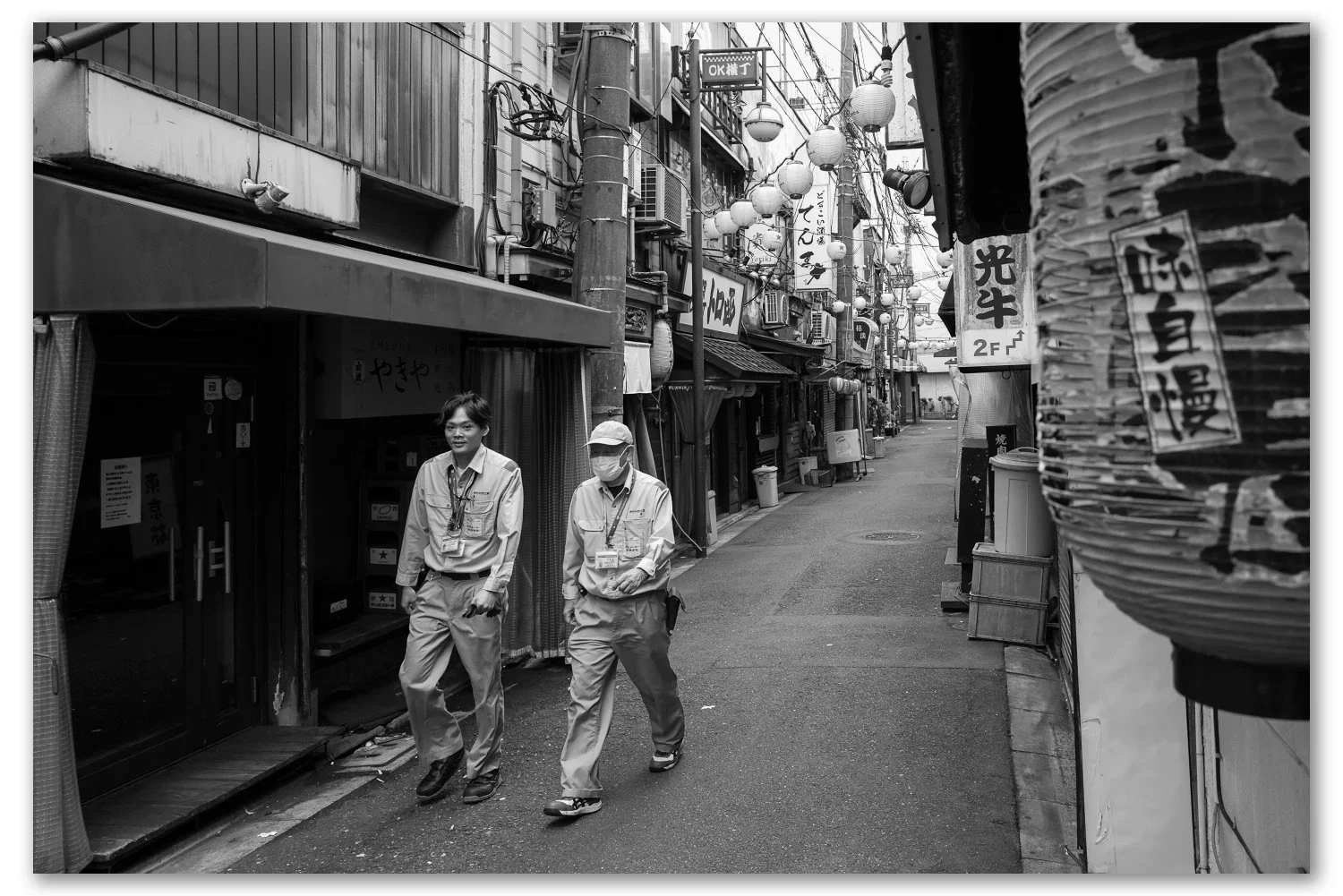
OK Yokocho, Akabane.
From Akabane, I ended up in eastern and central Tokyo. It's kind of the old-world side. It's a great place to get lost, because everything is so interconnected. You can start in Ueno, walk through an old market, and find yourself in Tokyo's craziness in less than an hour. That is precisely what I did. I walked quickly through the familiar streets of Ueno's Ameyoko, then took a detour past Okachimachi and into Akihabara.
![A shopkeeper in a white cap among racks of stock at a crowded stall in Ameyoko, Ueno]](https://images.squarespace-cdn.com/content/v1/5edf1b5a80a94a6733cf75f3/eaff4305-f08b-465c-8aba-d8b272d8741b/UenoMarket_L1061288_tokyoforgeries.webp)
Ueno Market shopkeeper taken with the Leica Q2 Monochrom
I didn't photograph the bright lights or the typical side of Akihabara. Instead, I focused on exploring the further-afield side streets and back streets to see what I could find. All that bright lights, big city, neon bullshit will be there tomorrow and the next day and every day after. But the stuff on the side streets is fading, and there's no guarantee what you find today will still be there tomorrow.
After a good walk around the periphery of Akihabara, I found myself with a terrible thirst. I was very much in need of coffee. There's no better place for coffee and, as it turns out, street photography in Tokyo than the wonderful neighbourhood of Jimbocho. Since it's just a few stops away on the Toei Shinjuku Line, I thought, why not?
Unfortunately for me, street photography was the first order of business once I arrived in Jimbocho. There's just too much cool there. I don't mean cool in a contemporary sense, but much more in a tragically hip sense. It's a place I purposely leave unmapped in my mind, so when I get there I don't really know which way I'm going to go. That makes it perfect for a day like this.
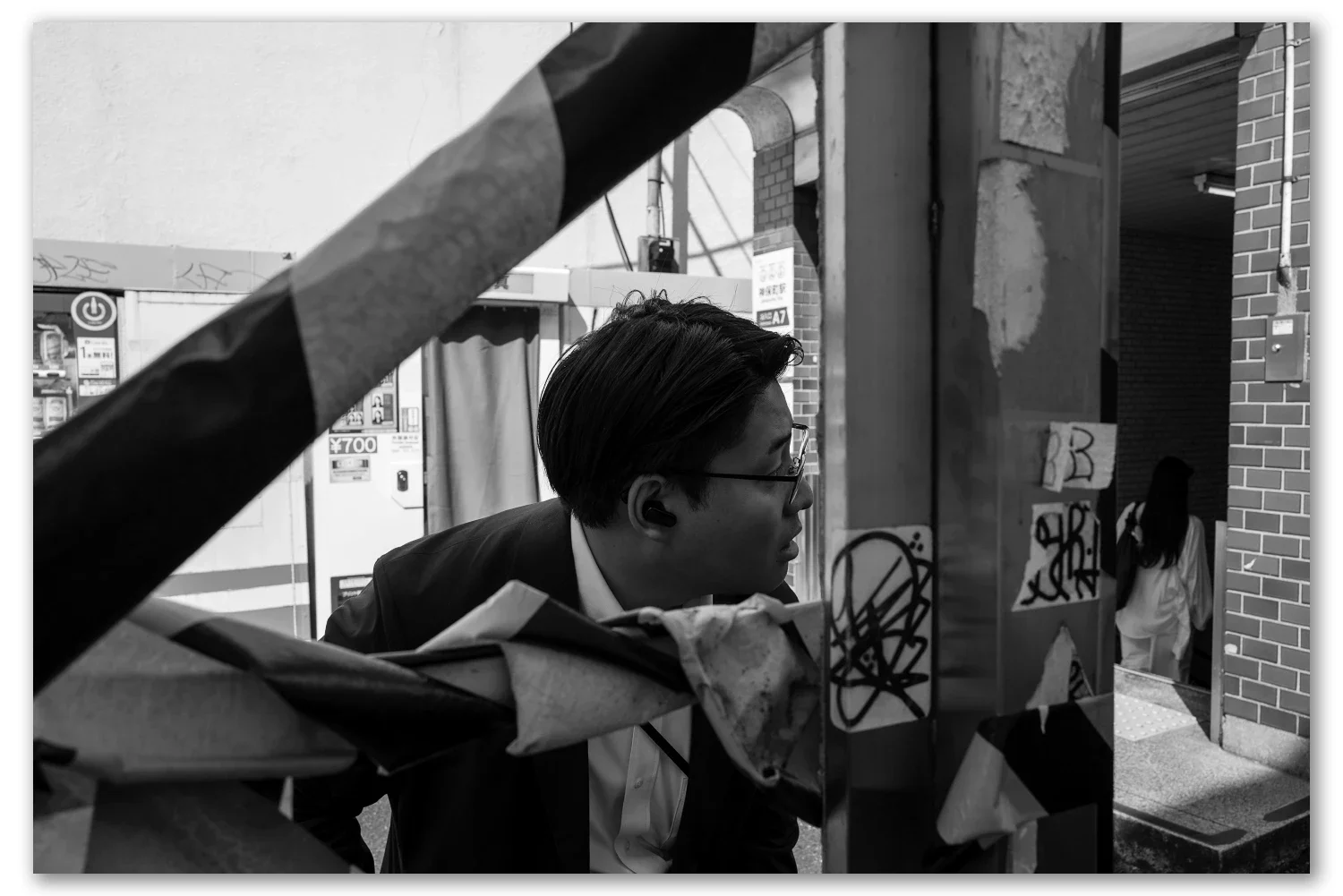
Street photography in Jimbocho.
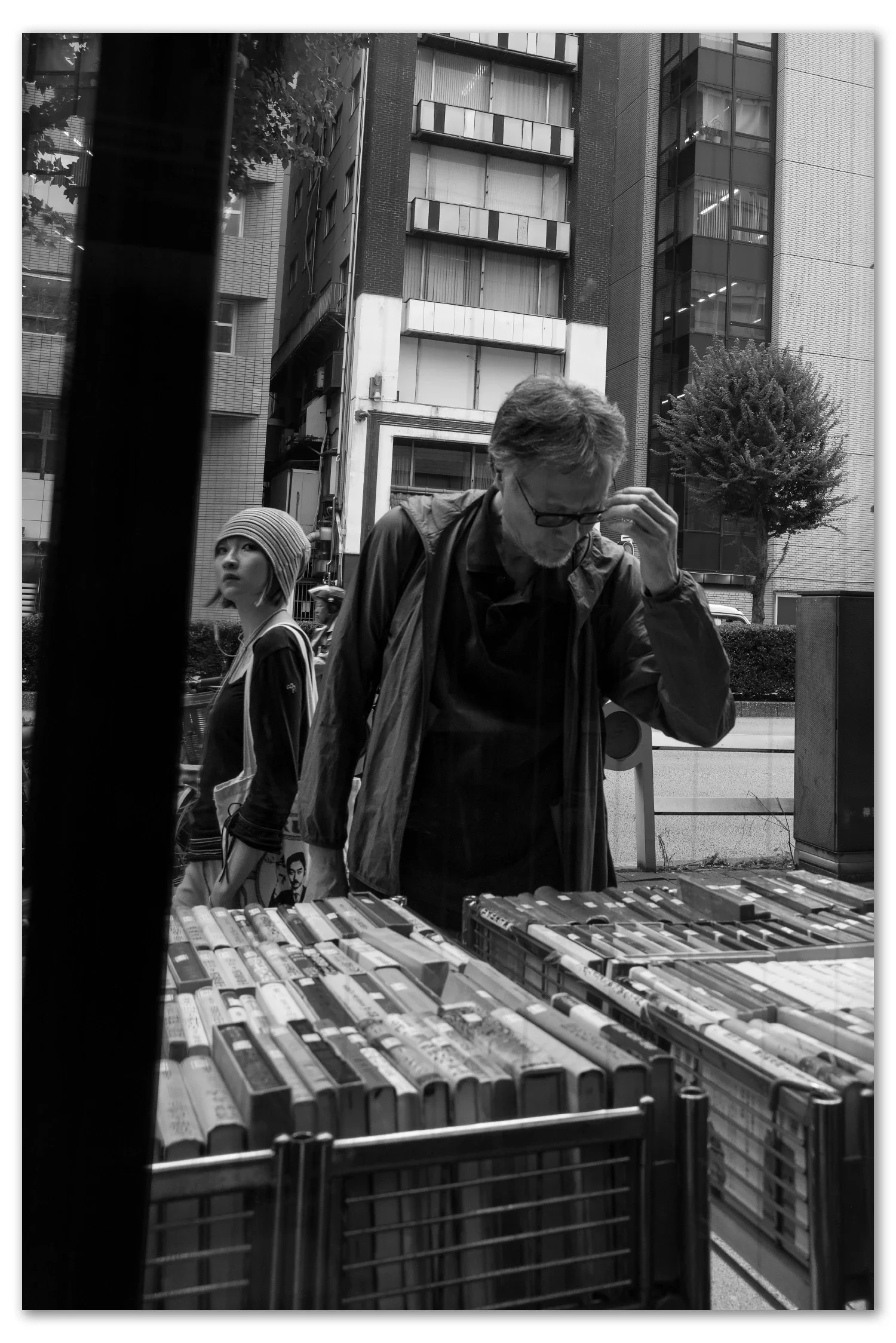
Jimbocho Book town Street Photography
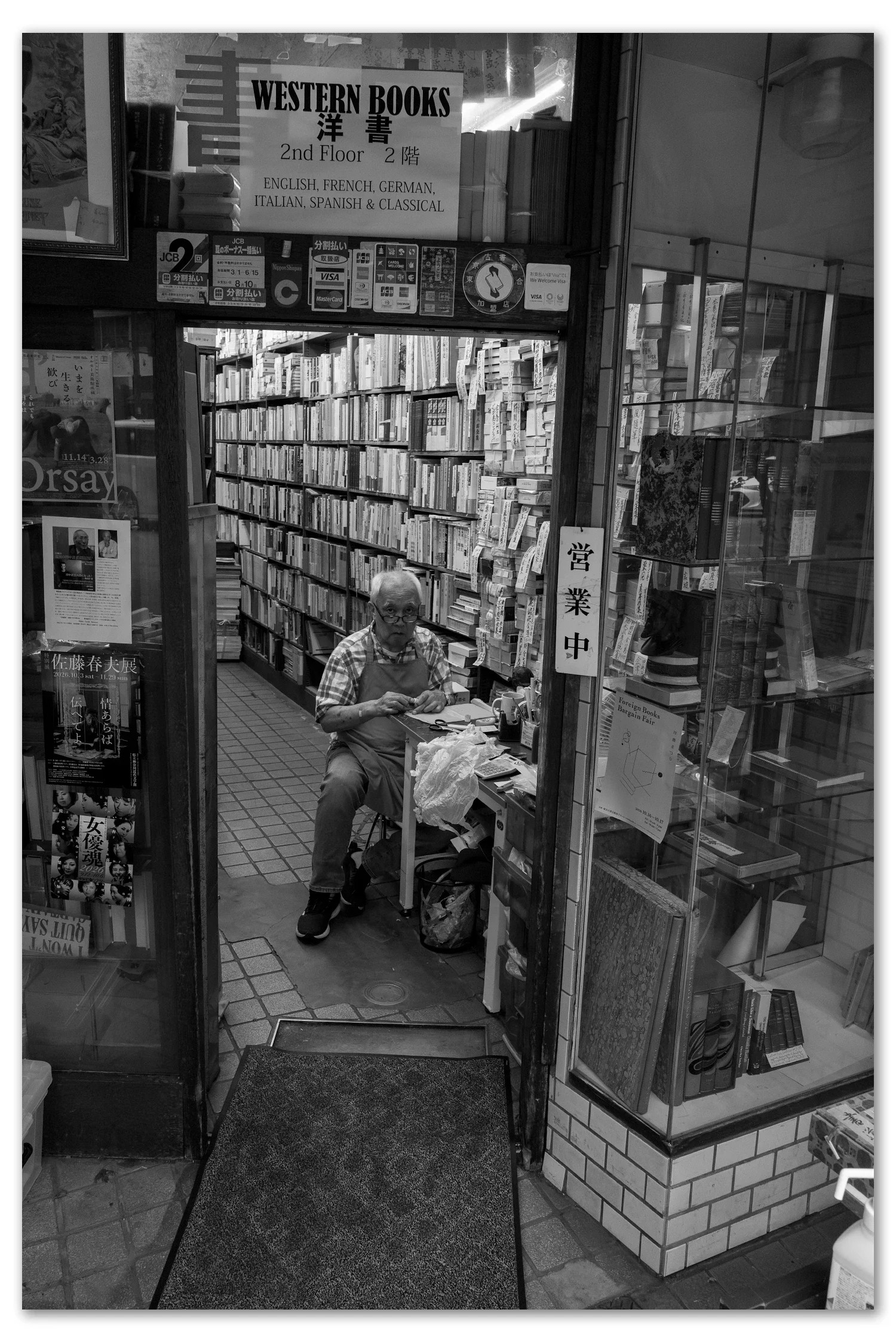
Book Town street photography in Jimbocho, Tokyo
The coffee I craved so much ended up being more of a nightcap at the end of the afternoon, and it turned out to be the end of my day. There are so many cafés and coffee roasters here that it's really hard to go wrong, so I just sat on the street, enjoyed my coffee and watched Tokyo pass me by, completely satisfied.
Part two: the rain
This August and September have seen a record number of typhoons make landfall in Japan, which has made the weather very hectic and uncharacteristic. It's a wonderful respite from the intense humidity of a Tokyo summer, but it has made shooting consistently difficult. Shooting in the rain is very nice, very romantic, but shooting in too much rain just doesn't yield anything very good. It's miserable.
Miserable is a wonderful word to describe the kind of rain I walked into just a couple of days before that afternoon in Jimbocho. I had expected rain, but had purposely waited until mid-afternoon to leave, thinking I had avoided the worst of it. I was terribly wrong.
Again, I started in Akabane, where I concentrated on a couple of specific locations I like and tried to find a new way to shoot them, or a subtlety or nuance I might have missed. I spent quite a bit of time trying to figure them both out. What came away was more mediocrity, but also the impetus for future good ideas.
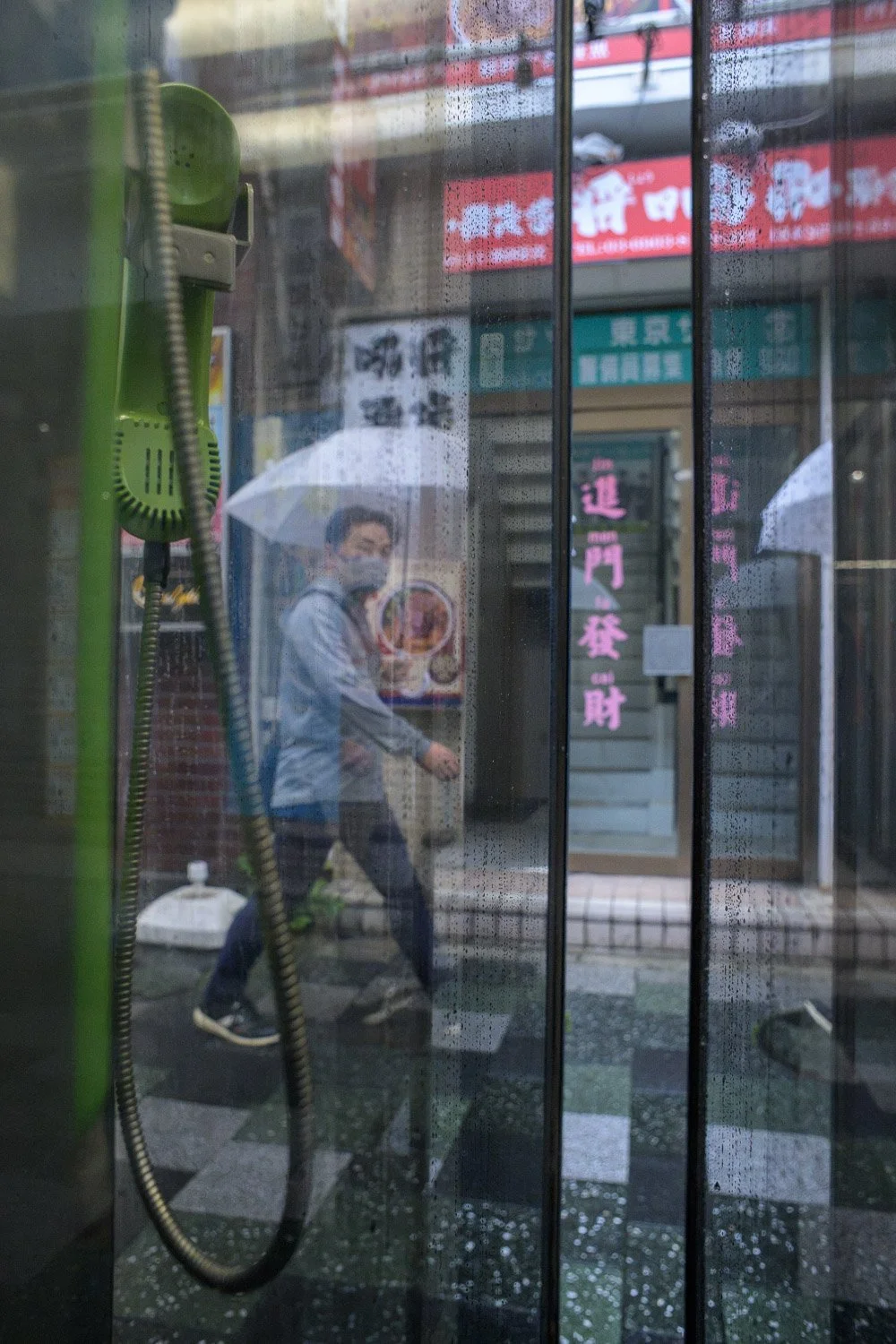
Akabane telephone booth street photography reflection
I kept moving, deciding I would head to Shimbashi and walk back through Ginza to the Ueno area, where I would eventually catch the train home. However, the first place I ended up shooting was Kanda. I'm not sure exactly why, but when the train pulled into Kanda Station, I stepped off. At first the rain wasn't too bad, but it got stronger and stronger, making it difficult to keep moving and keep shooting.
Rather than languish in unsuitable conditions, I took my own advice and kept moving, heading this time to Yurakucho Station, which is on the doorstep of Ginza but more famous for the Tokyo International Forum. Here there's lots of space to move from indoors to outdoors. It offers some cover from the rain, but not entirely, which makes it a great place for reflections.
![A man in a checked shirt reads on a bench in the rain-soaked plaza of the Tokyo International Forum, a closed umbrella at his feet]](https://images.squarespace-cdn.com/content/v1/5edf1b5a80a94a6733cf75f3/24ec19f7-2e15-46a8-a8f8-c3468e0234f2/TokyoInternationalForum_DSC3551_tokyoforgeries.webp)
Reading on a rainy night at the Tokyo International Forum
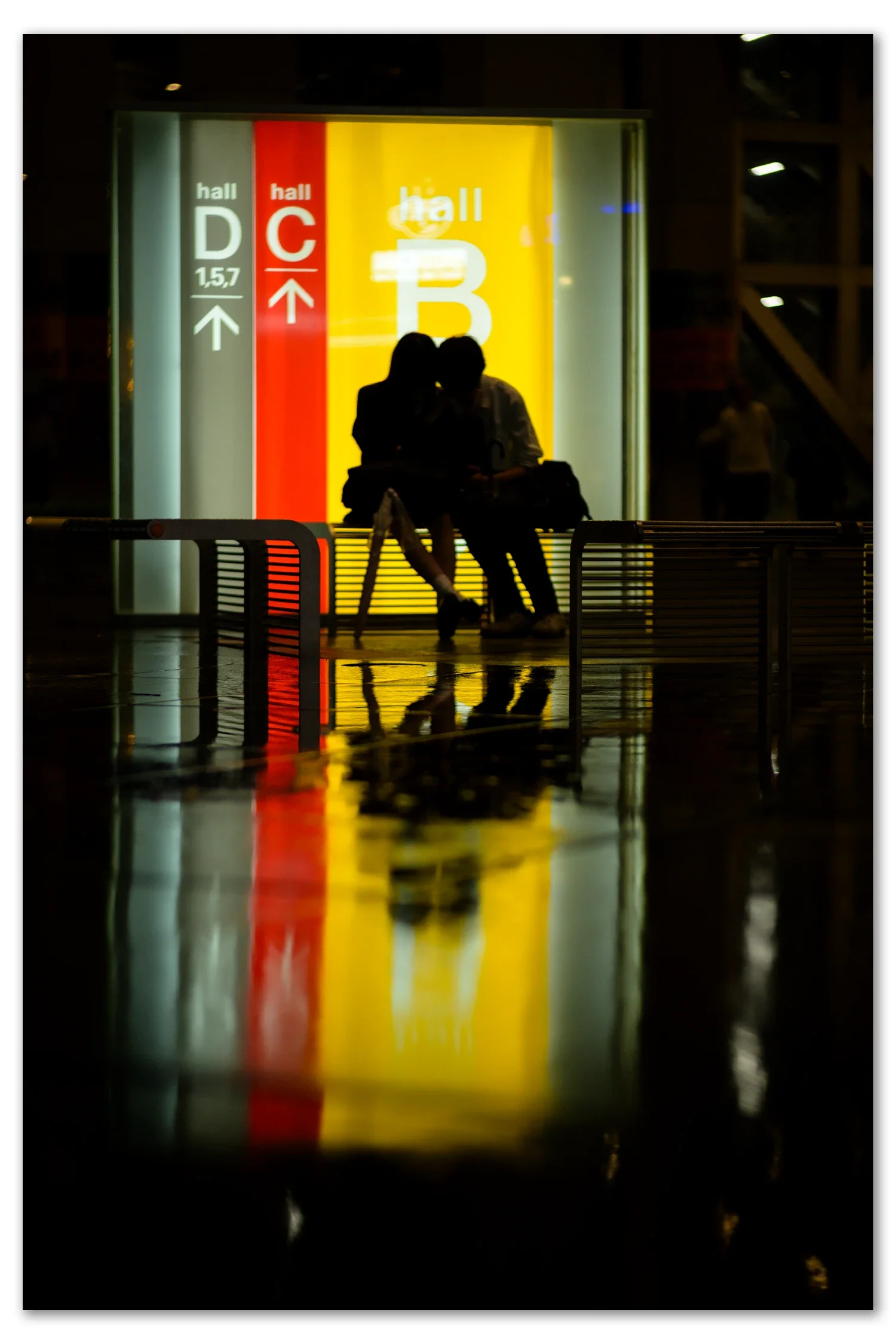
A couple silhouetted in the rain at Tokyo International Forum
I spent some time moving in and around the Tokyo International Forum and made a couple of nice images before moving on to the open square in front of Yurakucho Station. Again, the rain picked up quite a bit, which made shooting somewhat difficult. I did find a couple of nice images, and was happy to move on toward Shimbashi Station.
I would never make it all the way to the station.
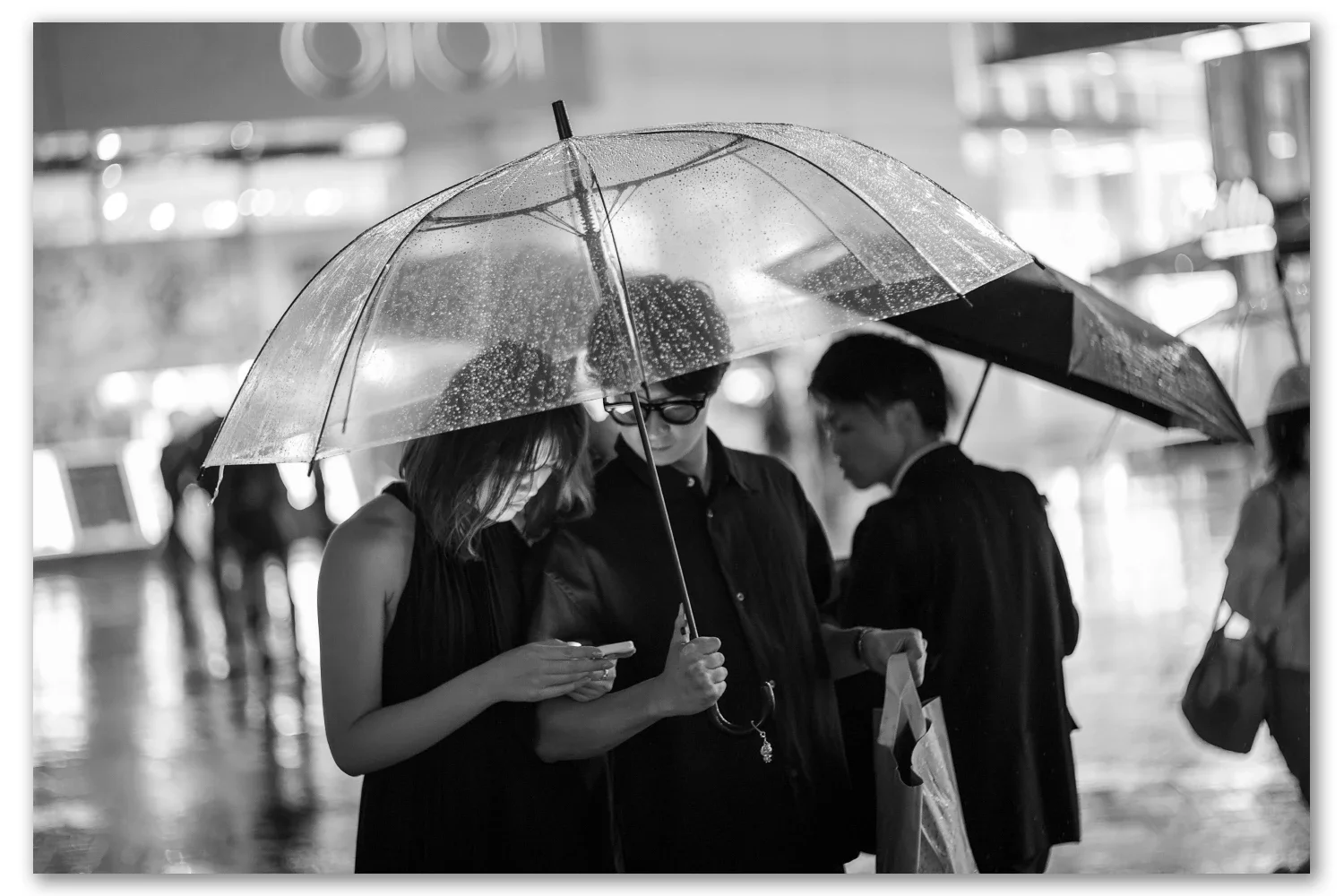
Rainy Yurakucho/Ginza street photography
The rain slowed enough that I could move freely, and I found myself quite close to the tracks, enjoying the restaurant and izakaya culture and the patrons this area is known for. Keeping with my theme, I didn't linger in any one place too long. Probably much longer than I normally would on a day of movement, but the rain made it forgivable. Again, I was rewarded with a handful of frames that were pretty good.
With the worst of the rain over, battery life waning and tired legs, I decided to head for home, but not without a quick visit to Akabane. The nightlife here is real. Just outside the station is full of people trying to coax you into their bar or restaurant. That's not really for me, but the massive puddles and bright lights made for some interesting shots.
![A woman walks through the smoky lantern-lit izakaya lane beneath the railway tracks between Yurakucho and Shimbashi]](https://images.squarespace-cdn.com/content/v1/5edf1b5a80a94a6733cf75f3/76a68132-21b9-408b-9fe8-c00d7d10b459/Shinbashi_20260916-_DSC44091.jpg)
A lady opens her umbrella as she walks past the famous izakaya beneath the tracks between Ueno and Shimbashi on a rainy Tokyo night.
On my way to the station, I made a quick walk through OK Yokocho, which was decidedly empty. It was quite beautiful and ethereal, and I couldn't help but photograph it, less like a street photograph and more like a cityscape. Part of me wished I had a tripod and all the time in the world, but another part of me was desperately begging for a patron or cook or hostess to come flying out of one of those doors, right at my camera. I spent far too long wanting both, but I'm really happy with the forgery I created there.
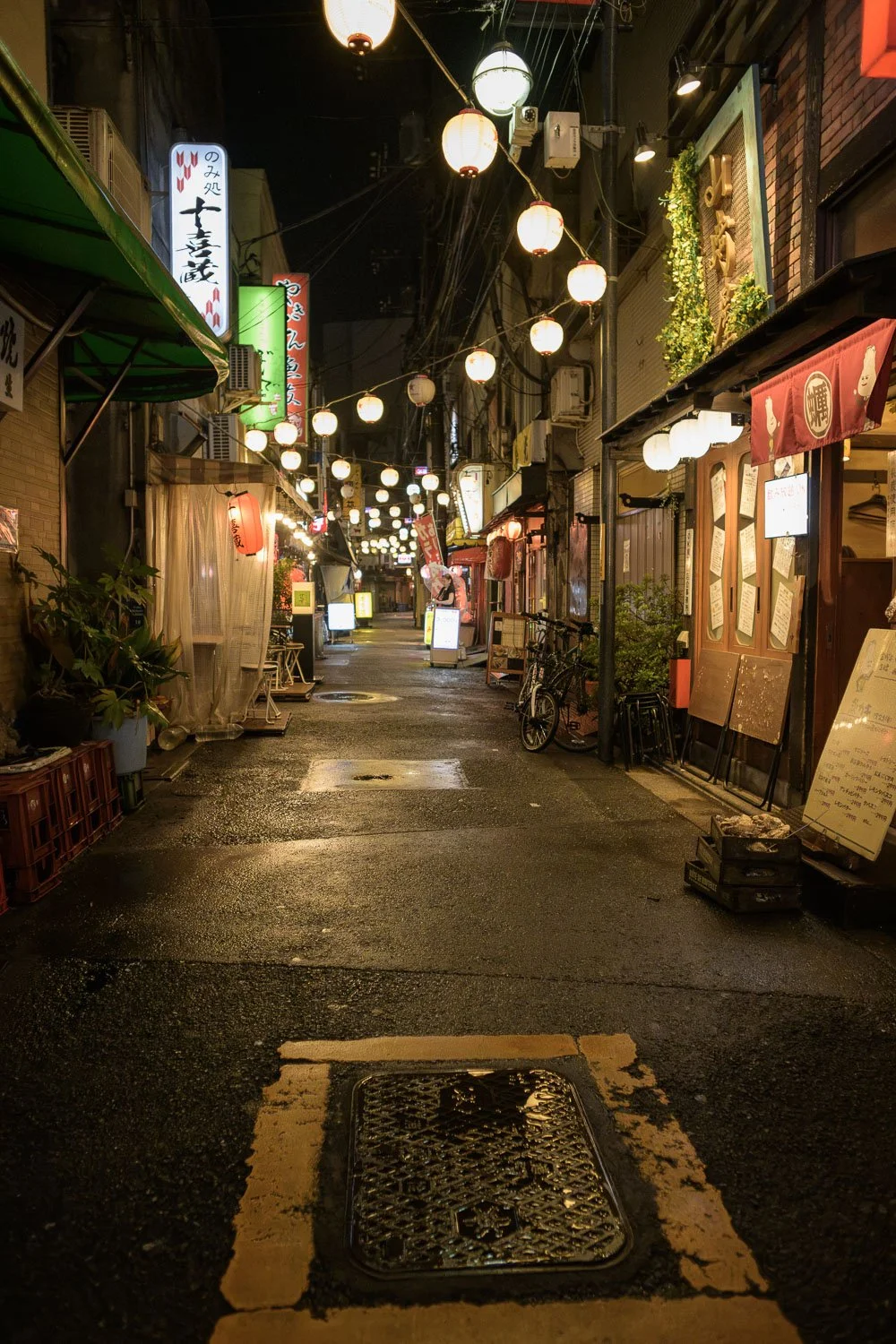
Ok Yokocho at the end of a rainy night. Street photography in Akabane, Tokyo.
A note on the glass
I shot the Jimbocho day on a Leica Q2 Monochrom with its fixed Summilux 28mm. I shot the rain day on a Nikon Z9 with two older Nikkor lenses: a 24mm and an 85mm. Two very different tools, the same practice: walk, look, ride the train, walk again.
Just move
When in doubt, when feeling overwhelmed, when in a new city, just walk, just move. You're not missing anything. You're not leaving anything to the side by moving forward. You're gaining a new perspective. It's challenging, but it can also be quite rewarding.
— Jeff Austin, Tokyo Forgeries · Akabane, Ueno, Okachimachi, Akihabara, Jimbocho, Kanda, Yurakucho · 16 and 18 September 2026
The streets never look the same way twice. I’m curious—how does this side of Tokyo hit you? Drop a comment below.
I live on flat whites and shutter clicks. If you’ve found value in these shots, toss a coffee my way to keep the sensor humming.
For those who want to skip the tourist traps and shoot the real Tokyo, my calendar is open for workshops. Explore the Masterclass here or email me at jeff@tokyoforgeries.com.
See you in the shadows.
Tokyo Forgeries is an evolving archive of Tokyo street photography and vintage-lens deep dives. We spend 30 days in every ward, using mid-century brass and glass to capture the city’s soul. This is a roadmap for the active pursuit of craft—documented through the geography of Tokyo and the character of its light.