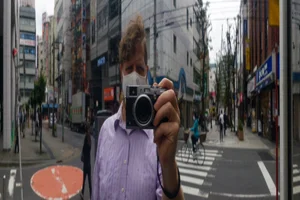
Street Photography: The Genre of Failure
Street photography has always been a genre of failure. 99% of what is taken never sees the light of day-It is all chaff. Separated and left on the cutting room floor, dragged into the recycle bin or forgotten 0`s and 1`s.
The remaing 1% is 99% good. Good in any discipline is the nice way to say mediocre. It is only 1 shot in 1000, which is great. I shoot all day at these odds. It is worth it every time.
999 failures make my possible 1 great frame a 1-in-a-1000 shot. I like the sound of that. This image is 1-in-a-1000. Seeing that in the moment, capturing the frame on the streets after all that failure is an amazing feeling.
Those 999 frames are not merely empty space on a memory card or backup drive. Each of those images is a lesson. Often, it is a simple one, specific to the moment, as you find your frame. Occasionally, they are larger failures that require more thought and time to fully grasp. Today is more about the latter than the former.
Asakusa Street Photography Lessons Learned
This morning, I was in Asakusa near the main gates of Senso-Ji Temple, called the Kaminarimon. Literally, it translates as the Thunder Gate. I took a shot here a few months ago, designed to be a banner photo. Something that looks big and shows the context of a location, but could also serve as a background image for text.
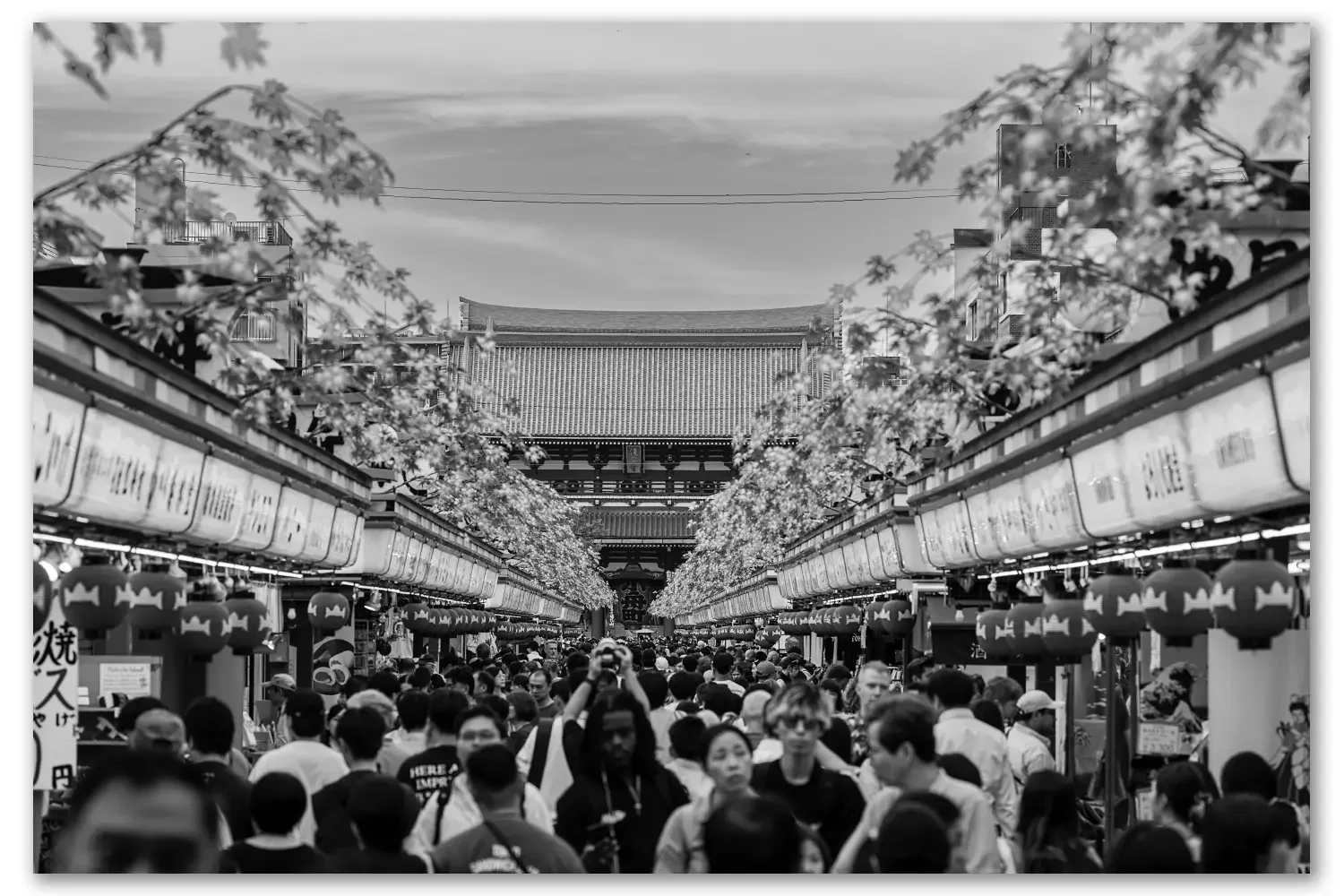
Main shopping street of Senso-Ji Temple
I took that photo for that purpose; I felt it could be a powerful image on its own. However, it was missing something. There was no emotional connection for the viewer outside of the grandeur of the scene. This image needed a face in the crowd to add emotion to the scene.
I set out to capture that exact image. To make sure I didn't come home empty-handed, the decision was made to include 85mm and 135mm focal lengths alongside the previously used 200mm lens. I felt 100% confident that I would capture that 1% great shot. Moreover, proud of myself for improving on the previous image that had served its purpose very well.
The focal lengths of 85-135-200mm would all give me a similar frame with a decidedly different amount of compression. My thinking was simple: one of these vintage Nikkors would get me the image I wanted. All three were spectacular failures.
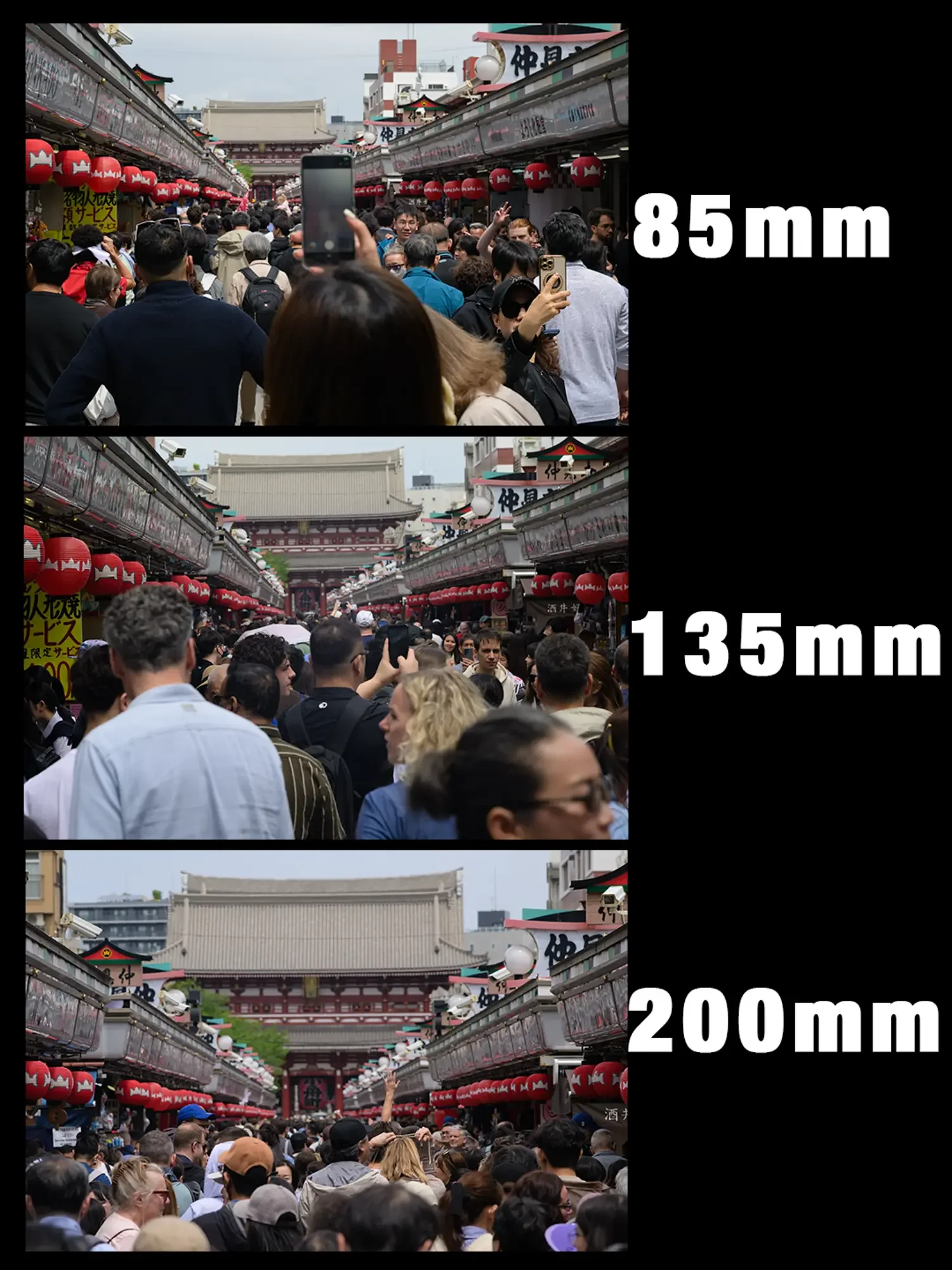
85mm-135mm-200mm View of Senso-Ji shopping street
I pushed it for a while, but that face just wasn’t there. There were hands waving, hands with phones, and the occasional tour group flag. I wanted to capture the orderly mob mentality with just one face to express the feeling of this sea of people off to see something spectacular together, while simultaneously alone.
The street photography gods had other plans. Below is the best I could get.
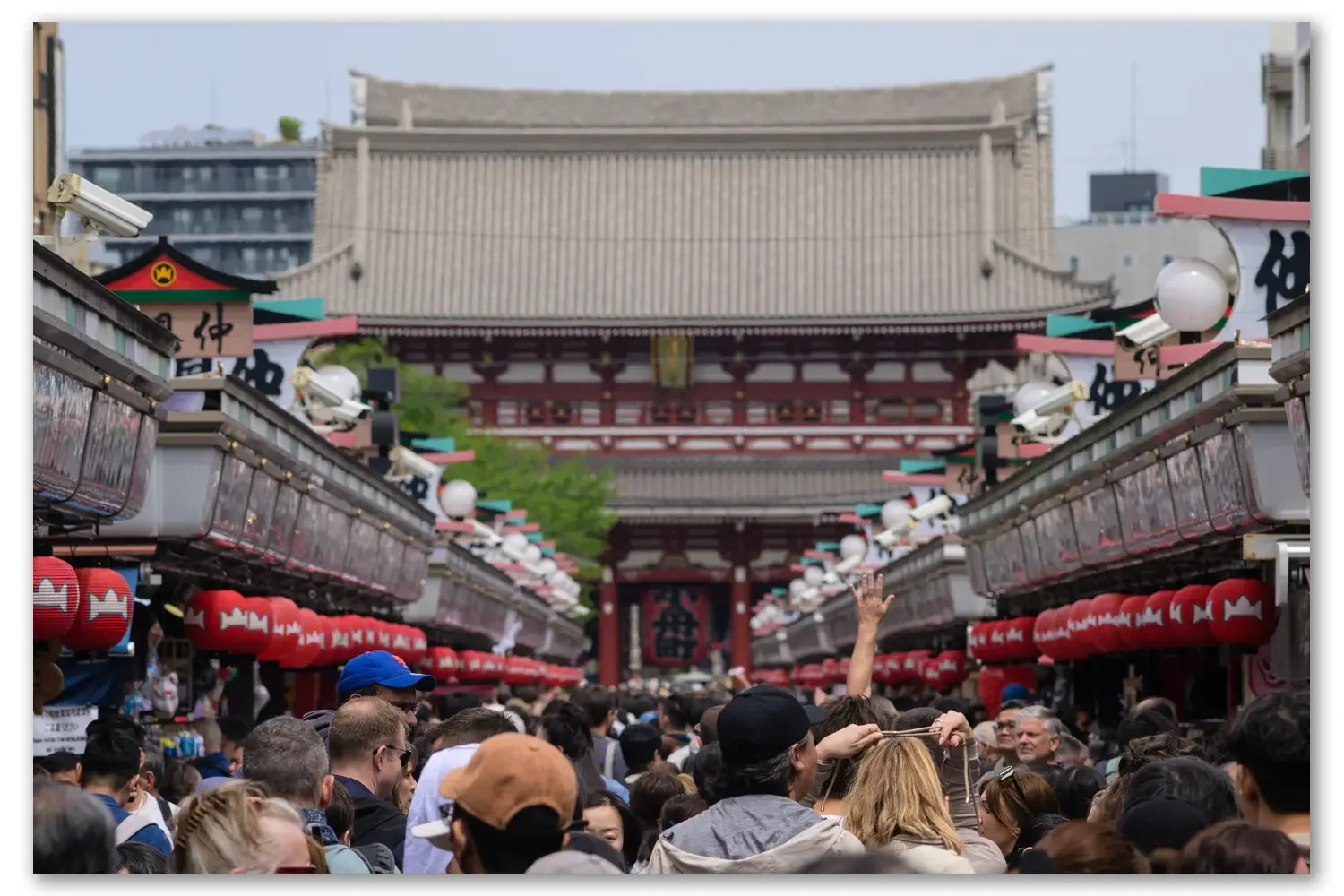
Hand waving on the main shopping street of Senso-Ji
This could make the 1%, but it’s far closer to good than the great I am working for. I had to move on. Initially, the plan was to do a quick loop and give myself a second chance. I never give up. That is the golden rule in street photography: exactly what you are looking for will happen the moment you give up and drop the camera from your eye.
I moved through the crowd, shooting some individuals, but nothing that made the grade. At the halfway point, I made the simplest choice: I turned around. With all the people facing me, I waited for someone interesting to walk past. This is not the shot I had envisioned, maybe it wasn’t my day, maybe I am not good enough for that shot yet, who knows. It is, however, the feeling I wanted to capture.
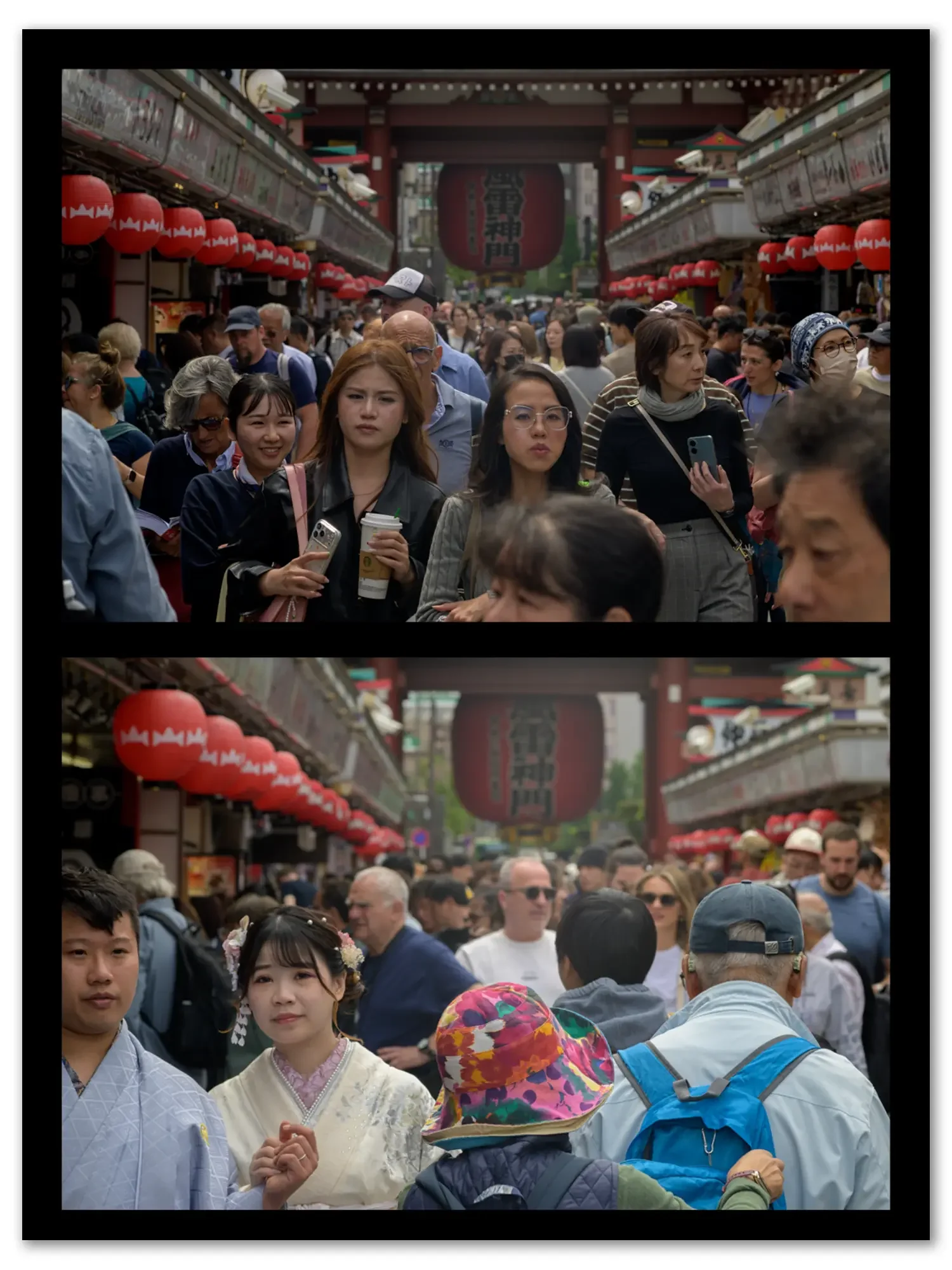
People at Senso-Ji shopping street, captured with vintage lenses
All that failure for a 1-in-1000 chance at something great. If going out every day to shoot in Tokyo gets me some good and one great, I like those odds. They seem very much skewed in the artist’s favour.
Are any of the crowd shots great? No, not really. They will not win any awards, but they did reintroduce to me a valuable lesson: do not panic, keep shooting, and if you don't see what you want right in front of you, maybe turn around.
The streets never look the same way twice. I’m curious—how does this side of Tokyo hit you? Drop a comment below.
I live on flat whites and shutter clicks. If you’ve found value in these shots, toss a coffee my way to keep the sensor humming.
For those who want to skip the tourist traps and shoot the real Tokyo, my calendar is open for workshops. Explore the Masterclass here or email me at jeff@tokyoforgeries.com.
See you in the shadows."
Tokyo Forgeries is an evolving archive of Tokyo street photography and vintage-lens deep dives. We spend 30 days in every ward, using mid-century brass and glass to capture the city’s soul. This is a roadmap for the active pursuit of craft—documented through the geography of Tokyo and the character of its light.