Shibuya Without the Crossing: Where I Actually Shoot
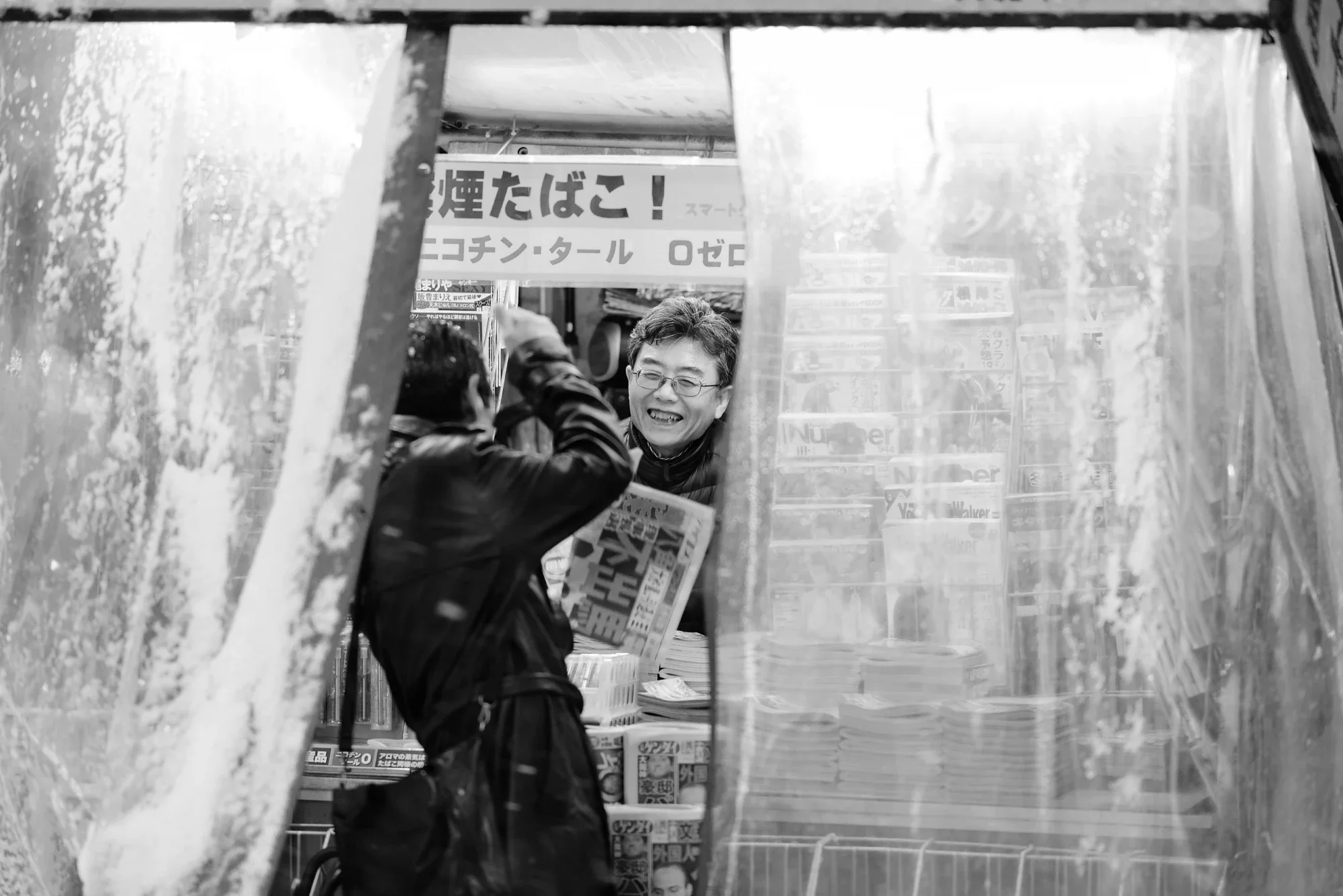
The famous last news stand in Shibuya
Every evening, a familiar piece of theatre unfolds just outside the Hachiko exit of Shibuya Station. As the pedestrian lights turn green, thousands of people surge into the intersection from half a dozen different corners. Above them, giant LED screens wrap around skyscrapers, bathing the asphalt in a hyper-saturated, synthetic glow. Dozens of smartphones are held aloft on selfie sticks while travellers spin in slow circles, capturing their own presence in the world’s most famous sea of humanity.
This is Shibuya Crossing, an iconic monument to Tokyo’s endless kinetic energy. But it is also a stage—an over-photographed, hyper-curated space where everyone, whether tourists documenting their arrival or locals pathologically pretending not to notice the lenses, participates in a performance. The crossing has become a caricature of Tokyo, an image so relentlessly polished by Instagram feeds and tourism campaigns that it obscures the city’s true character. To find the psychological pulse of the metropolis, a photographer must turn their back on the neon spectacle, pocket the wide-angle lens, and walk away from the light.
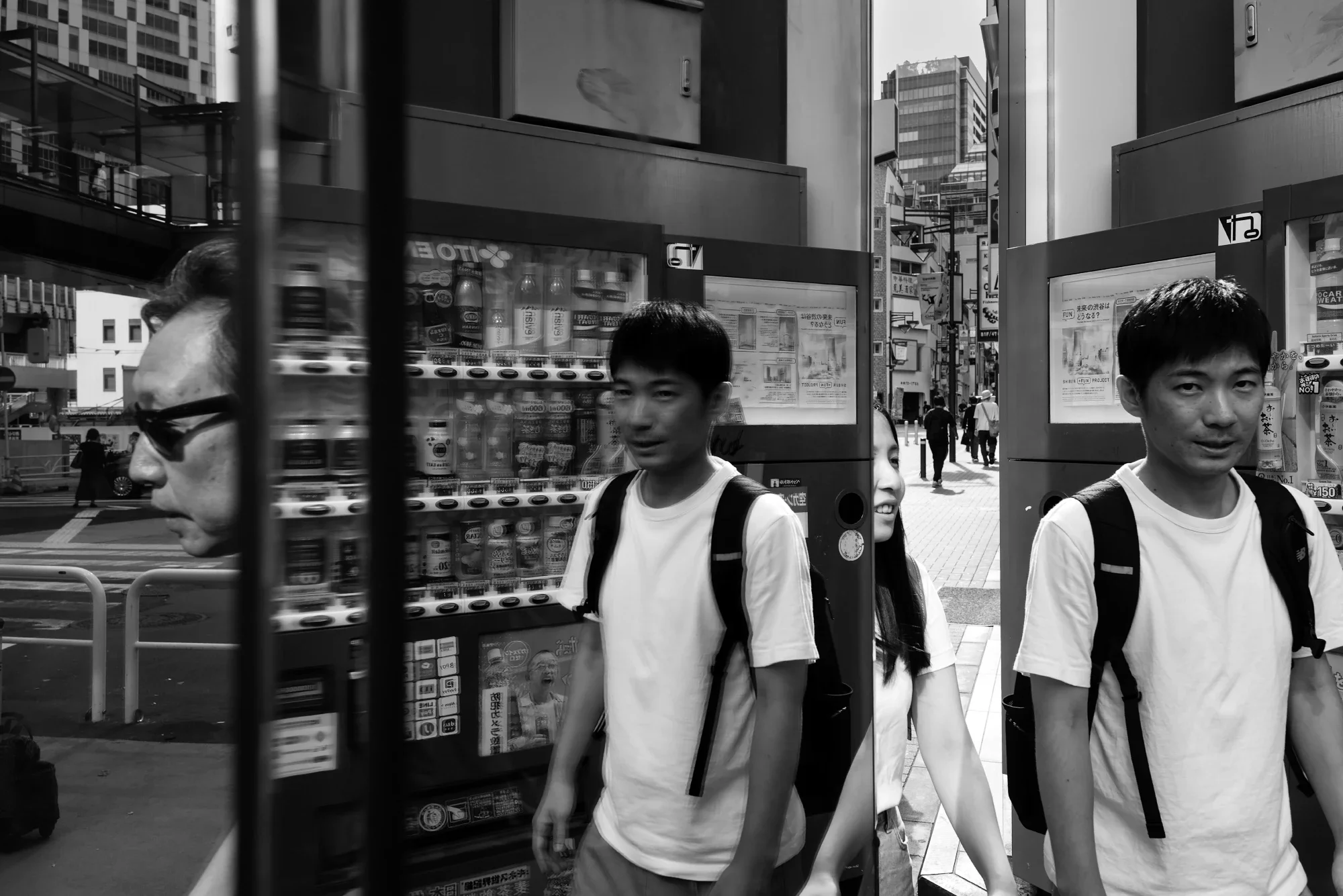
Four faces reflection Shibuya
Into the Shadow of Dogenzaka
The transition happens fast. Walk past the towering Shibuya 109 building and follow the steady incline of Dogenzaka, or slip into the narrow gaps behind the massive Mark City complex, and the neon roar begins to muffle. The wide avenues fracture into a labyrinth of cramped, dim backstreets. Here, the grand architectural statements of modern capitalism disappear, replaced by a dense, chaotic jumble of weathered concrete, exposed wiring, and low-slung doorways.
In these neglected spaces, the atmosphere shifts completely. The overwhelming collective hum of the crossing gives way to a heavy, localized intimacy. The lighting is no longer designed to dazzle or sell; instead, it becomes a patchwork of accidental illumination. A single flickering bulb outside a tiny izakaya (Japanese pub), the cold blue glow of a solitary vending machine, or the sweeping high beams of a delivery van turning an impossible corner—these are the elements that slice through the dark.
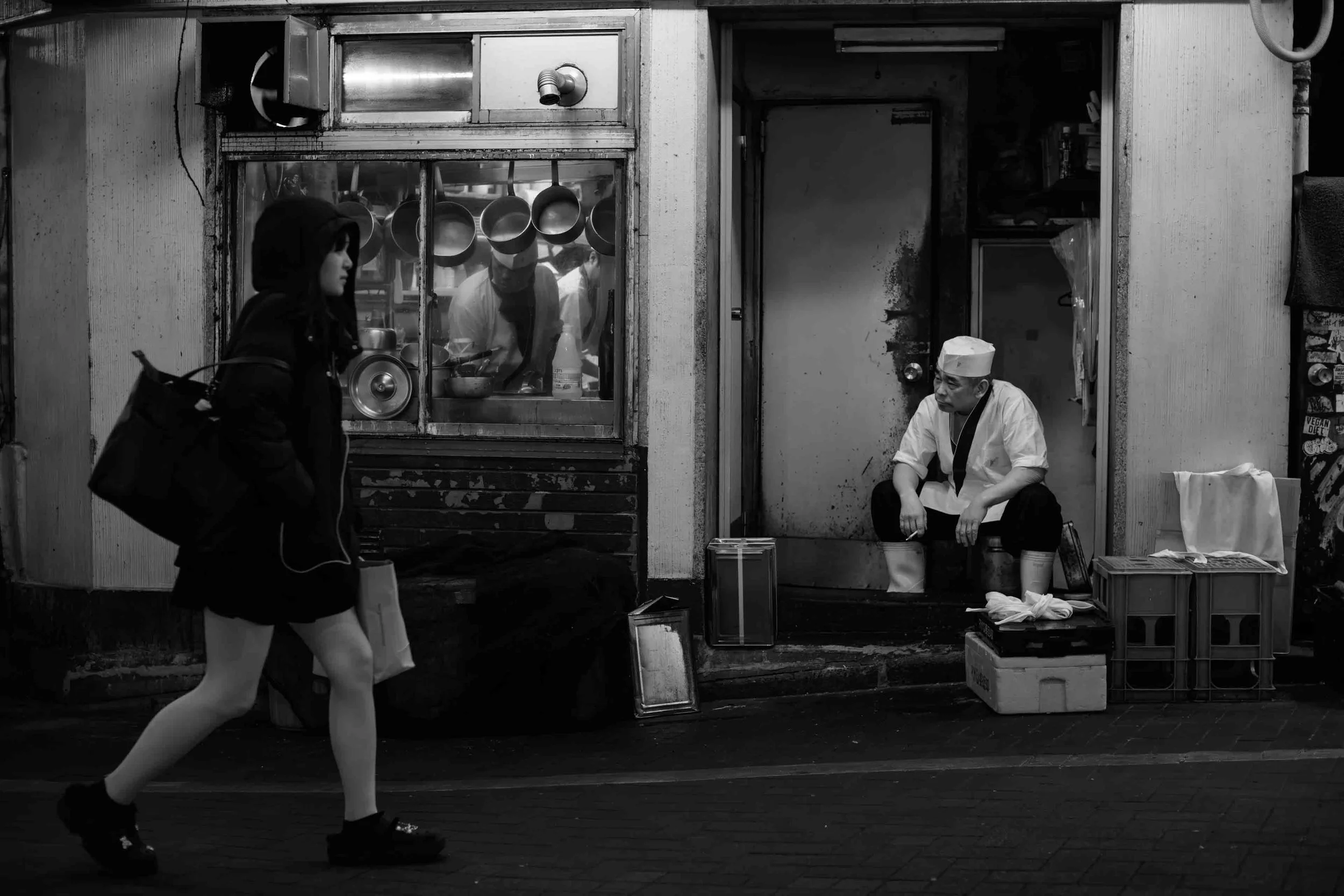
The most famous spot to smoke in Shibuya
The Weight of Private Urgency
In the back alleys of Dogenzaka, people do not move for cameras. The individuals who pass through these tunnels of concrete are driven by a deeply private urgency. There are no content creators pacing their steps or friends posing against graphic walls. Instead, you see the solitary salaryman, tie slightly loosened, shoulders curved under the invisible weight of a twelve-hour workday, walking toward a nondescript station entrance. You spot a kitchen worker stepping out into a damp corridor for a quick, silent cigarette, staring blankly into the middle distance.
In these small, unscripted moments, the true psychological landscape of Tokyo reveals itself. It is a landscape defined not by futuristic techno-optimism, but by a quiet, collective exhaustion. The city runs on an intense, unyielding friction—a relentless social pressure that demands perfect conformity and ceaseless labour during the day. When the sun goes down, the backstreets become the pressure valves where that tension is slowly, invisibly released.
Capturing this exhaustion requires an eye for the uncomfortable and the imperfect. It is found in the slouch of a commuter leaning against a tiled wall while waiting for a late-night taxi, or the tight, guarded expression of someone slipping into a hidden doorway. These subjects are entirely unaware of—or indifferent to—the camera. They are simply living out the heavy, mundane reality of surviving in one of the densest urban environments on earth.
The Beauty of Worn Spaces
There is an inherent honesty to the physical deterioration of these alleys. While the main thoroughfares of Shibuya are constantly scrubbed, renovated, and rebranded to maintain a pristine, globalized aesthetic, the backstreets are allowed to age. They bear the physical scars of time and human utility. Rust bleeds down from corrugated iron roofs; decades of grease coat the exhaust vents of tiny noodle shops; layers of torn, outdated flyers cling to rusted utility poles.
These spaces are often uncomfortable. They are cramped, sometimes foul-smelling, and structurally claustrophobic. Yet it is precisely within these worn boundaries that the "real" Shibuya lives. The pristine crossing belongs to the world; it is a global asset, a screen onto which outsiders project their fantasies of a sci-fi Tokyo. But the dark alleys belong exclusively to the city itself. They are the domestic, functioning organs that keep the giant machine running.
Not every outing in Shibuya is a success; read about the night Shibuya won.
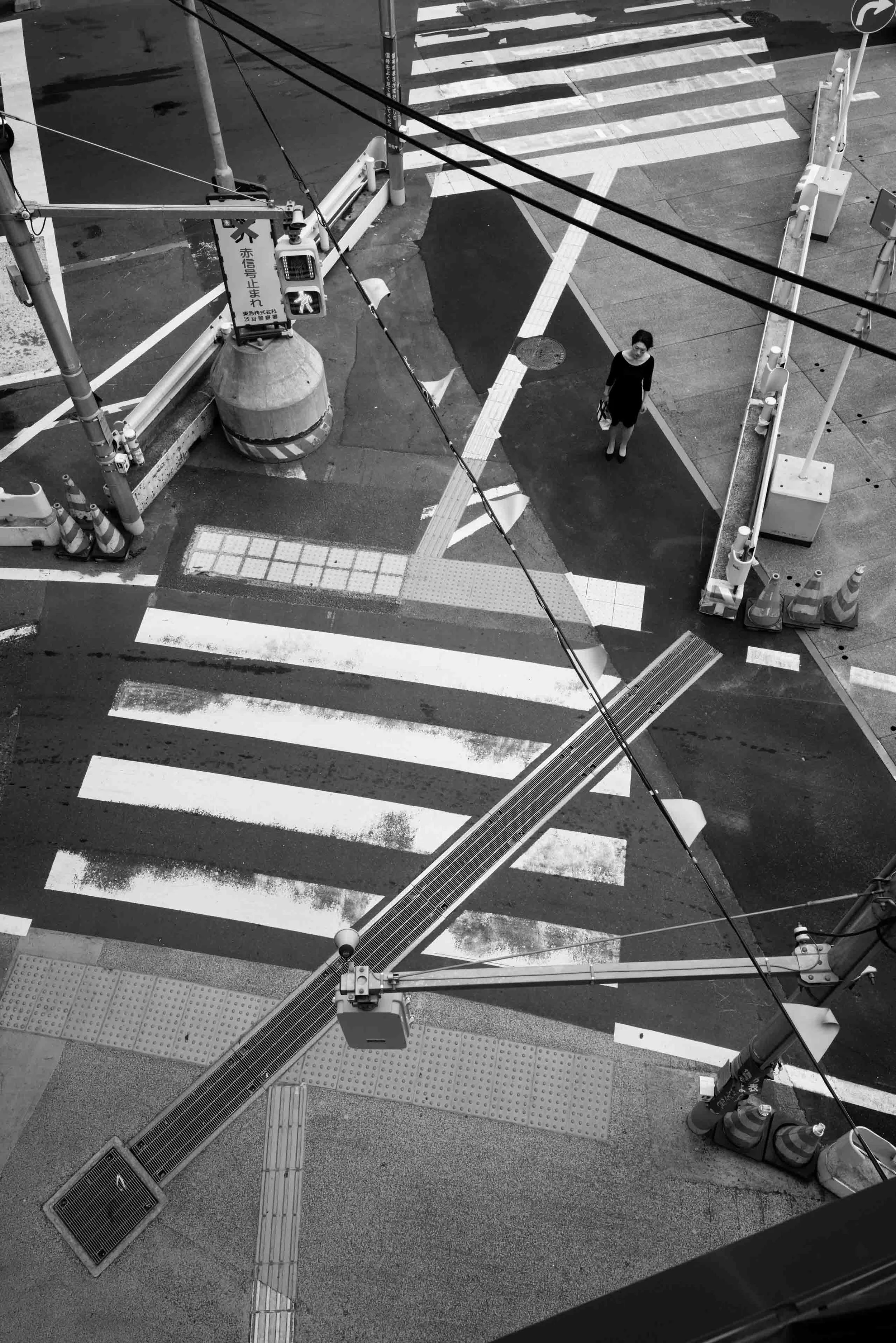
Shibuya construction
The streets never look the same way twice. I’m curious—how does this side of Tokyo hit you? Drop a comment below.
I live on flat whites and shutter clicks. If you’ve found value in these shots, toss a coffee my way to keep the sensor humming.
For those who want to skip the tourist traps and shoot the real Tokyo, my calendar is open for workshops. Explore the Masterclass here or email me at jeff@tokyoforgeries.com.
See you in the shadows."
Tokyo Forgeries is an evolving archive of Tokyo street photography and vintage-lens deep dives. We spend 30 days in every ward, using mid-century brass and glass to capture the city’s soul. This is a roadmap for the active pursuit of craft—documented through the geography of Tokyo and the character of its light.