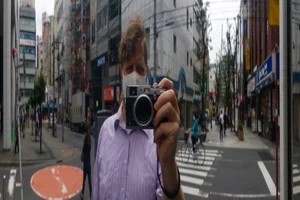
For street photography, the camera body matters least. What affects your pictures most is how often you go out and how close you get, then your focal length, then the character of the lens, and only then the body. Of the two classic focal lengths, 35mm puts you inside the scene and forces you close, while 50mm lets you observe from a comfortable distance — pick one and use only that for a long time.
This question is usually a way of postponing the street, and the genre encourages it. Gear has become a personality here — something you can research, debate and own instead of doing — and every hour spent comparing bodies is an hour the light was doing something without you.
So here is the honest hierarchy, in the order that actually affects your photographs:
1. How often you go out.
2. How close you get.
3. The focal length.
4. What the lens does to light.
5. The body.
The body is last. Not irrelevant — last. Nobody selling one will ever put it there.
Bodies
A phone is a real camera and the best one available to anybody who will not carry something else. Its genuine advantage is not quality — it is that holding one makes you look like every other person on the street rather than like a photographer, which helps enormously with being uninteresting rather than invisible. Its genuine limitation is the mirror image of that: it is very hard to be deliberate with a device built for glancing. And here it cannot be silenced, which matters more than you would expect.
A DSLR is fine. Optical finder, real weight, and a mirror that makes a noise in a quiet alley at seven in the morning. None of that stops you from making good photographs.
I use mirrorless, and the two things that matter aren’t the ones printed on the box. First, you see the exposure before you take it, which is how you learn to expose for a pool of light instead of for an average — the heart of setting exposure for street photography, taught to you by the viewfinder. Second, it can be silent. My Z9 has no mechanical shutter. It makes no sound whatsoever, and that has changed what is possible in a quiet market far more than any difference in image quality ever has.
Silence has costs, and I will not hide them: a fully electronic shutter can smear a fast pan and can band under some artificial lighting. Both are real. Neither has cost me a photograph I cared about.
35mm or 50mm — the actual answer
They are not two points on a scale. They are two different relationships with the person in front of you.
35mm puts you in the situation. The frame keeps the world around the subject — the stall, the signage, the person behind them — and to fill it, you have to be close. That closeness is a social act, not a technical one, which is why the lens is harder than it looks.
50mm has you looking at the situation. Cleaner, more selective, far kinder to a messy background, and it lets you stand back where nobody minds. That last part is the honest risk: it is the focal length that most easily becomes a way of avoiding people while feeling like you are photographing them.
There is also a hard practical consequence from [the zone focusing numbers](/blog/zone-focusing-street-photography). At 35mm, focused at two metres, you have a workable band of sharpness. At 50mm you have about seventy-eight centimetres. If you want to work quickly without autofocus, the wide end is not a preference. It is a requirement.
My advice, which nobody takes: pick the one that forces you to stand where you are least comfortable, and shoot only that for a year.
What I actually carry
Not a recommendation. Evidence.
On a photography day it is a Nikon Z9 and one lens. That is the whole kit, and the single lens is not modesty — it is the decision from earlier in this answer, made at the door instead of out on the street where it would cost me something.
When the day is stills and video together, the Z9 goes into a SmallRig cage with a handle on top so I can flick between the two, and then I will carry a couple of lenses.
The glass is vintage Nikkor — 24, 35, 50, 85, 135 and 200. The 85 is a Nikkor-H Auto f/1.8, mid-1960s and single-coated.
The one that has done the most work lately is a Nikkor Auto 35mm f/2.8, the 1962–74 redesign, the common version rather than the one collectors chase. I spent a day with it across Ginza, Ueno, Yūrakuchō and Akihabara, and my honest verdict was that it is unremarkable — warm-neutral, flare you can control, forgettable in the best possible way. That is what I want from a lens. It should not have opinions about my photograph.
And a Nikkor Z 40mm f/2 for days when I am working around a tour and need to not think about focus at all.
That list is not a shopping list. It is a description of what one person ended up holding after settling into a way of working. Yours will look different, and should.
If you are buying anything
Use what you have. Then buy one used prime, wide. Then buy nothing for a year.
If you want the fastest route to learning: an old manual lens and an adapter cost less than a filter for a modern lens, and the old one will teach you more, because it makes you decide focus before the moment instead of during it.
Buy the bag last, and choose one that t loo’t look like a camera bag.
On old glass, honestly
I prefer vintage lenses for how they treat light. I have no contempt whatsoever for modern ones — they are my professional tools, and on the days that actually pay I use them without a second thought. The argument is about rendering and character. It was never about modern glass being bad, and anyone telling you modern lenses are soulless is selling you something too.
The best camera for street photography is the one you have on the fourth visit to the same corner.

My vintage Nikkor lens set
The common counterpoint
"Gear doesn't matter" is a very comfortable thing to say once you own a flagship body and six lenses, and it is not even true. Autofocus, low-light performance and silence genuinely change what is possible, and telling a beginner the body comes last is how you leave them fighting equipment that fights back. As for vintage glass — that is a costume. You are strapping a manual-focus handicap onto a professional camera that costs more than most people's cars and calling the inconvenience soul. The honest advice is simpler: buy the best autofocus camera you can afford, learn it, and stop mystifying the tools.
My answer
The hypocrisy charge lands and I am not going to squirm out of it. I am telling you the body matters least while holding an expensive one. Notice that, and weigh what I say accordingly.
What I can offer instead of a denial is what my own archive shows. My best frames are not on my best equipment. The pictures people respond to hardest were not made with anything a beginner could not buy used for a few hundred, and the difference between those and the ones nobody looks at is never the camera.
I concede the capability point outright, because I made it myself above. Silence changed my working method. Good autofocus is a genuine advance, and I use it. I am not romanticizing struggle, and a beginner fighting broken equipment should replace it.
But the ordering survives, for one specific reason. The failure mode of a beginning street photographer is almost never that my camera could not do that. It is I was not there, or I did not get close enough, or I saw it two seconds too late. Equipment solves a problem most beginners do not have yet, which is exactly why buying feels like such a satisfying substitute for going outside.
On costume: fair, when it is performance. Mine is not. I use old lenses for how they render, and I would happily use a modern one that did the same thing. Sometimes one does — and then I use it, and say so.
Part of Street Photography: Twenty Questions, Answered — a series answering the questions people most often ask about street photography.
Frequently asked questions
Is 35mm or 50mm better for street photography?
Neither is better; each creates a different relationship with your subject. 35mm keeps the surroundings and makes you work close. 50mm isolates the subject and lets you stand back — which is also its risk, because it makes it easy to avoid people. 35mm is also far more forgiving for zone focusing.
Can you do street photography with a phone?
Yes. A phone is a real camera and often the best one for someone who won't carry anything else, and it makes you look like everyone else on the street. Its limitation is that it's harder to be deliberate with a device built for quick glances.
Do you need an expensive camera for street photography?
No. Most beginners are held back by not being there or not getting close enough, not by equipment. Use what you have, add one used prime lens if you want to, and then buy nothing for a year.
Notes and sources
The kit described is my own. The Nikkor Auto 35mm f/2.8 is the 1962–74 redesign; the 85mm is a Nikkor-H Auto f/1.8. The depth-of-field comparison uses figures from my zone-focusing post. Fully electronic shutters can distort fast pans and band under some artificial light — a general characteristic, not specific to one camera.