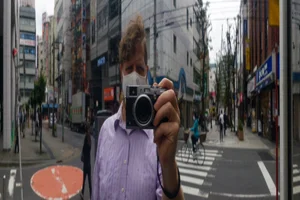
Akabane Street Photography — The Corner Nobody Came to Shoot
A working-class neighbourhood north of the famous map, where the street still behaves like itself.
Akabane, Kita-ku · JR Keihin-Tōhoku, Saikyō & Shōnan-Shinjuku Lines · Akabane Station
A famous corner hands you a famous photograph — which is to say, someone else's. Akabane hands you nothing. You have to build the frame yourself, out of an ordinary shopping street and a low northern light, and that is the only kind of photograph worth keeping.
Akabane is a choice. I could pass it by on the subway without a second thought. Instead, I get off at Akabane-Iwabuchi on the Namboku Line — a back door into the labyrinth of winding side streets. The path is old, quiet, and local. I chose these streets.
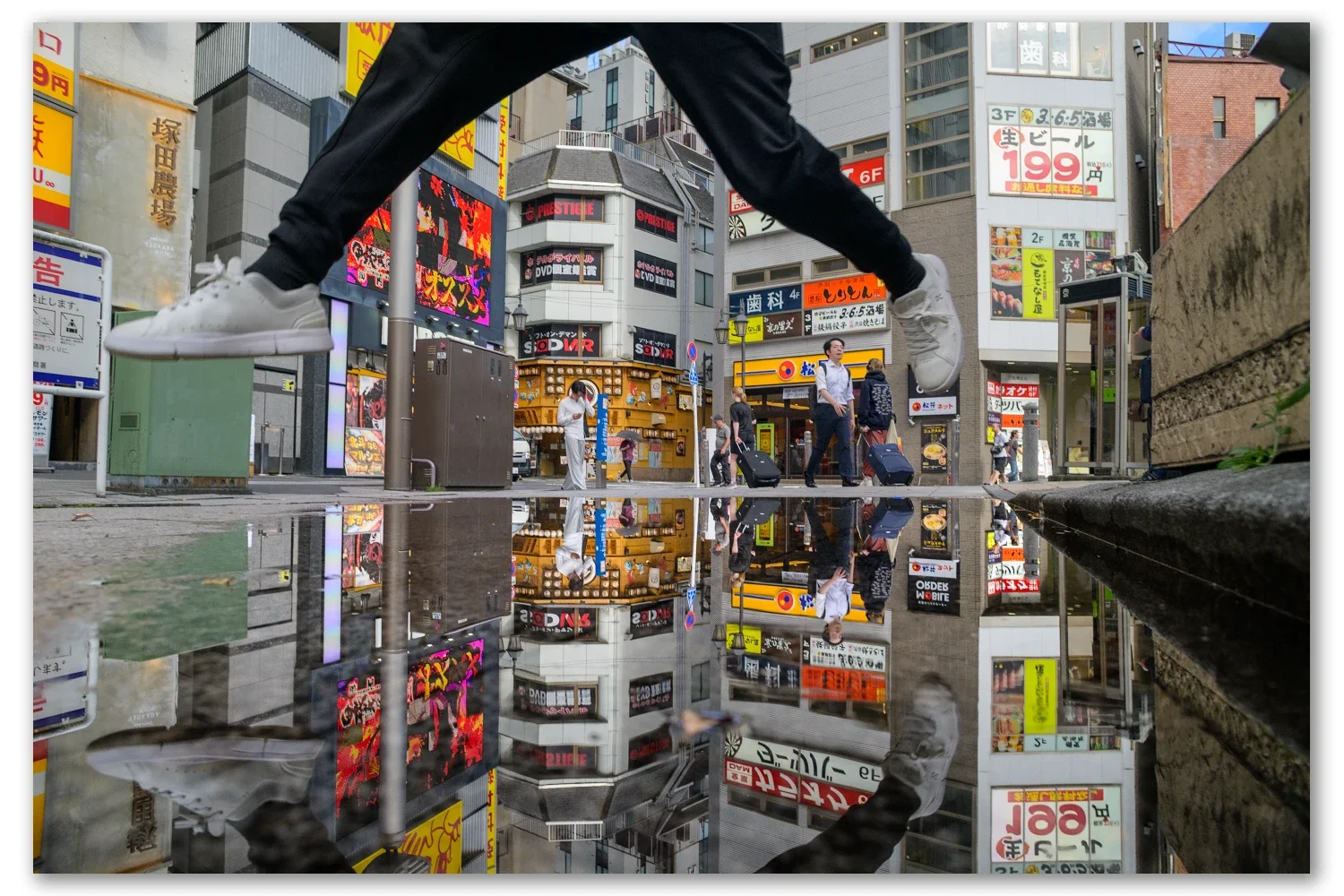
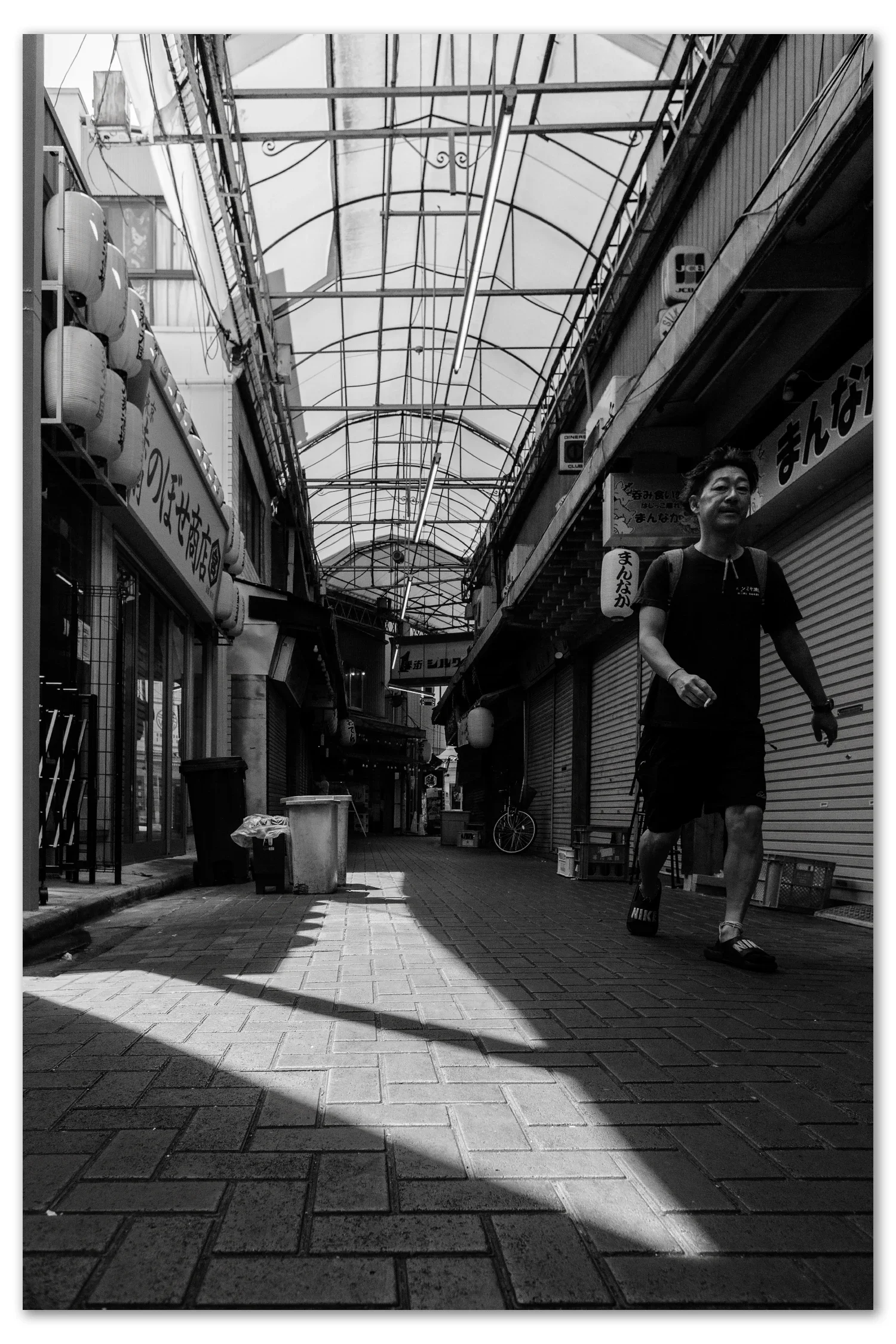
What Akabane Actually Is
Akabane sits at the northern edge of Kita-ku, the last real Tokyo before the Arakawa River and, across it, Saitama. Come out of Akabane Station, and the ward splits in two almost at once. To the west, the land climbs onto the Musashino plateau — quiet, residential, with stairs cut into the cliff line. To the east, it falls away flat toward the river, and that low ground is where the ward keeps its character: covered shopping arcades, lantern alleys, and a drinking culture that starts in the early afternoon and never quite apologizes for it.
This is a working ward. People live here, shop here, and get off the train tired here. It has none of the curated edge of the wards that photographers fly in for. The famous map of Tokyo — the crossing, the neon canyon, the fish market — stops well south of here. What replaces it is something rarer and harder to fake: ordinary life, lived out loud, in a place that was never built to be looked at.
That is the whole appeal. Akabane does not perform for the lens. It simply continues, and you are welcome to stand in it.
Why It's Good for Street Photography
Start with the light. Akabane runs roughly north–south along the tracks, and the low northern sun rakes down the side streets in the morning and again late in the day — long shadows, warm walls, the kind of side-light that does half the composition for you. The covered arcades give you the opposite: a flat, even, sheltered light that holds all day and never blows out, which means you can work the same shopping street at noon and still come away with something.
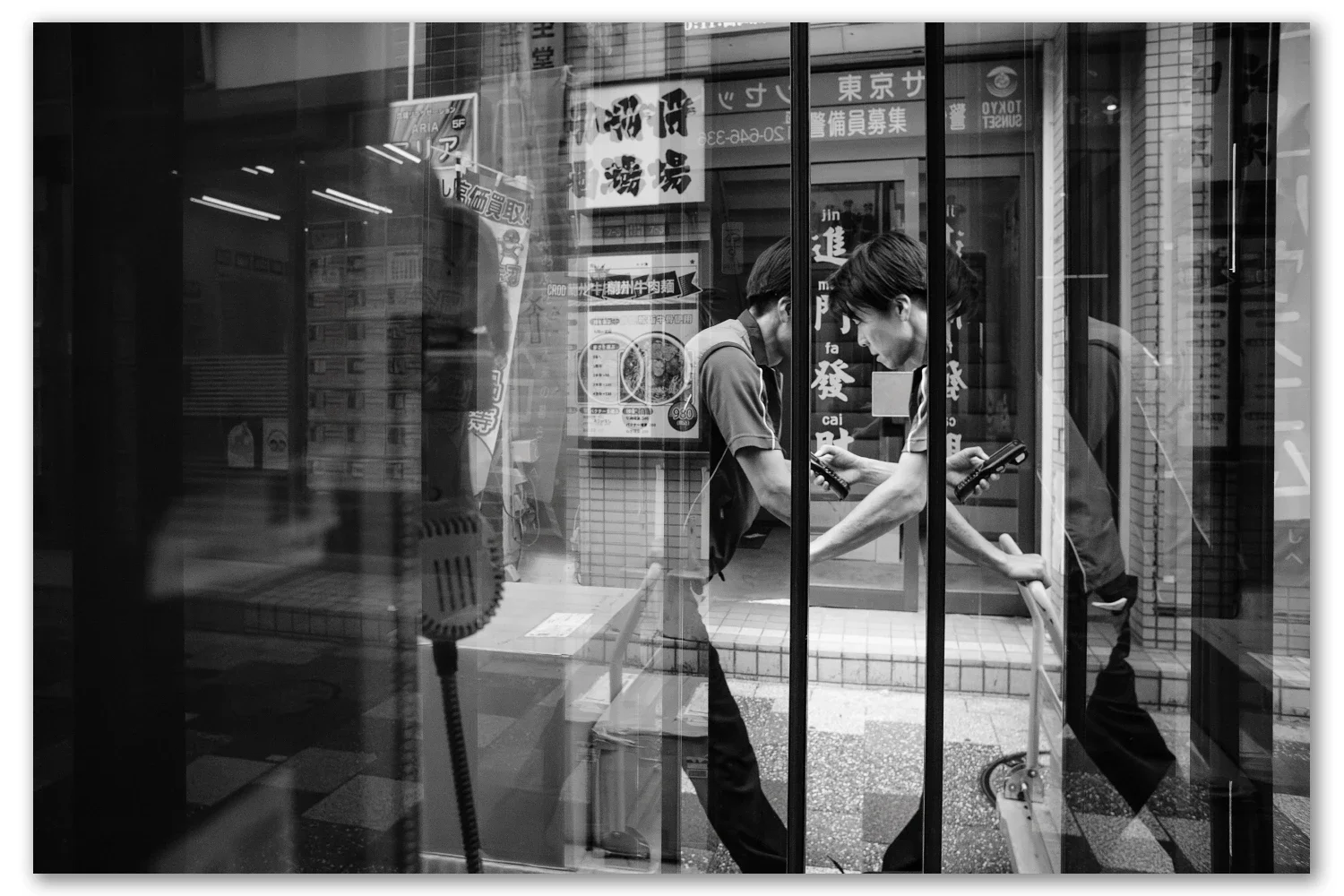
Then the rhythm. This is one of the few wards in Tokyo where people drink in daylight without ceremony, and that loosens everything — faces, gestures, the way a person leans on a counter at three in the afternoon. The subjects are not commuters hurrying past you. They are staying a while. They are at ease. You are far more invisible here than in any tourist ward, because nobody is expecting a camera and nobody is performing for one.
And the contrast — this is the part the search term promises. Shibuya and Shinjuku have been photographed so thoroughly that the genre now arrives there to re-shoot frames it has already seen. You go to those wards to confirm a picture. You come to Akabane to find one. The corners here are unfamous, meaning they are unclaimed, so the photograph you make is actually yours. This is where you develop your eye — not by chasing the frame everyone agrees is good, but by earning one nobody handed you. The patience the famous corner removes, Akabane gives back.
My Connection to This Place
Akabane is the last medium-sized station before Tokyo becomes Saitama. It carries the northern commuter east or west into the city. It also connects my home to the rest of it.
For years, I commuted through Akabane every day, and you learn to tell the commuters from the locals. The commuter is always in a rush — to work, then to eat and drink on the way home. The locals move by their own clock. Already where they need to be.
That contrast is what holds me. Two people passing at opposite speeds, with the same purpose. It makes street photography here particularly hard: the locals go hyper-aware the moment they sense you, while the commuters never notice you at all.
Photograph a local, and you leave them perplexed, almost confused. Why are you taking my picture? — is how the face so often reads. For me, it's simple. The honesty of a life in that one moment is among the most beautiful things you can see. If I can forge a few frames of that, I'm fulfilled.
Wherever I'm headed, if there's time, I walk those streets. A choice to shoot Akabane.
A Short History of the Streets
Akabane's two halves were drawn by water and time. The eastern lowland lay in the floodplain of the Arakawa, and for centuries the river both fed and threatened it. The single most photographable piece of that history still stands a short walk north, where the old Iwabuchi floodgate — the Aka-suimon, the "red sluice gate," built around 1924 — controls the split between the Arakawa and the Sumida. It is a blunt, beautiful piece of red engineering against a wide sky, and it is the reason this ground stopped flooding and started filling with houses.
The streets you actually shot, though, were drawn by the war's end. When the fighting stopped in 1945, the open ground outside the station became a black market — the improvised, half-legal trade that fed a hungry city. Nobody bulldozed it. It simply set, like cooling metal, into the maze of narrow eateries and drinking alleys that still stand today. OK Yokocho — the lantern-lit alley off the east exit — is that postwar market, grown old and kept alive. You are not photographing a recreation. You are photographing the thing itself, eighty years on, with the same width and the same purpose.
That is the gift Akabane gives a photographer: history you can still point a lens at, because nobody got around to replacing it.
Where to Shoot — The Findable Corners
These are the spots anyone can reach. They are genuinely generous — start here, and you will not waste a day.
Akabane Ichibangai — the main covered shopping street off the east exit. This is the spine of the ward: shopkeepers, day-drinkers, the slow tide of local life under an arcade roof. Best light: any hour — the roof gives you even, sheltered light that never blows out, which makes it the safest place to work when the sky is flat. Watch for: the gestures, not the storefronts — the hand-off of change, the lean on a counter, the regulars who know each other.
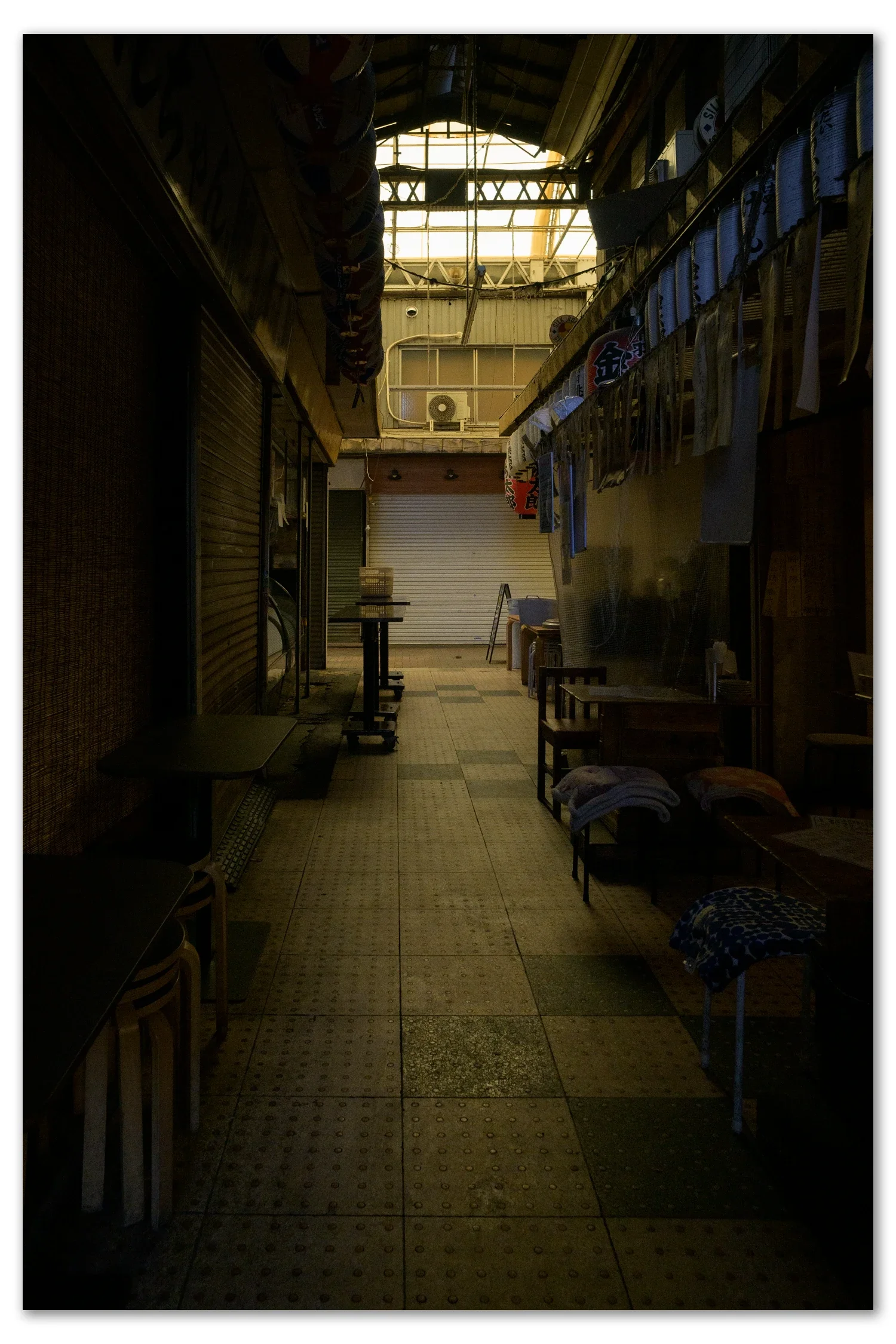
OK Yokocho — the narrow postwar alley threaded inside Ichibangai, under a hundred metres long, packed with maybe thirty tiny bars and snack counters. Best light: late afternoon into blue hour, when the paper lanterns warm up and start to outweigh the daylight. Watch for: the quarters are tight and the people are drinking — shoot from the mouth of the alley, work the layers of light, and read the room before you raise the camera.
The Arakawa levee & Iwabuchi floodgate — walk north-east to the river and the city falls away into sky. The grassy embankment, the cyclists, the old red gate, the new blue one beside it. Best light: golden hour, when the low sun runs flat across the water and the levee throws long figures. Watch for: space and patience — this is wide-frame, single-subject work, the opposite of the alley's density. In spring the Sakura Tsutsumi greenway here runs pink with cherry trees.
The west-side cliff stairs — cross under the tracks to the high ground and the ward changes register entirely: quiet residential lanes, staircases cut into the Musashino plateau, level changes that make a frame out of nothing. Best light: morning side-light down the slopes. Watch for: the geometry — a staircase, a single figure, a wall — when the alleys feel too busy.
Under the elevated tracks — Akabane Station rides above the street on eight tracks, and the structure that carries it throws gaps of light, pillars, and passing commuters. Best light: hard midday, when the shadow bars are sharpest. Watch for: the rhythm of light and dark, a person stepping through it.
The Corners I Keep for the Walk
The corners above are the ones I'll happily hand anyone. They aren't the ones I come back for.
What I come back for doesn't have an address. It's the stretch that only works for the twenty minutes when the light drops behind the arcade. It's the counter where, after enough visits, the owner stops watching my camera and starts ignoring it. It's the frame that only exists because I've stood on that spot a hundred times and earned the right to be unremarkable there. None of that survives being written down. The moment you map it, it stops being yours and becomes a checklist — which is exactly what I left the famous wards to get away from. So I'll tell you it's here. I won't tell you where.
Light, Weather & Season
Akabane rewards the edges of the day. The low northern sun means side-light, not overhead glare — get there for the first hour after the arcades open, or the last hour before the lanterns take over, and the side streets do half your composing for you. Midday is for the covered arcades, where the light stays even, and the work never stops.
Dusk is when the ward turns into itself. As the daylight drops, OK Yokocho's lanterns shift from decoration to the main light source, and the whole alley goes warm and close. Akabane at night is a different animal from the daytime ward — denser, drunker, kinder to a camera that waits.
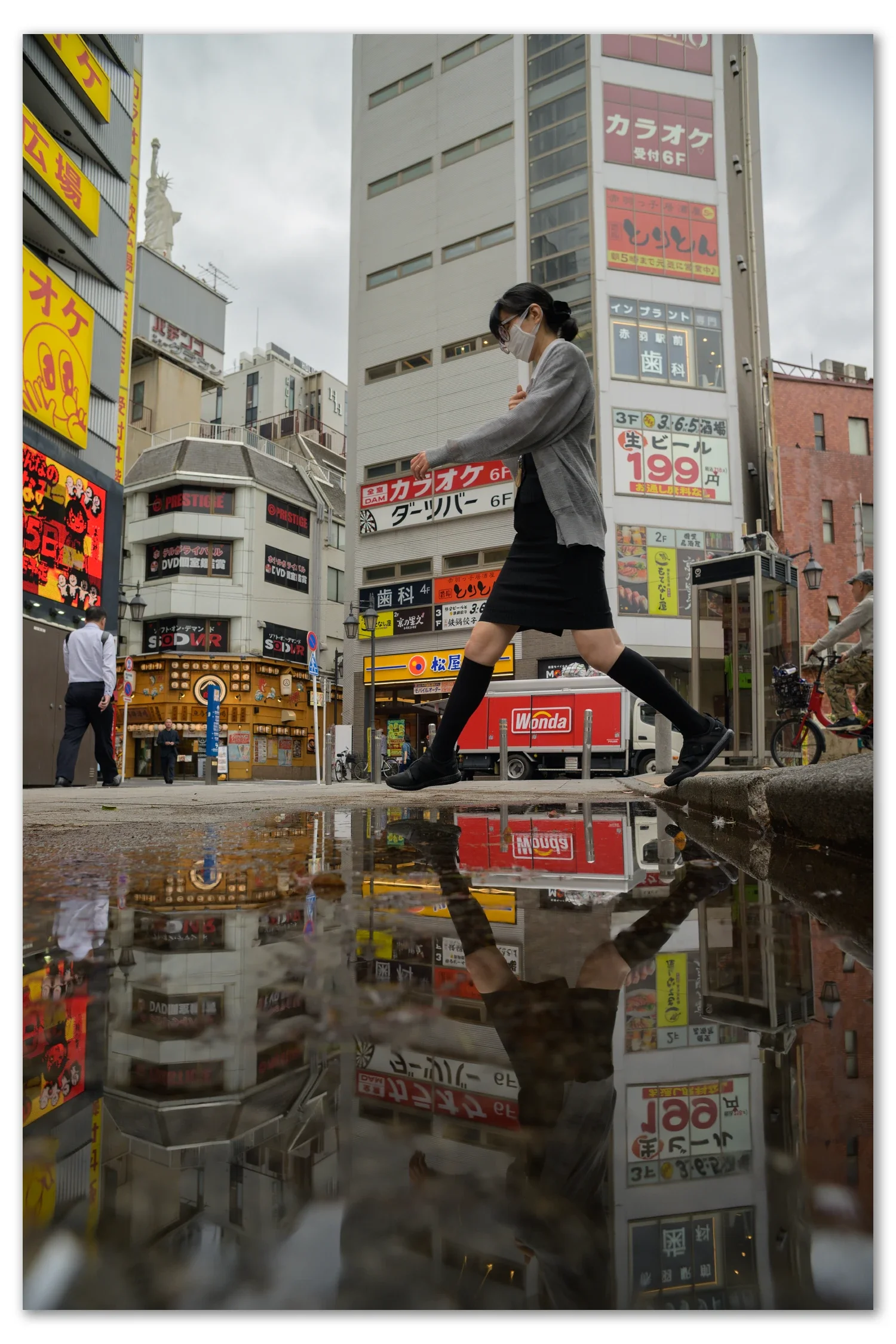
Rain is a quiet gift here. The arcades keep you and your glass dry while the open alleys turn to reflection — wet stone under paper lanterns, the colour pooling at your feet. Akabane in the rain is one of the few times the ordinary street starts to look like the photograph.
In spring, cherry trees along the Arakawa bloom, making the walk to the river worthwhile. Autumn offers the clearest, gentle light. Deep winter brings cold, flat scenery by the water, but the alleys feel cozier. Midsummer is humid and intense; focus on shooting the arcades and the blue hour instead of midday.
Gear & Approach
Carry less than you think you need. Akabane's distances are short — the arcade is narrow, the alley is narrower — so a 35mm or a 50mm sits right for almost everything here; you frame with your feet, not a zoom. I tend to bring an older Nikkor for the way it renders the warm alley light, the slight softness that suits paper lanterns better than anything clinical would. But that is character, not a requirement. Any camera works in Akabane. What the ward asks for is not glass — it's patience, and the manners to use it.
Approach matters more than equipment here, because people are at ease, and you want to keep them that way. Move slowly. Shoot from the edges of a scene before you step into it. In OK Yokocho, especially, read the room and respect that these are people drinking, not exhibits. The reward for being unhurried and unobtrusive is the thing every tourist ward has trained out of its subjects: someone who simply carries on, and lets you forge the frame instead of staging it.
Getting There
Akabane Station is easier to reach than its obscurity suggests. It sits on the JR Keihin-Tōhoku, Saikyō, Shōnan-Shinjuku and Utsunomiya/Takasaki lines — roughly fifteen minutes from Tokyo Station, and a straight shot up from Shinjuku or Ikebukuro. Come out of the east exit for the arcades and alleys; that is where the ward lives.
A sensible loop: start at the east exit, work Akabane Ichibangai and OK Yokocho while the light is low, then walk north-east toward the Arakawa and the Iwabuchi floodgate for the wide river light at golden hour. Cross back under the tracks to the west-side stairs if you want to finish quietly. Two to three hours, unhurried, and you'll have shot three completely different wards without leaving one.
The famous corner gives you a photograph everyone already has. The unfamous one makes you earn a photograph that's only yours. Akabane is full of unfamous corners — which is exactly why I keep coming back.
— Jeff
Tokyo Forgeries documents the city one ward at a time, through vintage glass, unhurried. If you want the corners that aren't on this page — the ones that take a hundred returns to find — that's what the masterclass is for. Or subscribe to follow the archive as it grows, ward by ward.
The streets never look the same way twice. I’m curious—how does this side of Tokyo hit you? Drop a comment below.
I live on flat whites and shutter clicks. If you’ve found value in these shots, toss a coffee my way to keep the sensor humming.
For those who want to skip the tourist traps and shoot the real Tokyo, my calendar is open for workshops. Explore the Masterclass here or email me at jeff@tokyoforgeries.com.
See you in the shadows.
Tokyo Forgeries is an evolving archive of Tokyo street photography and vintage-lens deep dives. We spend 30 days in every ward, using mid-century brass and glass to capture the city’s soul. This is a roadmap for the active pursuit of craft—documented through the geography of Tokyo and the character of its light.